Customs and Immigration Without the Nerves
Real scenarios for customs and immigration: duty free allowances, food rules, cash declarations, red and green channels, and what secondary inspection actually involves.
13 min read · Updated March 2025
Customs and immigration produce more low-grade travel anxiety than almost any other part of a trip, mostly because the rules feel opaque and the stakes feel high even when they usually are not. The fastest way through this stage of travel is understanding it as a series of small decisions rather than one intimidating gate. Below are five common situations, framed as problem, solution and outcome, that cover most of what ordinary travellers actually run into.
Problem: you bought more duty free than your allowance covers
A traveller flying home from Singapore to the US picks up two bottles of whisky and a carton of cigarettes in the airport duty free shop, on top of some perfume. It feels tax free because the shop said so, and in a narrow sense it was, at the point of sale. The traveller's home country allowance for alcohol on return is one litre without paying duty, so the second bottle is technically over.
Solution: declare it. Most countries' arrival forms, whether paper or app-based, ask directly whether you are carrying goods above the personal allowance, and answering honestly, then paying whatever modest duty is owed, is a five minute process at a dedicated desk.
Outcome: the traveller pays a small amount of duty on the second bottle and walks through without further delay. Compare this to the alternative, walking through the green nothing-to-declare channel and being stopped, where the same bottle can be seized entirely and a fine can be added on top. The honest route is nearly always faster and cheaper than it looks from the outside.
Problem: you are carrying food from home and are not sure if it counts
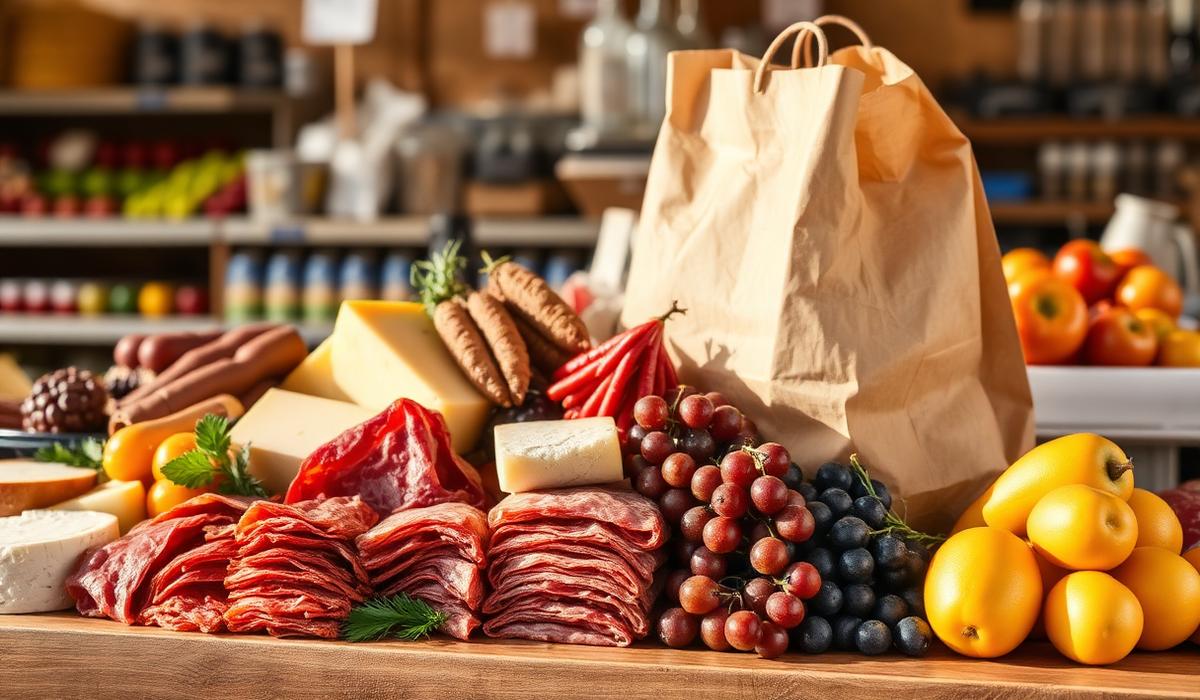
A traveller flying into Auckland from a family visit abroad is carrying a jar of homemade jam, a bag of dried herbs, and some fruit picked up as a snack for the flight, none of it commercially packaged, all of it well meaning. New Zealand and Australia both run some of the strictest biosecurity screening of any developed countries, including detector dogs and X-ray scanning of all arriving luggage.
Solution: declare everything food related on the arrival card, even if it seems trivial. The form usually has a blunt yes or no question about food, plant material, or animal products, and the honest answer is almost always yes if there is any doubt.
Outcome: a biosecurity officer inspects the items, generally in under ten minutes, and either clears them, treats them, or disposes of the ones that are not permitted, usually the fresh fruit and the herbs, while permitted items like sealed commercial jam are returned. Undeclared items caught by the dogs or scanner instead can trigger an on the spot fine, commonly several hundred dollars, for exactly the same jar of jam that would have been fine, or at worst confiscated politely, if declared.
Problem: you are carrying a large amount of cash for a family reason
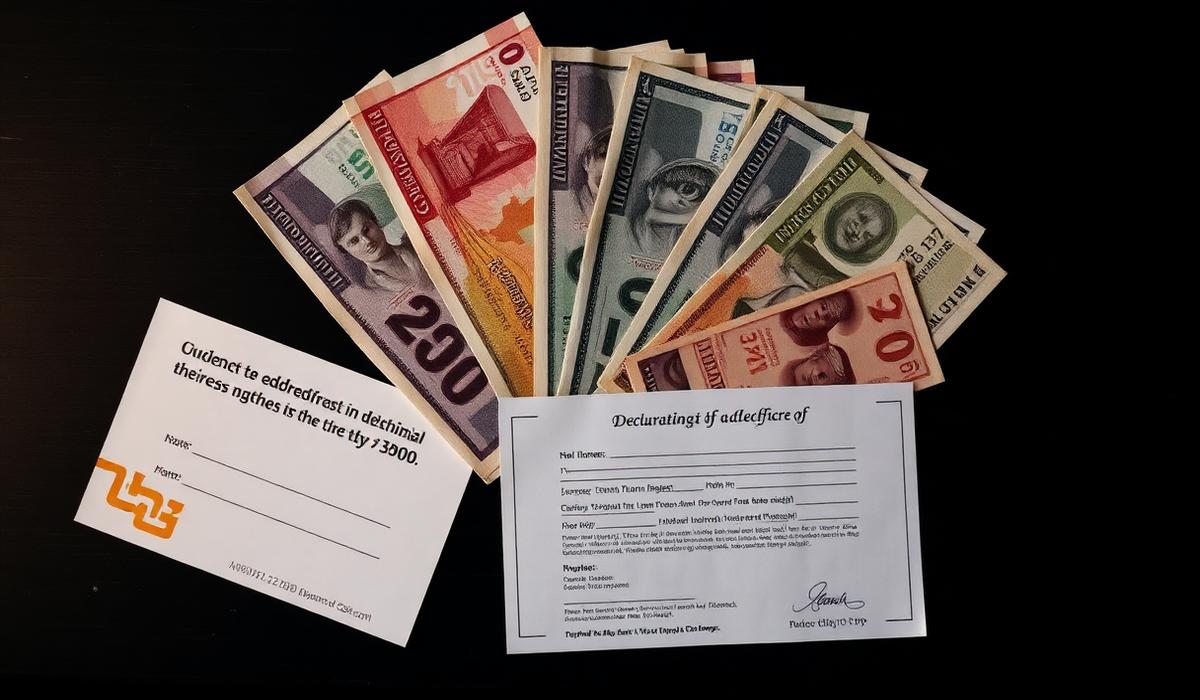
A traveller flying into Frankfurt is carrying just over 10,000 EUR in cash, intended as a wedding gift for family and partly because a relative does not trust bank transfers. This crosses the EU's cash declaration threshold, and most countries worldwide have a similar reporting requirement somewhere between 10,000 and 15,000 in their local currency or US dollar equivalent.
Solution: declare it proactively at the customs desk or via the EU's cash declaration system before travel, which for the EU can now be done digitally in advance. Carrying a large sum is generally not illegal in itself, but failing to declare it when required is what creates legal exposure.
Outcome: the officer records the declaration, may ask a few questions about its source and purpose, and the traveller proceeds normally, cash intact. Travellers who do not declare and are found carrying undeclared cash over the threshold risk having the cash seized while an investigation into its origin takes place, which can take weeks or months to resolve even when the money is entirely legitimate.
Problem: you genuinely have nothing to declare but you are picked for secondary inspection anyway
A traveller arriving into Atlanta from a long haul flight walks through primary immigration without incident, collects a checked bag, and is then directed by a customs officer to a secondary inspection area for no reason that was explained. This can feel alarming, but it is a routine and common part of how customs agencies manage risk, and selection is frequently random, based on a broad risk profile, or simply due to a minor flag like an unusual travel pattern or a country visited recently.
Solution: answer questions calmly and directly, and allow the physical inspection to happen without objection. Being asked to open a bag, explain the purpose of a trip in more detail, or wait while an officer checks something is standard procedure, not an accusation.
Outcome: the large majority of secondary inspections resolve within twenty to forty minutes with the traveller cleared to go, sometimes with nothing found and no explanation given for why they were selected in the first place. It is an inconvenience, particularly if it eats into a connection time, but it is rarely the beginning of a bigger problem for a traveller with nothing to hide.
Problem: you are not sure whether to use the red or green channel
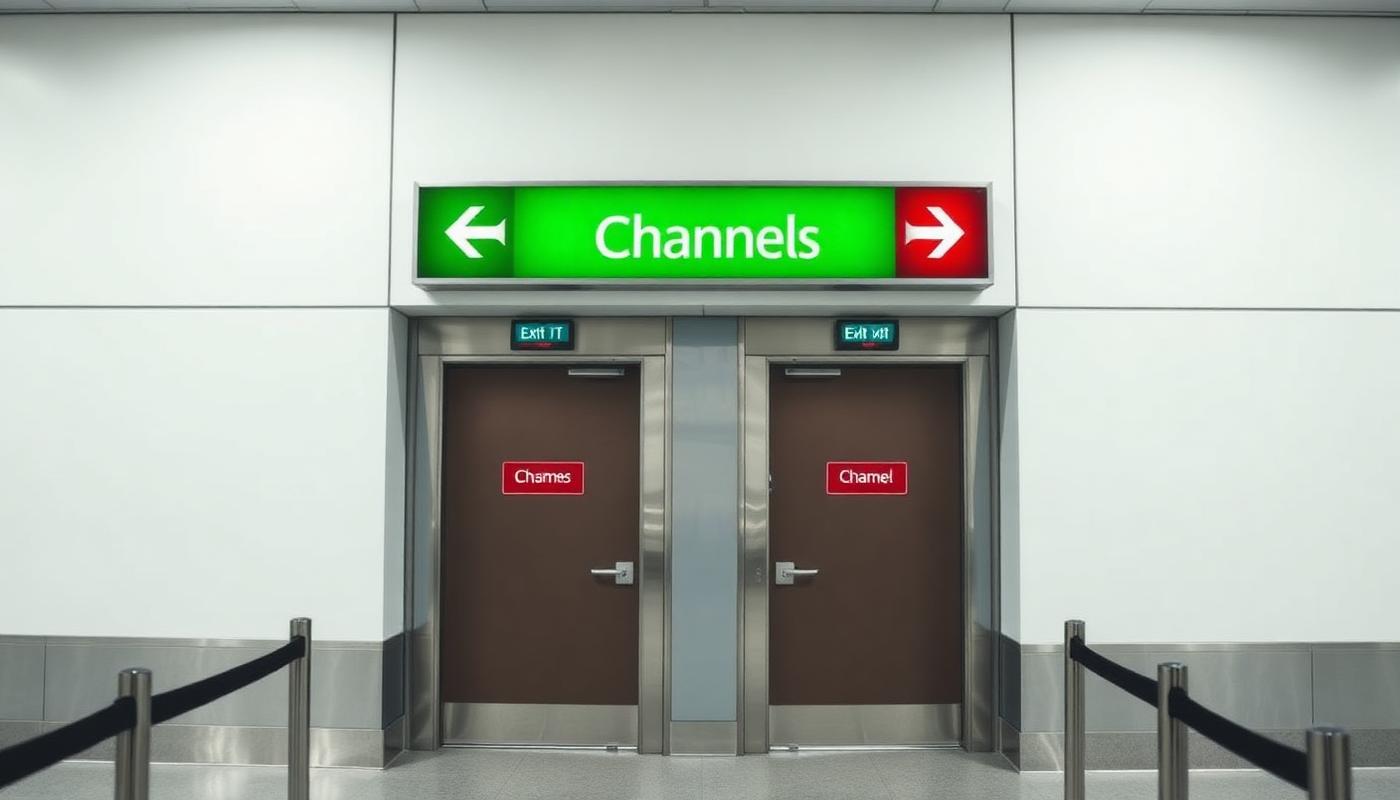
The red and green channel system, used across the UK, much of Europe and a number of other countries, is simpler than it looks and the confusion usually comes from overthinking a borderline item. Green means nothing to declare and nothing over the personal allowance. Red means something to declare, whether that is goods over the value or quantity allowance, restricted items, or cash over the reporting threshold.
Solution: if there is genuine doubt about whether something needs declaring, the safe default is the red channel or the dedicated customs desk. Officers there deal with borderline cases all day and can quickly tell you if something did not actually need declaring, at which point you simply proceed. There is no penalty for declaring something that turns out to be fine.
Outcome: a traveller who asks rather than assumes almost never has a bad experience at customs. The only travellers who run into real trouble are the ones who guess wrong in the direction of not declaring something that needed it.
Problem: you are transiting through a country you are not actually visiting
A traveller flying Delta from Atlanta to Amsterdam, then onward on KLM to Nairobi, lands at Schiphol with no intention of leaving the airport, expecting to walk straight to the next gate. Depending on the passport held and the specific transit arrangement, this can still require clearing Dutch or Schengen immigration if the bags need to be rechecked or if the connection crosses from a non-Schengen arrival into a Schengen departure. Some airports offer a genuine airside transit that avoids immigration entirely; others, depending on terminal layout and ticket structure, do not.
Solution: check the transit visa requirement for the specific country and passport combination before travel, not after landing. A number of countries require a transit visa even for passengers who never intend to leave the airport, particularly if the layover crosses into a new day or exceeds a set number of hours.
Outcome: a traveller who has checked in advance either confirms no visa is needed and proceeds through an airside transfer, or arrives with the correct transit visa already obtained and clears the formality without incident. Travellers who assume transiting never requires a visa occasionally find themselves denied boarding at the origin airport, well before they ever reach the transit country, because the departing airline's own systems checked the requirement first.
A quick reference: what typically needs declaring
| Item type | Typically needs declaring when |
|---|---|
| Alcohol and tobacco | Above the destination's specific personal allowance, commonly one litre of spirits or one carton of cigarettes, though this varies widely by country. |
| Cash and cash equivalents | Above roughly 10,000 USD or local equivalent, combined across currencies and travellers in the same party in many jurisdictions. |
| Food, plants and animal products | Almost always, particularly fresh produce, meat, seeds, and homemade preserved goods, especially into Australia, New Zealand and the United States. |
| High-value goods bought abroad | Above the destination's personal allowance for goods, which is often a set value threshold rather than a specific item list. |
| Restricted or regulated items | Always, including certain medications, some plant-based traditional remedies, and items made from protected animal species. |
This table is a starting point, not a substitute for checking the specific destination's customs website, since thresholds and category definitions genuinely differ from country to country and change periodically.
A note on connecting through a country with its own strict rules
Some connection points add complexity purely because of what that specific country restricts, independent of your final destination. A traveller connecting through Dubai carrying prescription medication that is legal at home but controlled locally, certain codeine-based painkillers being a commonly cited example, can run into serious trouble even during a short airside transfer if the medication is discovered and not pre-cleared. The safest approach for anyone connecting through a country known for stricter rules on medication, alcohol or other items is to check that specific country's rules in advance, not just the rules of the country you are actually visiting, since a transit stop still generally means the item passed through that country's jurisdiction even without a formal entry.
What officers are actually trained to notice
It helps to understand that most customs and immigration questioning is pattern-based rather than personal. Officers are trained to notice inconsistencies: a stated purpose of visit that does not match the length of stay, a nervous change in story when a follow-up question is asked, or luggage that does not match the stated reason for travel, such as heavy business equipment on a trip declared as tourism. None of this means an honest traveller with an unusual but true story needs to worry. It does mean it is worth having a simple, consistent answer ready for basic questions like the purpose of the trip, where you are staying, and how long you intend to remain, since hesitation on straightforward questions draws more attention than the answer itself typically would.
Language barriers are a genuine and common source of extended secondary inspections that have nothing to do with wrongdoing. A traveller who does not speak the local language well may simply need more time and a more patient explanation, and most agencies have access to interpretation services, whether a phone line or a staff member, if asked. It is entirely reasonable to ask for an interpreter rather than struggling through a rushed exchange in a language you are not comfortable with.
A short note on immigration itself
Immigration, the passport check that happens before you reach the baggage carousel or customs, is a separate process focused on your right to enter the country rather than what you are carrying. Have your passport, and if applicable your visa or travel authorisation like an ESTA or ETIAS, easily accessible rather than buried in a bag. Answer questions about the purpose and length of your stay directly and consistently with whatever you told the airline or embassy when you applied for any visa or authorisation, since inconsistency between what was declared in advance and what is said at the desk is one of the more common triggers for a longer conversation with an officer.
For a broader look at what documents to have ready before you even reach this stage, our travel documents checklist covers what to prepare in the weeks before departure so that immigration and customs are the fastest part of the trip rather than the slowest.
Where to go next
To carry this further, read The Travel Documents Checklist, Visa Basics Without the Jargon. The full Rules Station index lists every guide in this module, and Change Station covers the side of the trip this article does not. If the dates themselves are still moving, the itineraries in Route Station are built to absorb a shifted day.
Frequently asked questions
Related articles
Keep reading across the network
Rules Station · 12 min read
The Travel Documents Checklist
A timeline based checklist for travel documents, from eight weeks out to arrival, plus what to keep as a digital copy and what needs to stay on paper.

Rules Station · 12 min read
Visa Basics Without the Jargon
A question and answer guide to visas versus travel authorisations, visa on arrival, transit visas, processing times and what happens after a refusal.
Rules Station · 13 min read
Connecting Flight Rules and Minimum Connection Times
How connections actually work across same airline, codeshare, and separate ticket bookings, with minimum connection times at LHR, AMS, FRA, CDG, ATL and DXB.