
Airport Security Screening, Start to Finish
A step by step walk through airport security screening, from bag prep to the checkpoint, plus common mistakes, CT scanners and known traveller schemes.
12 min read · Updated March 2025
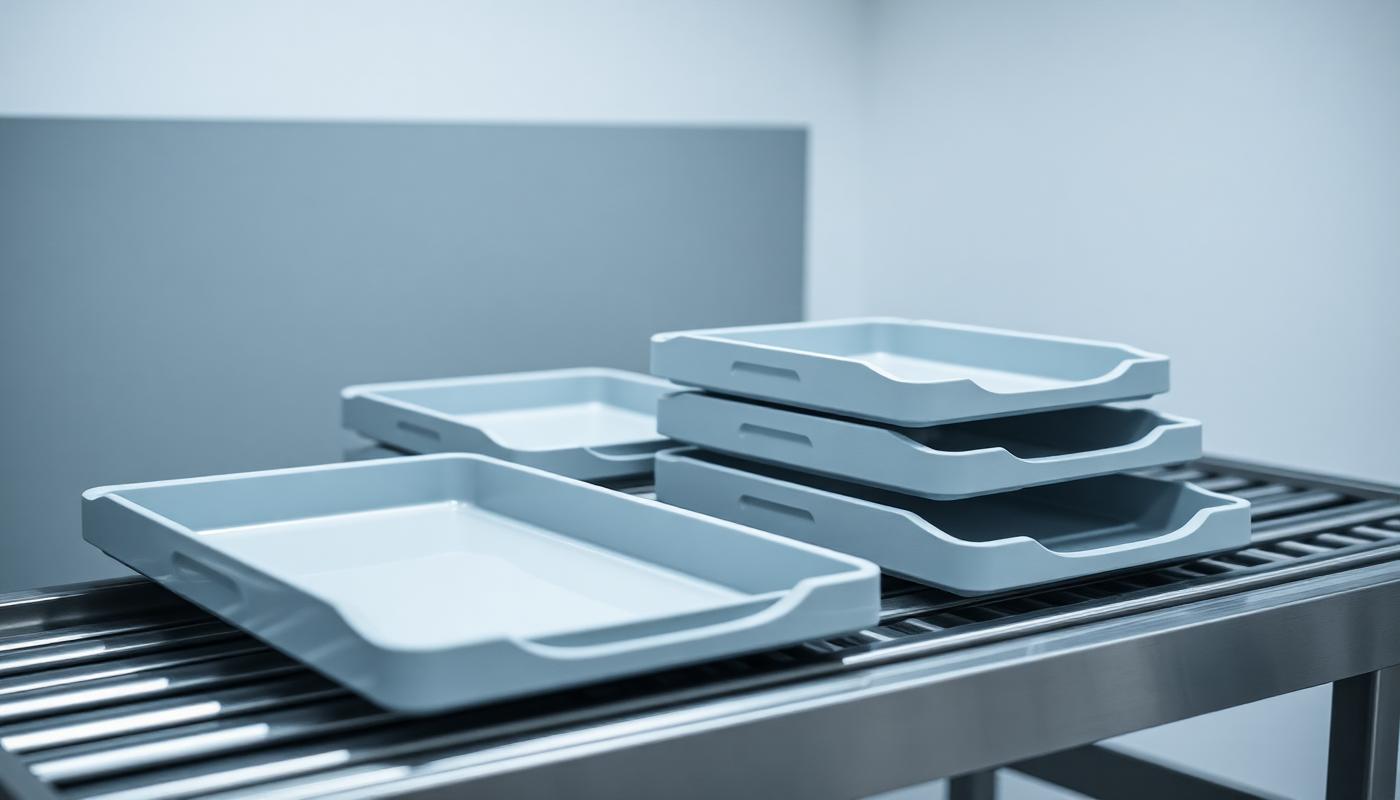
Airport security screening is one of those experiences that everyone has done dozens of times and almost nobody has thought through in order. Most delays at the checkpoint come from the same handful of avoidable moments: a forgotten water bottle, a laptop buried at the bottom of a bag, a belt that needed removing after all. This is a walk through the checkpoint from the moment you join the queue to the moment you collect your things, in the order it actually happens, with the parts that trip people up called out explicitly.
None of this is airline specific. Screening rules are set nationally, sometimes by a single security agency like the TSA in the United States, and applied fairly consistently across the airports that agency covers. Rules do vary country to country though, so treat the specifics here as generally true rather than as a universal law, and check current guidance for your departure airport if you are unsure.
Before you even reach the queue
The single biggest time saver happens before you leave the house, or at latest before you leave the hotel. Pack liquids, gels and aerosols together in one place, ideally in the clear quart bag most checkpoints still expect, rather than distributed across three different pockets of a backpack. Keep your laptop and any tablet larger than a phone somewhere you can reach in one motion, not zipped inside a padded sleeve inside a second compartment.
Dress with the checkpoint in mind on travel days. Belts with large metal buckles, boots with steel shanks, and jewellery with a lot of metal all increase the odds of a manual pat down or a second pass through the body scanner. This is not about looking a certain way, it is about not having to fight with laces at 5am while a queue backs up behind you.
If you use a known traveller programme, have the number ready to enter at check in and printed or saved somewhere so it prints on the boarding pass. A PreCheck or Global Entry indicator on the pass is what actually routes you to the faster lane. Without it on the document, staff at the lane entrance cannot wave you through no matter what your phone app says.
Joining the queue and reading the lanes
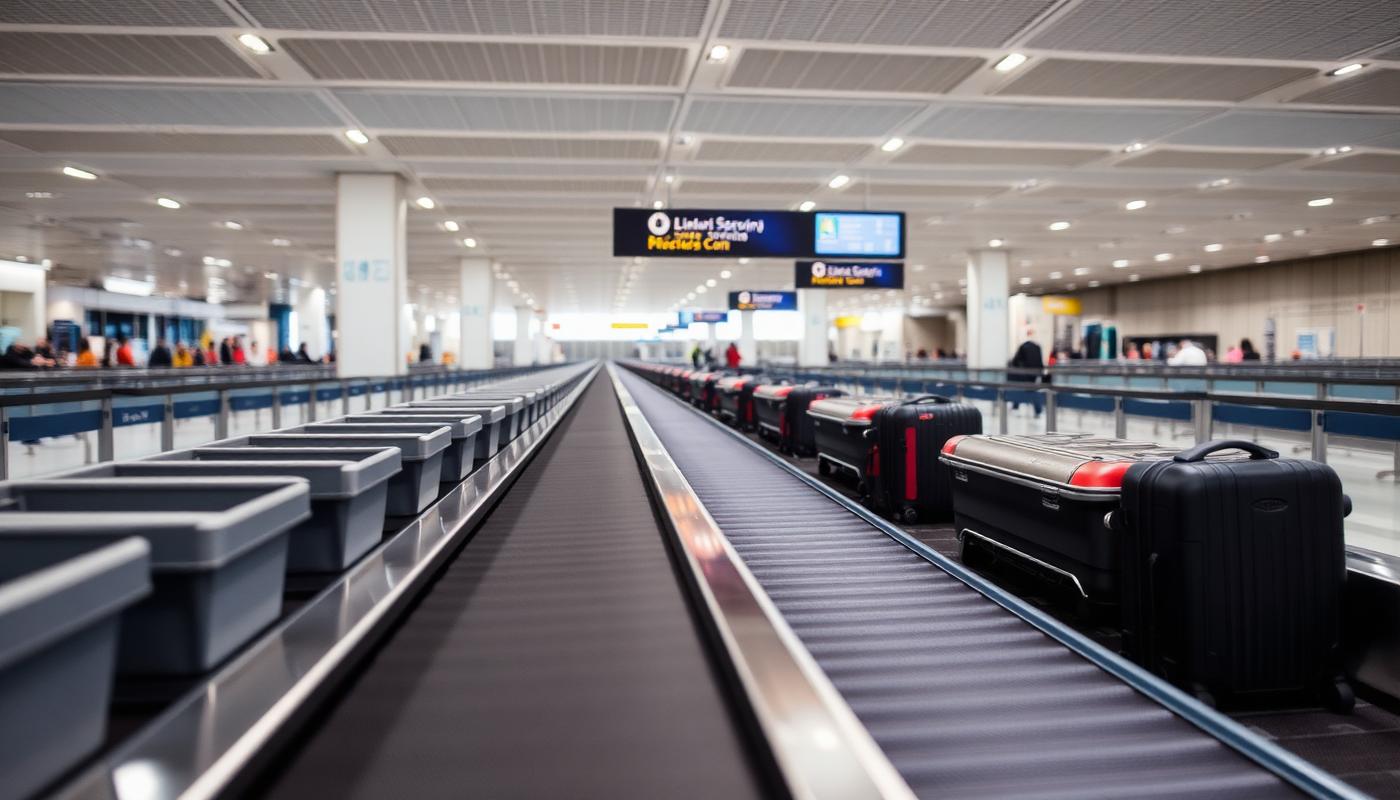
Larger airports increasingly split lanes by traveller type: a general lane, a PreCheck or fast track lane, sometimes a lane for families and travellers needing assistance, and occasionally a separate lane feeding into CT scanners. Read the signage before joining a line rather than after, because switching lanes once committed usually costs more time than it saves.
If you are travelling with a family member who needs more time, most airports have a lane or a dedicated queue position for this, and it is worth asking rather than assuming you have to use the standard line. Staff are generally used to routing wheelchair users, unaccompanied minors and travellers with visible medical needs through separately.
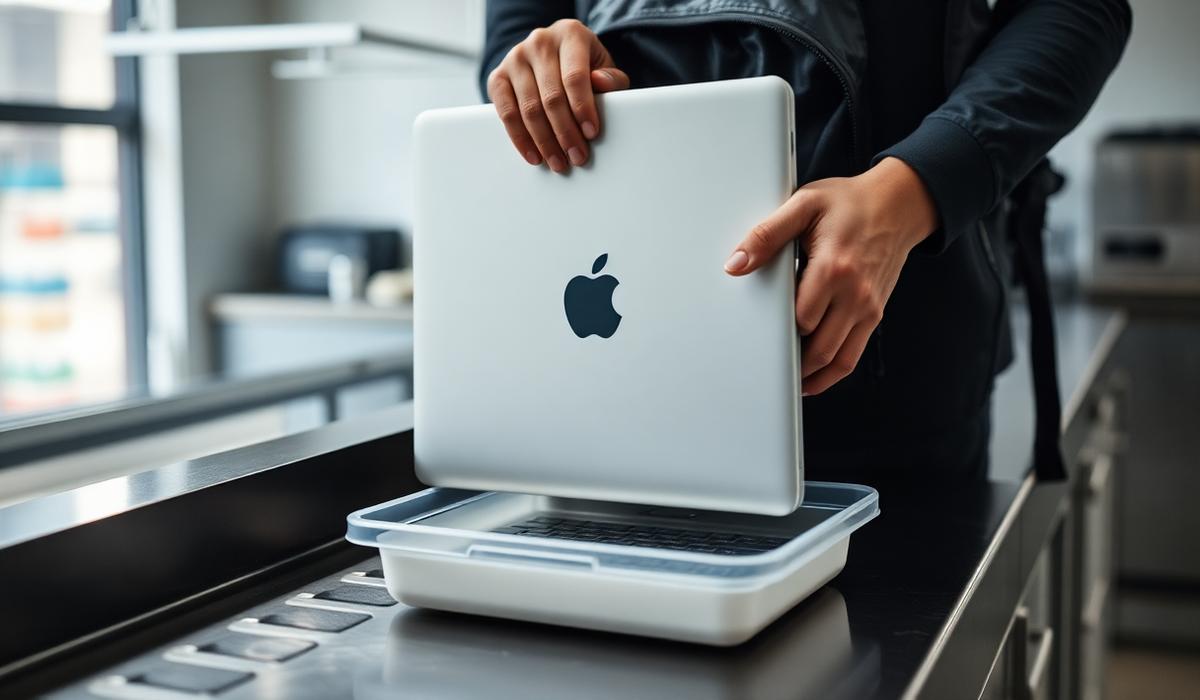
The tray stage: what actually needs to come out
This is where most delay is created and most delay is also avoidable. At a conventional X-ray lane, expect to remove: laptops and tablets larger than a phone into their own tray, liquids in the clear bag into their own tray, and typically shoes, belts, and any bulky outerwear. Phones generally stay in a pocket or a bag. Watches usually stay on unless they are very bulky or metal-heavy.
At a CT scanner lane, which is becoming common at major US hubs like Atlanta and at a number of European airports including several terminals at Heathrow and Amsterdam Schiphol, the machine can generally see through a normally packed bag well enough that laptops, tablets and sometimes liquids can stay inside. Look for the signage at the belt, since mixing this up in either direction, either overpacking a CT lane tray unnecessarily or underpacking an X-ray lane bag, is the most common source of a bag being pulled for a manual look.
- Laptops and tablets larger than a phone: generally out, unless the lane signage says CT and keep-packed.
- Liquids over 100ml or 3.4oz: not permitted in carry-on at most airports regardless of lane type.
- Liquids at or under that limit: in the clear bag, out of the main bag, unless CT signage says otherwise.
- Shoes: generally off at US checkpoints without PreCheck, often left on elsewhere in the world.
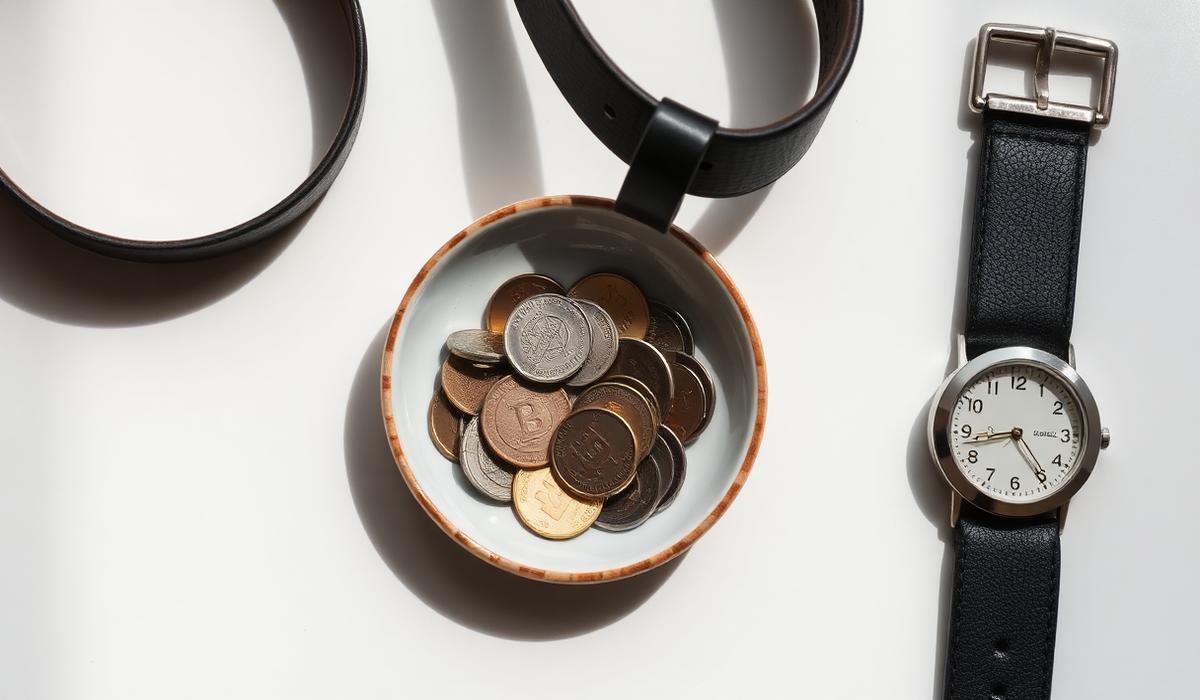
- Belts and bulky jewellery: off if there is meaningful metal content.
A small but persistent common mistake: people put their passport or boarding pass in the tray with their laptop, then walk through the body scanner without it, then have to go back for it while the belt keeps moving. Keep travel documents on your person, not in a tray, until you are asked for them.
The body scanner
Most checkpoints now use a millimetre wave body scanner rather than a metal detector arch. You stand inside with feet on the marked positions and hands raised briefly above your head. It takes about five seconds. The most common reason for a false alert is something small and forgotten: a tissue in a back pocket, a hair clip, a phone left in a jacket. If it alerts, an officer will generally pat down the specific area that triggered it rather than doing a full search, and this is routine rather than a sign anything is wrong.
Medical devices, implants and prosthetics do not need to be disclosed in advance in most jurisdictions, but mentioning one before you step through, particularly for something like an insulin pump that some manufacturers advise against putting through scanners at all, avoids confusion and lets the officer offer an alternative screening method.
Common mistakes, gathered in one place
- Water bottles carried through half full out of habit and confiscated at the belt every single time.
- Snack items like hummus, peanut butter or yoghurt treated as solids when security treats them as gels.
- Powders over roughly 350ml or 12oz, including protein powder and some cosmetics, drawing extra screening or confiscation depending on the country. A number of countries, including the US, have added extra screening steps specifically for larger powder quantities carried in cabin baggage.
- Duty free liquids bought before a connecting flight, sealed in a tamper evident bag, being opened or damaged before the connection, which can void the exemption at the second checkpoint.
- Vapes and spare lithium batteries packed in checked luggage rather than carried on, which is against the rules of most airlines and most security agencies for fire safety reasons.
- Arriving at the lane still holding a coffee, which then has to be either finished, discarded or in some airports carried through separately for a quick test.
CT scanners: what is actually changing
Computed tomography scanners build a three dimensional image of a bag's contents rather than the flat, overlapping X-ray image travellers have dealt with for decades. The practical upshot for passengers is that officers can rotate and examine the image without physically unpacking the bag, which is why airports with CT in place let laptops and liquids stay inside. At time of writing, coverage is uneven: some terminals at a given airport have it and others do not, and it is common for a traveller to fly out through a CT lane and fly home through a conventional one on the same trip. Treat every lane as a fresh decision rather than assuming the rules from your departure airport apply at your arrival or connection airport.
Known traveller and trusted traveller schemes
TSA PreCheck in the United States generally allows travellers to keep shoes, belts, light jackets and approved laptops in place, and routes them through a dedicated lane. Global Entry, also US-run, includes PreCheck benefits and additionally speeds up immigration on arrival into the US through kiosks rather than an officer queue. Clear is a separate, privately run identity verification service that can be paired with either, and mainly saves time at the identity check step rather than the physical screening itself.
Outside the US, similar programmes exist under different names: many EU countries participate in registered traveller schemes for faster passport control, and some carriers including British Airways and Lufthansa partner with fast track security products sold as part of certain fare classes or loyalty tiers. These typically speed up the queue rather than changing what you can carry through it.
Medical items and documentation
Liquid medications, gels used for medical reasons, and items like ice packs used to keep medication cool are generally allowed in quantities greater than the standard liquid limit, provided you declare them at the checkpoint. It is worth carrying the original packaging or a prescription printout, especially for controlled substances or injectable medication, since officers in some countries will ask for it and a traveller without it can face delay or, rarely, confiscation. CPAP machines, mobility aids and similar medical equipment are normally screened separately from carry-on baggage and are exempt from cabin bag size and count limits, though it is sensible to confirm this with the specific airline before travel.
Screening with kids, groups or a lot of gear
Travelling with young children changes the checkpoint experience in ways that are worth planning for rather than discovering on the day. Strollers generally go through the X-ray machine folded, or are hand-searched if they cannot fold easily, and car seats usually need to come off the stroller frame first. Baby formula, breast milk and baby food are typically exempt from the standard liquids limit even in quantities well over 100ml, but officers will often want to test or inspect them separately, so tell the officer before the tray reaches the belt rather than after. Build extra time into any airport arrival when travelling with more than one small child, since the tray stage alone can take three or four times longer than it does for a solo adult with a backpack.
Groups travelling together, whether a family or a group of colleagues on the same flight, often assume it is faster to go through security as a unit. In practice the opposite is usually true. Splitting into two or three smaller groups across adjacent lanes, where the airport layout allows it, tends to clear everyone through faster than funnelling six people and six bags through one lane in sequence. If the layout only offers a single lane, at least stagger who goes first so trays are not queued up three deep waiting on one person still hunting for a laptop.
How screening differs outside the United States
A traveller who only ever flies domestically within the US can be caught out the first time they fly out of somewhere like London Heathrow or Amsterdam Schiphol, where the choreography is broadly similar but the details shift. Shoes generally stay on at most European checkpoints regardless of PreCheck status, which surprises US travellers used to removing them by habit. Some airports, including several terminals across continental Europe, have moved to a single combined queue that splits into lanes only at the tray stage, rather than the US pattern of choosing a lane before joining any line at all. British Airways, Lufthansa and other European carriers do not control screening directly since it is run by the airport or a national authority, but they can offer fast track products bundled with certain fares or frequent flyer tiers that route passengers to a shorter queue.
Asian hub airports such as Singapore Changi are frequently cited by frequent travellers as having some of the fastest average checkpoint times in the world, partly because of generous lane staffing and partly because of widespread CT scanner adoption. None of this means a traveller should assume any given airport will be fast. Peak departure banks, a security agency short staffed on a particular day, or a temporary policy change around a threat level can all slow a normally efficient airport down without warning, which is the real argument for building in a buffer regardless of reputation.
After the checkpoint
Repack at the designated area rather than at the belt itself, since lingering at the X-ray exit is the single biggest cause of the queue behind you slowing down. Do a quick count: laptop, liquids bag, shoes, belt, phone, wallet, boarding document. It sounds excessive but it is the fastest way to catch a tray item left behind before you are three gates away and it is too late to go back easily.
If you are heading straight to a tight connection, as covered in our piece on connecting flight rules and minimum connection times, know that a repeat screening is sometimes required at the connecting airport even on an itinerary booked as one ticket, particularly when changing between international and domestic zones or between certain alliances. Build a few extra minutes into any layover under an hour for exactly this reason.
Where to go next
Two more guides pair well with this one. read carry-on-rules-explained, Connecting Flight Rules and Minimum Connection Times. The full Rules Station index lists every guide in this module, and Change Station covers the side of the trip this article does not. If the dates themselves are still moving, the itineraries in Route Station are built to absorb a shifted day.
Frequently asked questions
Related articles
Keep reading across the network
Rules Station · 11 min read
Carry-on Rules Explained
Cabin bag sizes, liquid limits, electronics, restricted items and the gate checks that catch travellers out.
Rules Station · 13 min read
Connecting Flight Rules and Minimum Connection Times
How connections actually work across same airline, codeshare, and separate ticket bookings, with minimum connection times at LHR, AMS, FRA, CDG, ATL and DXB.
Fix Station · 12 min read
What To Do When Your Flight Is Cancelled
The first ten minutes matter most. A practical order of actions for rebooking, refunds, hotels and compensation after a cancellation.