
Carry-on Rules Explained
Cabin bag sizes, liquid limits, electronics, restricted items and the gate checks that catch travellers out.
11 min read · Updated April 2025
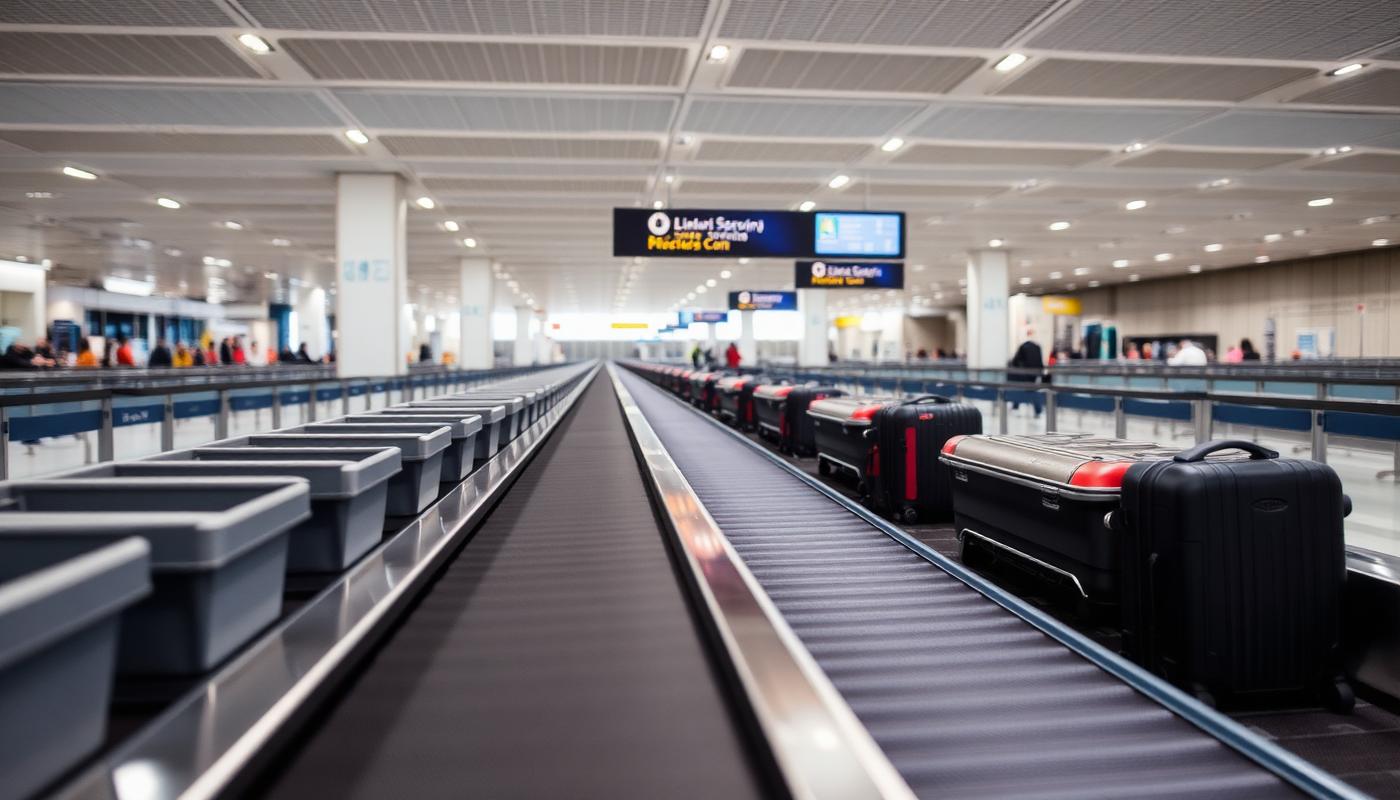
Carry-on rules feel arbitrary because they come from three different places at once. Security agencies decide what may pass the checkpoint. Airlines decide how big and heavy your bag may be. Individual airports add local quirks on top. None of these three coordinate with each other, and travellers are left to reconcile them at 6am with a queue behind them.
Here is the whole system, in the order you will actually meet it.
1. Size and weight: the airline decides
The most common full size cabin bag allowance is around 55 x 40 x 20 cm including wheels and handles. That "including" matters. Manufacturers measure the case body and airlines measure the whole object.
- Legacy carriers usually allow one cabin bag plus one personal item, with weight limits between 7 and 12 kg.
- Low cost carriers often include only a small personal item under the seat. The overhead bin bag is a paid extra.
- Basic economy fares on transatlantic routes can be surprisingly restrictive. Read the fare rules, not the airline homepage.
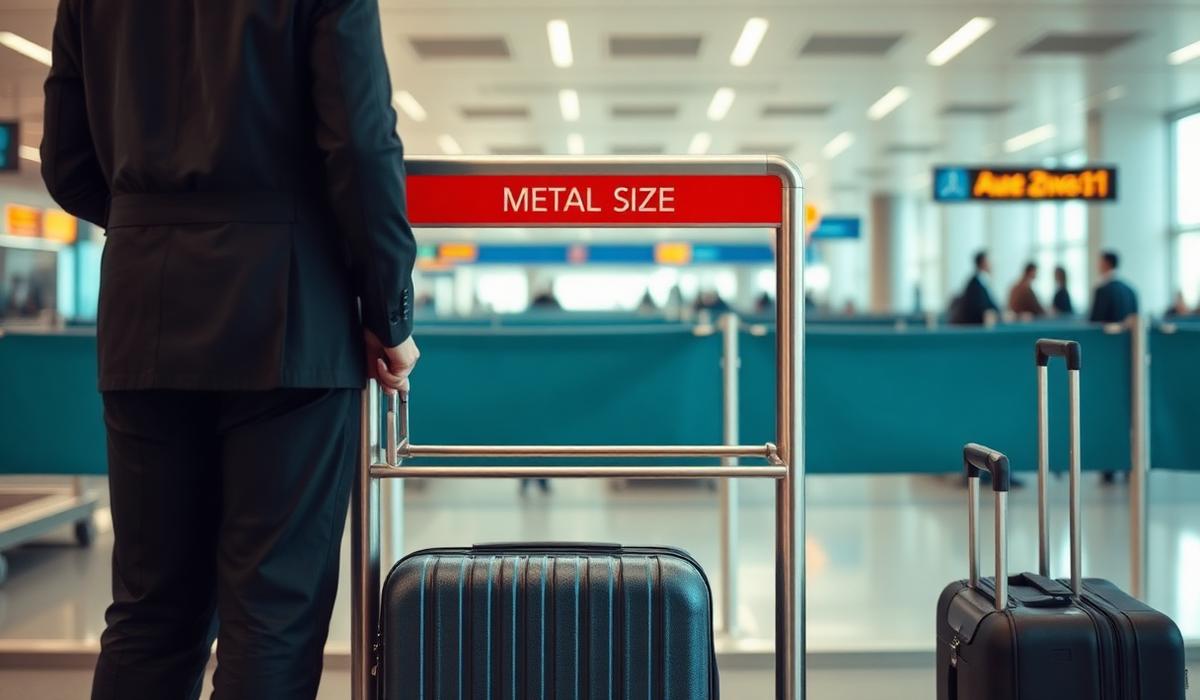
The gate sizer is the final authority. If your bag fits with force, it does not fit. Soft-sided bags survive this test far better than hard shells.
2. Liquids: the 100 ml rule, still
Every container holding a liquid, gel, paste, cream or aerosol must be 100 ml or smaller, and all of them must fit inside a single transparent resealable bag of roughly one litre. One bag per passenger.
The container size is what counts, not how much is left in it. A half empty 200 ml bottle is still a 200 ml bottle and it will be removed.

Some airports have installed CT scanners that allow larger liquids and laptops to stay in the bag. This is genuinely happening, but it is patchy. Pack for the strict rule and enjoy it when the relaxed one applies.
Exemptions worth knowing
- Prescription medication in reasonable quantities, ideally with the pharmacy label or prescription.
- Baby milk, formula and baby food when travelling with an infant.
- Duty free liquids bought airside, sealed in a security tamper evident bag with the receipt visible.
3. Electronics
Laptops and tablets usually come out of the bag and into a separate tray, unless the airport uses newer scanners. Phones stay with you. Larger electronics can trigger a manual swab, which is routine and not a sign of a problem.
Lithium batteries and power banks must travel in the cabin. Anything above 100 Wh generally needs airline approval, and above 160 Wh it is not accepted at all on most carriers. Spare batteries should have the terminals taped or be kept in a case.
4. Sharp objects and tools
The general rule is simple: if it could be used as a weapon, it goes in the hold. Scissors with short blades are often allowed but the threshold varies by country. Multi-tools with a blade are refused almost everywhere. Disposable razors are fine, straight razors are not.
5. Things people forget every single week
- Water bottles that were filled before security. Empty it, then refill airside.
- Souvenir snow globes, which are liquids in a glass sphere.
- Camping gas, lighters with fuel reservoirs, and certain e-cigarettes.
- Large aerosol deodorant that was bought "travel size" but is 150 ml.
- Homemade jam. It is a liquid. It always was.
6. At the gate
Boarding is where cabin bag rules stop being theory. If the flight is full, gate staff may ask for volunteers to check bags, sometimes for free. That is usually a good deal if you have nothing fragile inside and no tight connection.
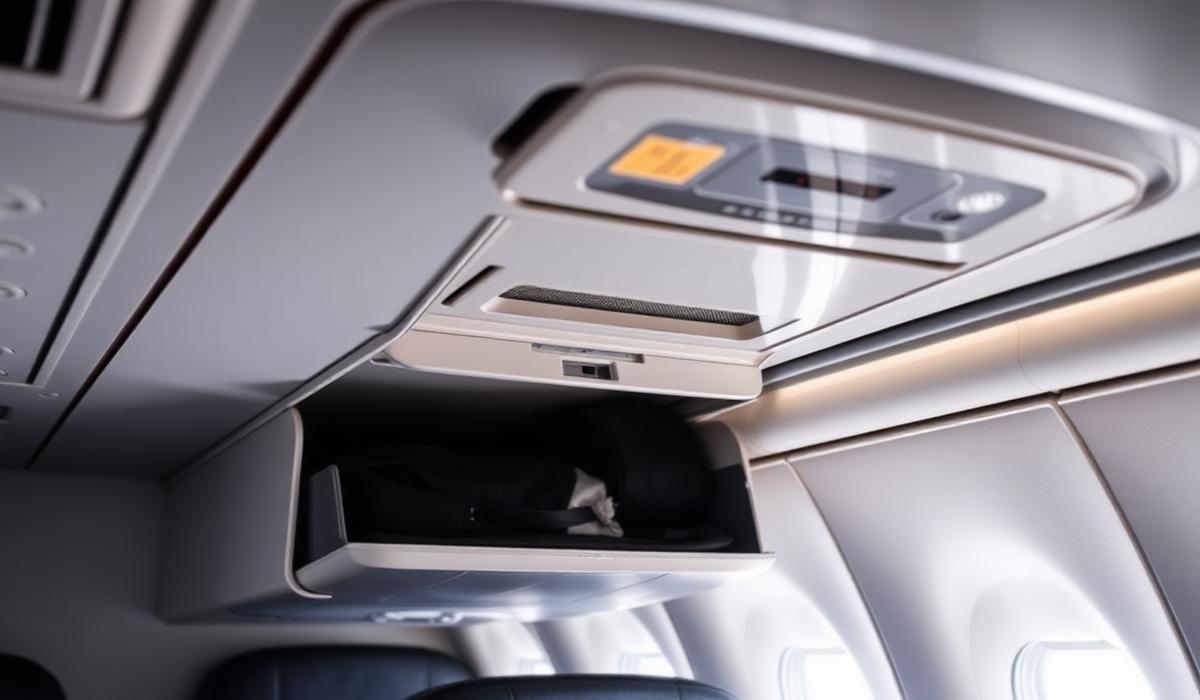
Before handing over any bag at the gate, remove your passport, medication, keys, chargers, laptop and valuables. Hold luggage can be delayed even when you are not.
A packing order that works
- Liquids bag on top, easy to pull out in one motion.
- Laptop in a dedicated sleeve near the outside edge.
- Documents in a pocket you can reach without opening the main compartment.
- Heavy items near the wheels so the bag stands up.
- Anything you would be upset to lose stays in the cabin, always.
The short version
Check the airline size limit for your fare, not the airline in general. Keep liquids under 100 ml in one clear bag. Batteries in the cabin. Blades in the hold. Arrive with your bag packed so that the security tray takes ten seconds instead of three minutes, and the rest sorts itself out.
7. Carrier size families, in practice
It helps to think of cabin bag allowances as falling into a few loose families rather than one universal standard, because that is closer to how airlines actually set them.
- Full service network carriers such as many European, North American and Gulf flag carriers tend to allow a roomier cabin bag, often close to 55 x 40 x 23 cm, plus a genuinely separate personal item like a laptop bag or handbag. Premium cabins and higher status tiers sometimes get a second bag on top.
- European low cost carriers generally split into two tiers: a small "free" personal item that must fit under the seat, and a larger cabin bag that is a paid extra even on the cheapest fares. The free allowance is usually stricter than people expect, sometimes as small as 40 x 20 x 25 cm.
- US domestic carriers mostly converge on a similar cabin bag size to the international legacy carriers, but the ultra low cost carriers there follow the European pattern of charging for anything beyond a small personal item.
- Regional and turboprop flights often gate-check larger cabin bags automatically because the overhead bins are physically smaller, regardless of what your ticket says is allowed.
None of this is standardised by treaty or regulation. It is simply commercial policy, which is why the same bag can be fine on one airline and rejected on its codeshare partner running the same route.
8. Personal item versus cabin bag
The distinction that catches people out most is between the personal item and the cabin bag. A personal item is meant to live under the seat in front of you: a small backpack, a handbag, a laptop bag. A cabin bag goes in the overhead bin. On full flights and on airlines that sell the cabin bag allowance separately, gate staff do check whether your "personal item" has quietly grown into a second full sized bag, and they usually have a sizer frame at the gate to settle the argument.
A reasonably reliable rule of thumb: if it needs both your hands to carry comfortably or has wheels of its own, it is a cabin bag, not a personal item, regardless of what the manufacturer calls it.
9. Where the liquids rule has actually loosened
A number of airports, particularly in parts of the UK, the Netherlands and a handful of others, have installed CT style scanners at some or all lanes that can see inside a bag clearly enough to allow liquids up to two litres and laptops to stay packed. This is real and it is expanding, but it is applied lane by lane and airport by airport, not as a blanket policy, and a transfer through an older airport can reset you back to the 100 ml rule for a connecting flight. Confirm the specific airport's current setup before you rely on it, and pack as though the strict rule applies as a fallback.
10. Batteries, power banks and medical devices
Lithium batteries belong in the cabin, never in checked luggage, because a thermal event in the hold cannot be dealt with the way one can in the cabin. Most airlines allow power banks up to 100 Wh without paperwork, a number band from 100 to 160 Wh with airline approval, usually two units, and nothing above 160 Wh at all on passenger aircraft. Loose or spare batteries should have the terminals covered with tape or kept in their original packaging so they cannot short against keys or coins.
Portable medical devices such as CPAP machines, insulin pumps and nebulisers are generally treated separately from the standard baggage allowance and do not usually count against your cabin bag limit, though you should carry a letter from a prescriber for anything unusual looking, and check the specific airline's medical equipment page before travelling. Liquid medication, including insulin, is usually exempt from the 100 ml limit but should be declared at the tray so it can be screened rather than questioned.
11. Musical instruments and sports gear
Small instruments such as a violin or a compact guitar case sometimes qualify as the cabin bag or the personal item if they fit the size limit, though many musicians end up buying an extra seat for anything larger and irreplaceable rather than risk the hold. Sports gear such as skis, golf bags and surfboards almost never travels as cabin baggage. It goes through as specialist checked luggage with its own fee structure, and it is worth confirming that fee at booking rather than discovering it at the counter.
12. What actually happens when the bin fills up
On a genuinely full flight, overhead bin space usually runs out somewhere around boarding group three or four, especially on aircraft with a high proportion of cabin-bag-only fares. When that happens, gate agents gate-check bags for the remaining boarding groups, sometimes voluntarily with an incentive, sometimes simply by announcement. This is normal operational reality rather than a punishment, but it means anything you cannot afford to be without for the flight, chargers, medication, valuables, a change of clothes for a tight connection, should already be pulled out and in your personal item before you reach the jet bridge.
How carriers typically compare, in broad strokes
Always check your specific airline's page for your specific fare, since these numbers move and vary by aircraft type, but the general pattern that frequent flyers report looks something like this.
| Airline | Typical free allowance | Where it commonly catches people out |
|---|---|---|
| American / Delta / United | One cabin bag plus one personal item on most fares | Basic economy fares on some routes restrict this to a personal item only |
| British Airways / Lufthansa | One cabin bag plus one personal item on most fares | Sizing can be checked more strictly on full flights out of busy hubs like LHR or FRA |
| Ryanair | One small personal item free, cabin bag is a paid extra | The free personal item is genuinely small, and gate sizers are used aggressively |
| Emirates | One cabin bag plus one personal item, generous by comparison | Weight limits still apply even when dimensions are generous |
Common mistakes at the gate
- Assuming a bag that fit on the outbound flight will fit on the return, when the return is operated by a codeshare partner with a stricter allowance.
- Packing valuables and medication in a bag you might be asked to gate-check, then realising it at the jet bridge with no time to repack.
- Treating a "personal item" allowance as a second full sized bag because it technically has wheels.
- Relying on a relaxed CT scanner liquids policy at your departure airport and being caught out at a stricter connecting airport.
- Not weighing the bag at home, then discovering at check-in that it is a kilogram over on a carrier that charges by the kilogram.
What to say if your bag is challenged at the gate
If a gate agent flags your bag as too large, a calm, specific question usually gets a clearer answer than an argument: "Is there overhead space left, or is this a weight-based check rather than a size one?" If space has genuinely run out, ask, "can I take my chargers, medication and passport out before you tag it," rather than assuming you cannot access the bag once it is tagged. On a paid cabin bag airline, asking "is there a lower gate check fee than the online upgrade fee" is worth trying, since the two prices are not always the same and staff do not always volunteer the cheaper one.
Edge cases: codeshares and connecting through a different terminal
A codeshare ticket can carry the marketing airline's baggage allowance on the ticket but be enforced according to the operating airline's rules at the actual gate, which occasionally differ. If your printed allowance and the gate agent's stated allowance disagree, ask which airline is operating that specific sector, since that is usually the rule that applies. Connecting through a different terminal, for example moving between a domestic and an international terminal at a hub like JFK or CDG, can also mean passing through a second security check with a different liquids or scanner setup than the one you cleared originally, so it is worth packing as though the stricter of the two rules applies for the whole trip rather than assuming the relaxed rule at your first airport will carry through.
A packing decision checklist
- Check the fare rules for this specific ticket, not the airline's general policy page.
- Weigh and measure the bag at home if it is close to the limit, including wheels and handles.
- Separate anything liquid, gel or aerosol into the one clear bag before you leave for the airport.
- Keep batteries, power banks and medication in the bag that stays with you, never in checked luggage.
- Pull essentials out of any bag you might be asked to gate-check before you board.
Frequently asked questions
Related articles
Keep reading across the network
Fix Station · 12 min read
What To Do When Your Flight Is Cancelled
The first ten minutes matter most. A practical order of actions for rebooking, refunds, hotels and compensation after a cancellation.

Route Station · 9 min read
Prague in One Well-Paced Day
A realistic one day Prague itinerary built around walking distance, opening hours and a couple of long sit-down breaks.