
Prague in One Well-Paced Day
A realistic one day Prague itinerary built around walking distance, opening hours and a couple of long sit-down breaks.
9 min read · Updated March 2025
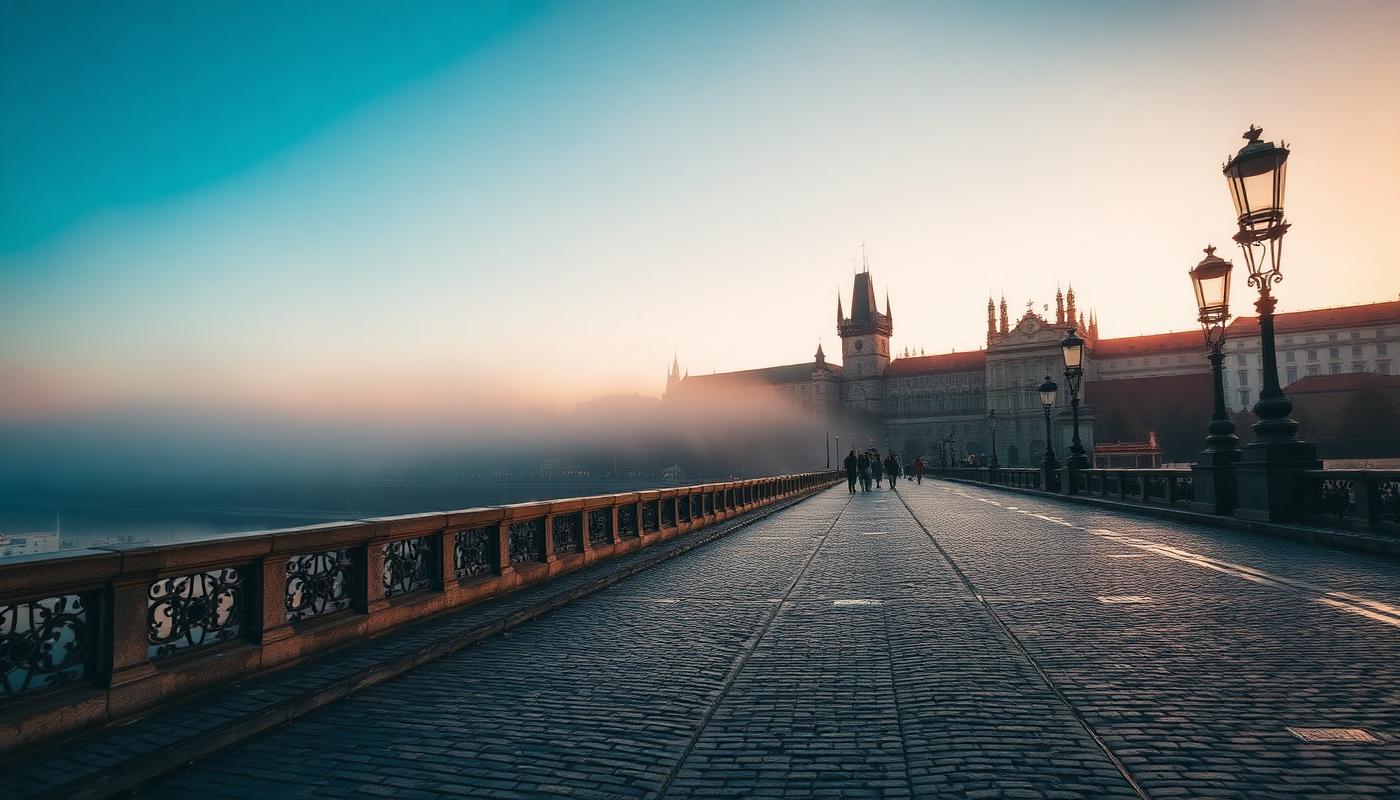
Prague is a city that rewards early risers and punishes people who try to do everything. One day is genuinely workable here, but only if you treat the historic core as a single walking loop instead of a checklist of attractions spread across the map. This route keeps you inside roughly four square kilometres and gives you two long breaks, because a day without breaks is a day you will not remember fondly.
The plan below assumes you start near the Old Town, walk west across the river, climb slowly, and come back down in the evening. It is roughly nine kilometres of walking with a lot of standing still.
7:00 - Charles Bridge before the crowd
Start at the bridge. Not because it is the most impressive thing in Prague, but because it is the one place that is completely different at 7:00 than at 11:00. At dawn you get statues, mist and maybe a dozen other people. By late morning you get a slow-moving queue of shoulders.
Walk the bridge twice, once in each direction. It takes ten minutes and it is the cheapest good decision of the day.
8:00 - Old Town Square and the astronomical clock
Head back east into the Old Town. The astronomical clock performs on the hour, and honestly the show itself is short and a bit underwhelming, which is a normal reaction that nobody admits in guidebooks. The square around it is the real attraction: Tyn Church, the pastel facades, the small streets running off in every direction.
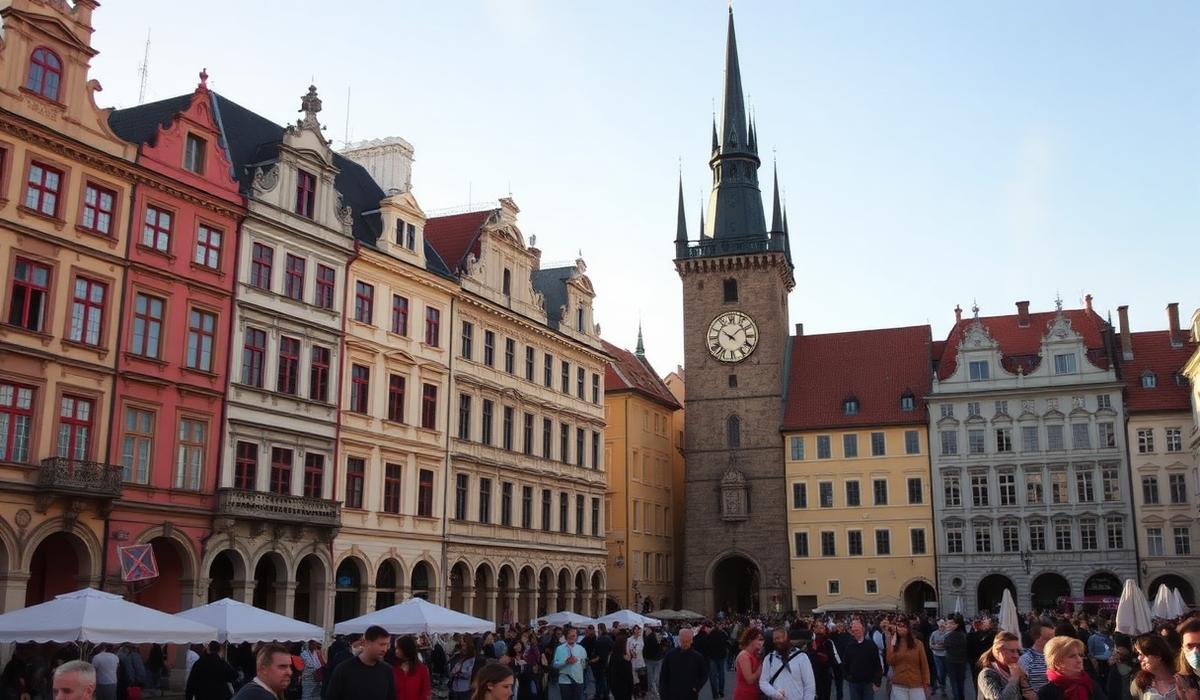
If you want breakfast, avoid the cafes directly on the square. Walk two streets in any direction and the price drops by a third while the coffee gets better.
9:30 - The Jewish Quarter
Josefov is compact and heavy. The Old Jewish Cemetery and the synagogues can be visited on a single combined ticket, and it takes about ninety minutes if you read the exhibits properly. If you are short on time, the exterior walk through Maiselova and Parizska still gives you the shape of the quarter.
11:30 - Cross the river towards Mala Strana
Recross the bridge and enter Mala Strana, the Lesser Town. This is where Prague stops being a postcard and starts feeling like a place people live in. Narrow lanes, small squares, the Church of St Nicholas with a baroque interior that is genuinely worth the entry fee.
Have lunch here rather than in the Old Town. Sit down for a full hour. You will need the rest before the climb.
13:30 - Prague Castle, slowly
The castle complex is not a single building, it is a small district with a cathedral in the middle. You can walk the grounds for free. The paid circuit covers St Vitus Cathedral, the Old Royal Palace, St George's Basilica and Golden Lane.
- Buy the timed ticket online the night before if you are travelling in summer.
- Security screening at the entrance adds ten to twenty minutes.
- St Vitus is the one interior that is genuinely unmissable.
- Golden Lane is charming but small, and it closes earlier than the rest.
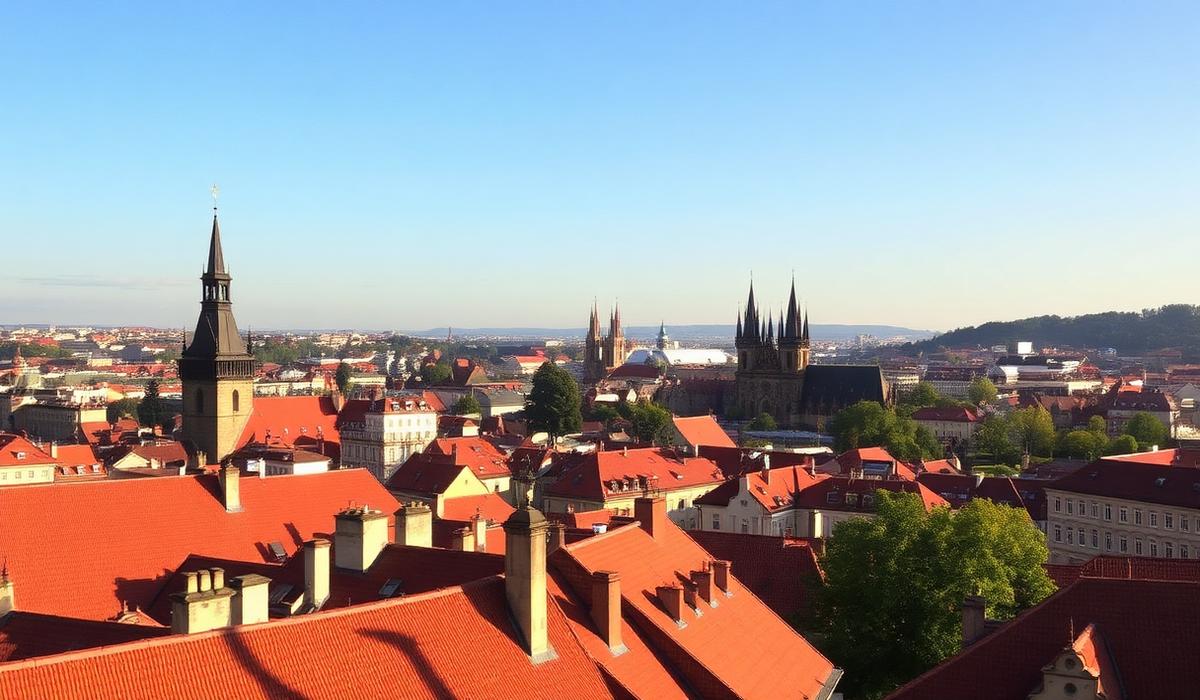
16:00 - Petrin or the terraces
From the castle you have two options. Walk south along the hill towards Petrin gardens for the long view over the city, or descend gently through the Nerudova street terraces and take the pressure off your knees. Both are good. The gardens are better in spring, the terraces are better when it is cold.
18:00 - Back down for dinner
Come down towards the river and eat in Mala Strana or across in the New Town. Prague dinner culture starts early, and by 20:00 the good places are full. Book if you have anywhere specific in mind.
20:30 - The last loop
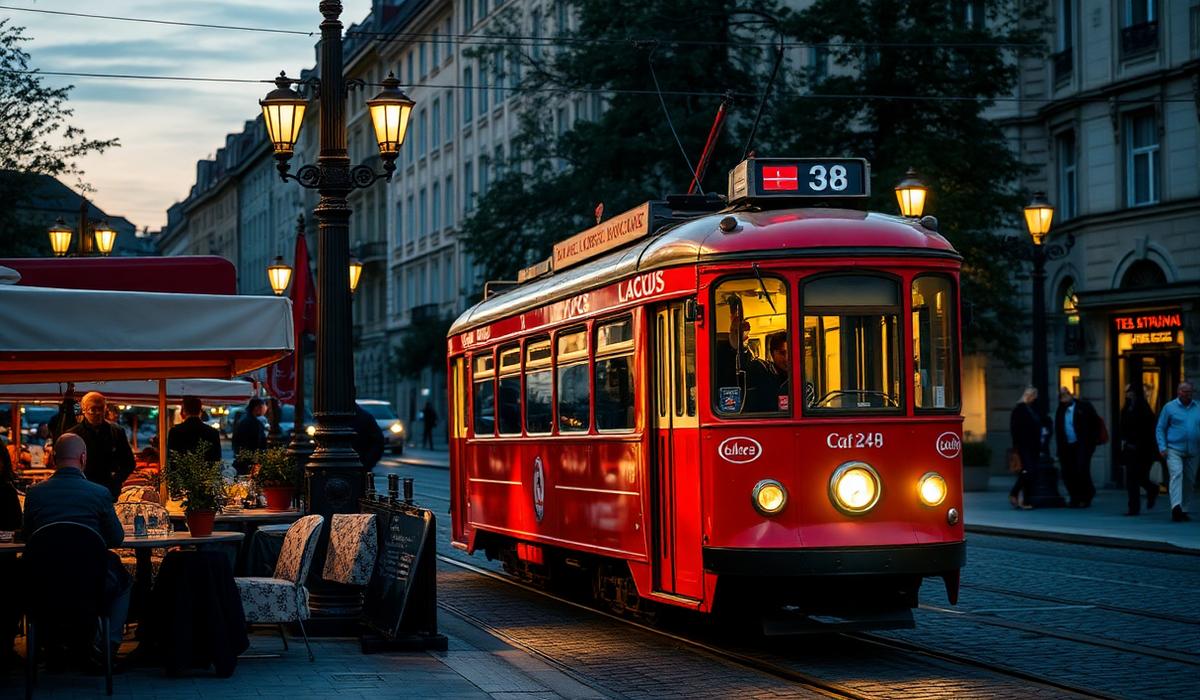
Finish where you started. Charles Bridge at night, lit, with the castle glowing above it, is the image most people take home. Then stop. Do not add one more thing. A one day itinerary works because it ends cleanly.
Practical notes
- Currency: Czech koruna, not euro. Card payment works nearly everywhere, but keep a small amount of cash for toilets and small bakeries.
- Exchange booths: avoid the ones in the tourist core advertising zero commission. Use a bank or an ATM from a known bank.
- Shoes: cobblestones for nine kilometres. This is not the day for new shoes.
- Tickets: if you take a tram, validate the paper ticket in the machine on board. Inspectors do check and the fine is unpleasent.
- Luggage: most main stations have lockers if you are arriving and leaving the same day.
If you have rain
Swap the Petrin section for the Municipal House, the Museum of Decorative Arts or a long coffee somewhere with windows. Prague in rain is still good, it just needs more indoor anchors in the middle of the day.
A fuller rain plan
If the forecast looks genuinely wet rather than just grey, it is worth building a whole alternate afternoon rather than one substitution. Start indoors at the Museum of Decorative Arts opposite the Rudolfinum, which rarely has a queue and gives you an hour of glass, furniture and jewellery in a beautiful building. From there the Municipal House, a full Art Nouveau interior with guided tours roughly on the hour, fills a second slot nicely, and its cafe is one of the few grand ones in Prague that is actually worth the price.
For the afternoon, the National Gallery's collection at the Sternberg Palace near the castle works well because it sits right on your existing route, so you are not backtracking across the city in the rain. If you would rather stay lower down, the Museum of Communism, a little kitsch but genuinely informative, is a reasonable hour near Wenceslas Square. None of these require advance booking outside of a busy weekend, though checking opening hours the night before is sensible since several close on Mondays.
Getting around when your feet give out
The route above is designed to be walkable, but Prague's public transport is good enough that you should not feel bad using it. Tram 22 is the one visitors end up on most often, since it runs from the National Theatre area up past the castle district and on to Strahov Monastery, saving a genuinely steep climb. It is also, by reputation, a favourite route for pickpockets precisely because tourists ride it tired and distracted, so keep bags zipped and in front of you.
The metro has three lines, A (green), B (yellow) and C (red), crossing at Muzeum and a couple of other central stations. For a single day you are usually better off with a 24 hour ticket, which at the time of writing costs somewhere around 130 koruna and covers trams, metro and buses without you needing to think about it again. Buy it from a machine at any metro station or through the PID Lítačka app, and remember that paper tickets must be validated in the little yellow machines the moment you board, not before.
Where to stay, and the trade-offs
Staying in the Old Town puts you inside the loop this itinerary follows, which is convenient for an early start, but it is also the loudest and most expensive part of the city and the restaurants right around your hotel will mostly be tourist traps. Mala Strana is quieter and arguably prettier at night, with the same walking distance to the bridge, though hotel choice there is smaller and prices are not much lower.
Vinohrady, a ten to fifteen minute tram ride from the centre, is where a lot of Praguers actually live and eat, and it usually offers better value for a similar standard of room. The trade-off is that you lose the ability to duck back to your hotel mid-afternoon, which matters less on a one day trip than a longer stay. Zizkov is cheaper again and has a genuine local, slightly rough character, but it is a longer tram ride from the sights and better suited to a second or third visit than a first.
Realistic costs in koruna
- Coffee and a pastry away from the main square: roughly 90 to 140 CZK.
- Sit-down lunch with a drink: roughly 250 to 400 CZK per person.
- Prague Castle paid circuit ticket: roughly 250 to 350 CZK depending on the route chosen.
- Combined Jewish Quarter ticket: roughly 350 to 500 CZK.
- 24 hour public transport ticket: roughly 130 CZK.
- Sit-down dinner with a beer, in Mala Strana rather than the square: roughly 350 to 600 CZK per person.
These figures move around with the season and the koruna's exchange rate, so treat them as a rough shape of the day rather than a fixed number, and confirm current prices before you travel.
Common mistakes worth avoiding
- Changing money at the "0% commission" booths clustered around Wenceslas Square and the Old Town. The commission is usually baked into a terrible exchange rate instead. A bank branch or a well reviewed ATM from a recognised Czech bank is almost always better.
- Standing at the front of the astronomical clock crowd for the full hourly show. The performance itself lasts under a minute and the view is better from slightly back and to the side, where you can also see Tyn Church over the crowd's heads.
- Eating on the Old Town Square itself. The kitchens are built for turnover, not quality, and the same dish two streets away is usually both cheaper and better.
- Skipping the security queue time at Prague Castle. Even with a timed ticket, the screening line can add fifteen or twenty minutes in high season, and it is easy to plan a day that leaves no room for it.
- Assuming every restaurant takes cards. Most do now, but small bakeries, public toilets and some market stalls still expect coins, so keep a little cash on you.
Accessibility notes
Prague's historic core is not an easy city for wheelchair users or anyone with limited mobility, and it is worth setting expectations honestly rather than discovering the problem at the Charles Bridge cobbles. Much of the Old Town and the bridge itself is uneven historic paving, and Mala Strana's lanes slope steeply in places. Prague Castle has step-free routes between its main courtyards, and St Vitus Cathedral has a level entrance, but Golden Lane's houses are small and not step-free. The tram network is the most practical accessible option for covering longer distances, since newer low-floor trams run on most central lines, though not every stop has a raised platform to match, so check the specific line before relying on it for a wheelchair. The metro has lifts at the majority of central stations, including Muzeum and Mustek, but a handful of older ones do not.
What I would skip
The Museum of Communism's location changed a few years ago and it is now a smaller, more commercial operation than the version some guidebooks still describe, so treat it as a curiosity rather than a must-see, and do not build a wet-weather afternoon around it alone. I would also skip the paid viewing platforms sold near the astronomical clock promising a better photo angle. The view from the Old Town Hall tower itself, a short separate ticket, is the one actually worth paying for, and it looks down on the square and the clock crowd rather than at them from the side. Finally, skip queuing for the funicular up Petrin Hill in the middle of a sunny afternoon in high season. The walking path up through the orchards takes about twenty five minutes and is a genuinely pleasant climb rather than a chore.
Frequently asked questions
Related articles
Keep reading across the network
Rules Station · 11 min read
Carry-on Rules Explained
Cabin bag sizes, liquid limits, electronics, restricted items and the gate checks that catch travellers out.

Change Station · 10 min read
How to Change Your Flight Date
A step by step process for moving a flight to a different date, what fare difference means, and when a change is worse than a new ticket.