
What To Do When Your Flight Is Cancelled
The first ten minutes matter most. A practical order of actions for rebooking, refunds, hotels and compensation after a cancellation.
12 min read · Updated June 2025
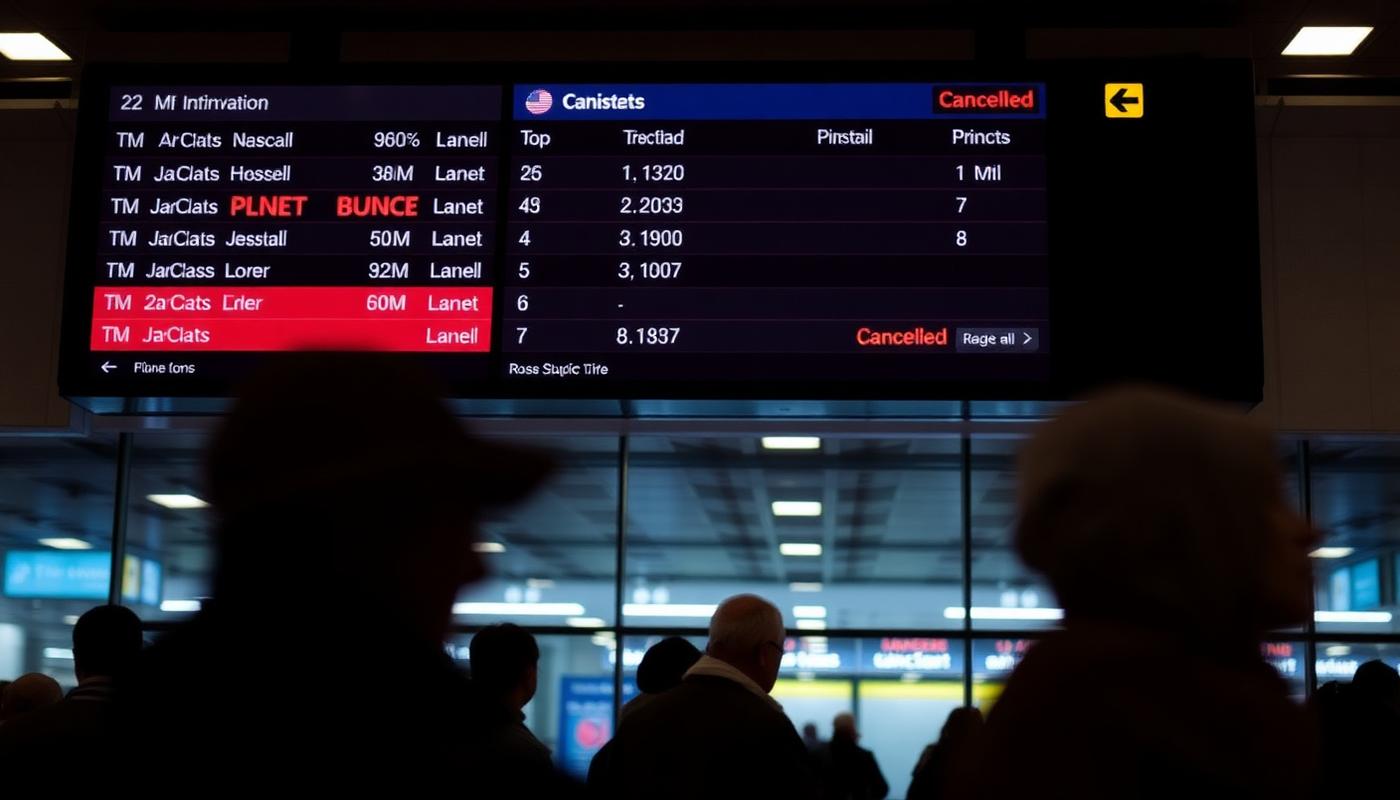
A cancellation is a race. Every passenger on your aircraft is now competing for the same limited number of seats on later flights, and the people who act in the first ten minutes end up on tonight's departure while everyone else ends up on tomorrow's.
This is the order that works.
Minute 0 to 2: Start two processes at once
Do not just walk to the desk, and do not just sit with your phone. Do both. Start walking towards the service counter while you open the airline app. Many airlines push a "rebook yourself" option within a minute of the cancellation, and it is often the fastest route to a seat.
Minute 2 to 5: Know what you are asking for
Before you reach an agent, decide what a good outcome looks like. Vague requests get vague answers. Specific ones get seats.
- Check which other flights exist tonight, including other airports in the same city.
- Check partner airlines. Alliance partners can usually be endorsed onto.
- Know your realistic latest useful arrival time.
- Decide whether you would accept an early morning departure with a hotel tonight.
Then ask for it directly: "Can you endorse me onto the 21:40 with your partner, or put me on the 06:15 tomorrow with a hotel." That sentence saves ten minutes of back and forth.
Minute 5 to 15: Use every channel
The desk queue is one channel out of four. Work them in parallel.
- The app self-service rebooking.
- The airline phone line, including the number for another country where the call centre may be quieter.
- Social media direct messages, which some carriers staff well.
- The physical desk, plus transfer desks and lounges if you have access.
Rebooking versus refund
In most regulated markets you have a choice between a replacement flight at the earliest opportunity and a refund of the unused part of the ticket. Understand the trade-off before you pick.
- Take the rebooking when you still need to make the trip and the alternative arrives in a useful window.
- Take the refund when the trip no longer makes sense, or when a different airline can get you there and you are willing to pay for that separately.
Once you accept a rebooking, the refund route usually closes. Do not accept anything on autopilot.
Care while you wait
Duty of care is separate from compensation, and it applies far more often. Depending on the region and the delay length, an airline may owe you meals, refreshments, communication and accommodation with transfer, even when the cancellation was caused by weather.
If staff cannot arrange it in the moment, arrange it yourself at a reasonable standard and keep the receipts. A reasonable airport hotel is reimbursable. A suite is a conversation you will lose.
Compensation, honestly
Fixed cash compensation is region specific. Under EU 261, cancellations with less than fourteen days notice that are inside the airline's control can trigger payments in three bands based on distance. The UK operates a near identical scheme. In the United States there is no federal cash compensation for delays, though refunds for cancelled flights are required and several carriers publish their own commitments.
Extraordinary circumstances such as severe weather, security events or air traffic control restrictions remove the compensation obligation, but they do not remove the duty of care and they do not remove your right to a refund.
If your bag was already checked in
Ask immediately whether your bag stays in the system for the rebooked flight or is being returned to the arrivals hall. Bags that travel separately from passengers after a cancellation are one of the most common causes of a three day baggage delay.
Documentation checklist
- Screenshot of the cancellation notice with the time it appeared.
- Boarding passes and booking reference.
- The reason given by the airline, in writing if possible.
- All receipts: hotel, transport, meals, replacement ticket.
- Names or desk numbers of the staff who assisted you.
The next day
File the claim in writing through the airline's official form rather than by phone. Keep it short, factual and attach the documents. If the airline rejects a valid claim, most regions have a national enforcement body or an alternative dispute resolution scheme, and those work better than a second angry email.
Prevention for next time
- Book the first departure of the day where possible. It cancels least.
- Prefer through-tickets over separate tickets on connections.
- Leave at least a three hour buffer on international connections.
- Keep one change of clothes and medication in your cabin bag.
- Know your airline's app well enough to rebook on it without reading anything.
An hour by hour timeline
It helps to know roughly what the next few hours look like, because a cancellation feels chaotic mostly when you do not know what stage you are at.
- Hour 0: the cancellation is announced. Rebooking options in the app usually appear within minutes, sometimes before the gate staff themselves have full details.
- Hour 0 to 1: the desk queue and the phone lines are at their worst, since everyone from the flight is trying the same channels at once. This is the window for working the app and social media in parallel.
- Hour 1 to 3: the airline typically starts confirming hotel and meal arrangements for anyone needing an overnight stay, if the cancellation qualifies under local rules.
- Hour 3 to 12: this is usually when a genuinely improved rebooking option, on a partner airline or a later flight with a seat that has just opened up, tends to surface. Keep checking, do not just accept the first offer and stop looking.
- The next day: paperwork. File any compensation or refund claim in writing once you are no longer trying to also solve the travel problem.
US refund rules versus EU 261 bands
These two systems are often confused and they work quite differently. In the United States, the Department of Transportation requires airlines to provide a refund to the original form of payment when a flight is cancelled or significantly changed and the passenger chooses not to accept the replacement, regardless of the cause, including weather. There is no separate federal cash compensation scheme for the inconvenience itself, though a handful of airlines have voluntarily published their own care commitments.
Under EU 261, which also covers flights departing the EU on any airline and flights arriving in the EU on an EU based airline, cancellations announced with less than fourteen days notice and caused by something within the airline's control can trigger fixed compensation in three bands, roughly correlated with flight distance, commonly cited as figures around 250, 400 and 600 euros. The UK runs a near identical scheme domestically. Extraordinary circumstances, such as severe weather or air traffic control action, remove the compensation obligation under both frameworks but do not remove the right to a refund or to care while you wait. Confirm the current banding and thresholds before filing, since the exact figures are occasionally reviewed.
Duty of care thresholds
Duty of care, meaning meals, communication and accommodation while you wait, is generally triggered by delay length rather than by who caused the disruption, which is why it applies far more broadly than cash compensation does. Typical thresholds under EU rules start at a few hours' delay for meals and refreshments, and an overnight stay usually brings in hotel and transfer obligations regardless of the cause. In the United States there is no equivalent legal requirement, so what you get depends entirely on the individual airline's own customer commitment, which varies a great deal between carriers.
Rebooking yourself while you queue
Most major airline apps now let you rebook directly onto another of their own flights within seconds of a cancellation being confirmed, sometimes before an agent has even reached your case in the queue. It is worth opening the app the moment you see the cancellation notice and checking the self-service option before you decide whether the desk is even necessary. If the self-service tool only shows a poor option, staying in the queue to ask a human about partner airlines or an earlier connection through a different airport is still worthwhile, since agents can often see availability the app does not display.
Interline and partner rerouting
Interline agreements let one airline issue you a ticket on another airline's flight, which matters enormously during a large scale disruption when your own airline's next available seat might be two days away. Alliance partners, such as those within Star Alliance, Oneworld or SkyTeam, are the most commonly used option, but many airlines also hold standalone interline agreements outside their alliance. Ask specifically whether the agent can endorse your ticket onto a partner or interline flight, since this is not always offered automatically and depends partly on the fare rules of your original ticket.
Documenting hotel and meal reimbursement properly
If you are arranging your own hotel or meals because the airline cannot do it in the moment, keep the standard reasonable rather than generous, since claims for anything perceived as excessive are the ones airlines push back on. Photograph or scan every receipt at the time, not later from memory, and note the time and the name of any staff member who told you to arrange things yourself. When filing afterwards, attach the receipts directly to the written claim rather than only mentioning that you have them, since claims with documentation attached are processed faster.
A worked example at a hub
Picture a cancelled evening flight from a major European hub such as Frankfurt or Amsterdam, caused by an airline crew scheduling issue rather than weather, announced two hours before departure. Under EU 261 this is likely within the airline's control, so both compensation and duty of care are probably in play. In the first few minutes, a passenger who opens the app finds a self-service rebooking onto the same airline the next morning, but also asks a desk agent about a partner flight departing that same night through a different hub. If the partner option exists and lands at a reasonable hour, taking it and skipping the overnight avoids the need for a hotel altogether. If it does not, accepting the hotel and meal voucher the airline offers, keeping every receipt, and filing the compensation claim the next day in writing is the standard path. Passengers who only queue at the desk and do not check the app in parallel typically end up a flight or two behind those who worked both at once.
Comparing your three main options
| Option | Best when | Watch out for |
|---|---|---|
| Accept the rebooking | A same-day or next-morning flight exists and the trip timing still works | Once accepted, the refund route usually closes |
| Take a refund | The airline's next seat is days away or the trip no longer makes sense | You lose any residual credit value some fares would otherwise offer |
| Buy a new ticket yourself | Time-critical trip and nothing reasonable on offer within your window | Reimbursement is not guaranteed, keep every receipt and confirm terms first |
Common mistakes after a cancellation
- Waiting in the desk queue without also checking the app, when both channels working in parallel is almost always faster.
- Accepting the first rebooking offered without asking about alliance or interline partners.
- Arranging a hotel or meals without asking first whether the airline will cover it directly.
- Assuming a separate onward ticket is protected by the cancelled flight's airline, when it almost never is.
- Filing a compensation claim by phone instead of in writing, which leaves no clear paper trail if it is disputed.
Exact wording for the desk or the app chat
Try something specific rather than open-ended: "My flight [number] was cancelled. Can you check tonight's options including partner airlines, and confirm whether a hotel is included if there's nothing until tomorrow." If the offered routing is poor: "Is there a comparable option through a different hub on a partner airline, even if it means a later or earlier arrival than this one." When filing a written claim afterward: "I am requesting compensation and reimbursement of receipts attached for flight [number], cancelled on [date], booking reference [code]. Please confirm receipt and expected response time."
Edge cases: codeshares, separate tickets and terminal changes
On a codeshare cancellation, for example a flight sold as a Delta number but operated by an Air France aircraft out of CDG, the operating carrier's desk is usually the one that can actually rebook you, even if your confirmation email shows the other airline's branding. If a Delta agent cannot find the cancellation in their system, ask them to search the Air France flight number directly. Separate tickets remain the biggest risk in any cancellation: if your cancelled flight was meant to connect to an unrelated, separately booked onward ticket, the airline that cancelled has no obligation toward that second booking at all, so you need to handle rebooking or a refund on it entirely on your own. And if the rebooking you are offered introduces a terminal change you did not originally have, for example a revised itinerary connecting through a different terminal at Dubai or Atlanta, check the new connection time before accepting, since a cancellation-driven reroute can quietly create a tighter transfer than your original booking ever had.
Frequently asked questions
Related articles
Keep reading across the network

Change Station · 10 min read
How to Change Your Flight Date
A step by step process for moving a flight to a different date, what fare difference means, and when a change is worse than a new ticket.
Rules Station · 11 min read
Carry-on Rules Explained
Cabin bag sizes, liquid limits, electronics, restricted items and the gate checks that catch travellers out.