
Emergency Travel Rebooking
A decision tree and checklist for rebooking travel in an emergency, covering rebooking channels ranked by speed, partner airline endorsements, and when to buy your own ticket.
13 min read · Updated March 2025

Emergency rebooking is a different exercise from an ordinary delay or cancellation, because the usual patience of "wait for the next available flight" often is not good enough. Whether the emergency is personal, such as a family medical situation or a funeral, or purely logistical, such as a cancelled flight the night before an event you cannot miss, the goal is the same: find the fastest realistic path to your destination while keeping the paperwork trail intact for a refund or reimbursement claim afterward. This guide works through the decision points in roughly the order you should hit them.
Step one: rank your rebooking channels by speed
Not all rebooking channels move at the same speed, and during a large disruption the gap between the fastest and slowest channel can be hours. Generally, the airline's own app or website self-service tool is fastest, since it is not limited by staffing and often shows you real seat availability instantly. Airport kiosks and transfer desks, if you are already at the airport, come next, particularly desks that specialize in rebooking rather than general check-in. Social media customer service accounts on platforms like X have become surprisingly effective for some airlines during a mass disruption, since public complaints tend to get prioritized. Phone lines are usually the slowest option during a large scale disruption, because call volume spikes exactly when everyone affected by the same event calls in at once. If you must call, doing so from a country's local number for that airline, rather than a hotline in the country you booked from, can sometimes reach a shorter queue.

Step two: check for partner airline endorsements
If your airline's own next available flight is a day or more away, ask specifically whether they can endorse your ticket to a partner airline, meaning they transfer the value of your unused ticket so you can fly on a different carrier sooner. This is common within alliances such as Star Alliance, Oneworld and SkyTeam, and also happens through informal interline agreements between airlines that are not in the same alliance but have historical partnerships. Endorsement is not something you can usually arrange yourself online, it typically needs a phone call or a desk agent to process, and not every fare type qualifies, particularly heavily discounted basic economy tickets. Still, it costs nothing to ask, and during a weather event or system-wide outage affecting one airline, a same-day seat on a completely different carrier can be the difference between making an event on time and missing it entirely.
Step three: weigh buying your own ticket
Sometimes the fastest and most reliable option is simply to buy a new ticket outright on whichever airline has the soonest available seat, treating the original disrupted ticket as a separate matter to resolve later through a refund claim. This makes the most sense when the trip is genuinely time-critical, such as reaching a family member in hospital or attending a funeral, and less sense for a routine trip where a delay of a day is inconvenient but not urgent. If you go this route, keep the original booking confirmation, any cancellation notice from the airline, and the receipt for the new ticket together, since most refund and travel insurance claims for this scenario require documentation showing the original flight was disrupted through no fault of your own.
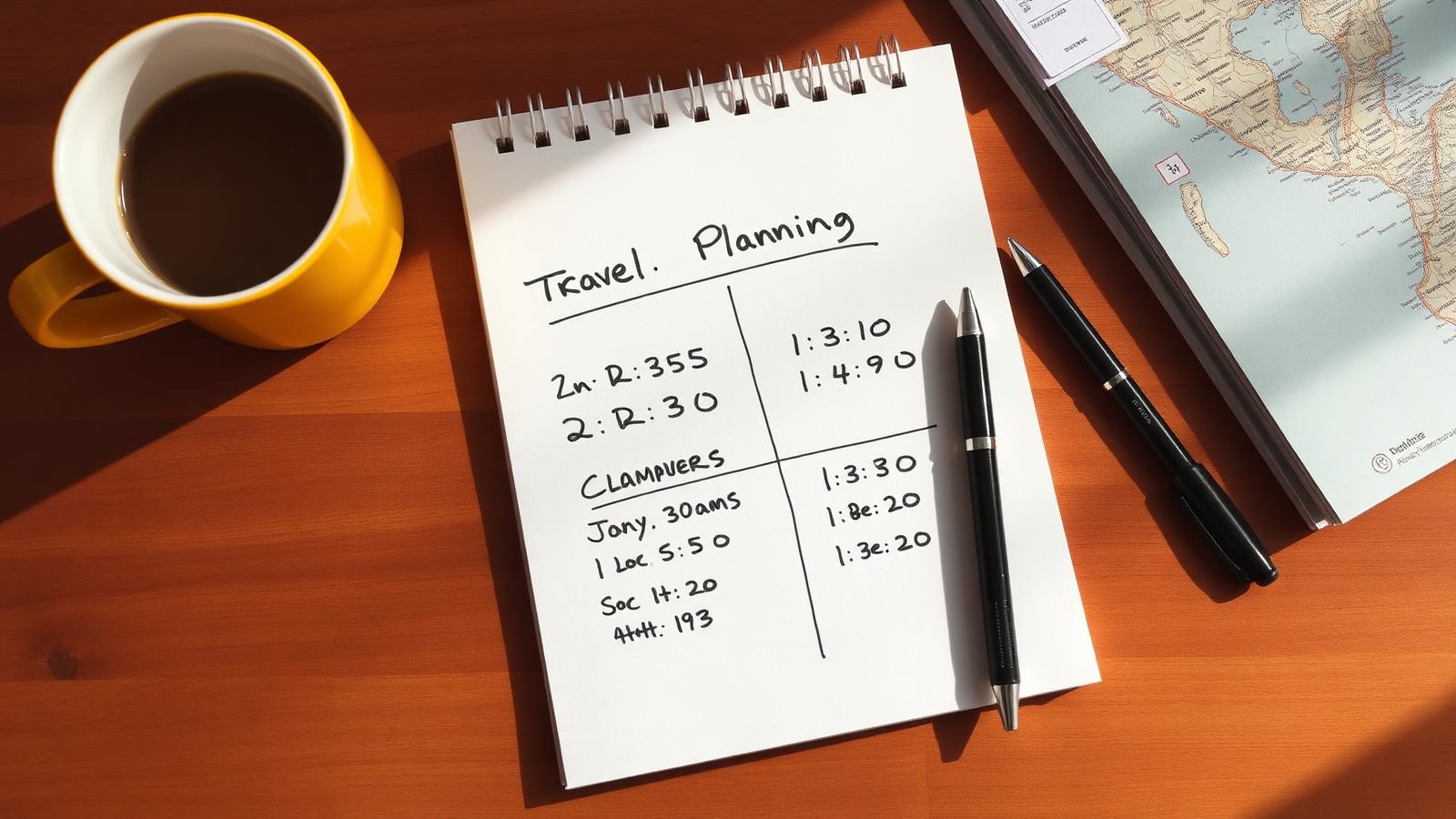
Decision tree: how to think through it quickly
- Is a self-service rebooking option available in the app right now, on your own airline, within a few hours of your original time? If yes, take it and move on.
- If not, is there a partner airline with a seat today? Ask directly about an endorsement rather than assuming it is not possible.
- If no partner option exists quickly, is there a ground alternative, rail or a long drive, that would get you there faster and more reliably than waiting? For regional trips this is often the case.
- If none of the above works within your window, is the situation urgent enough to justify buying a full price ticket on any available airline and sorting reimbursement later?
- If the trip is not truly time-critical, is it simpler and cheaper to accept a later rebooked flight and a hotel voucher for the overnight wait?
Overnight decisions: hotel or push through
If rebooking pushes your departure to the next morning, decide early whether to accept an airline-provided hotel, book your own, or attempt to push through with a red-eye or an overnight ground option instead. Airline-provided hotels during a mass disruption event can be basic and heavily booked, sometimes requiring a long shuttle ride from the airport, so if speed and comfort matter more than cost, booking your own hotel closer to the airport and claiming the receipt back afterward, where your fare rules or travel insurance support it, is often a smoother night than joining a long voucher queue with a hundred other stranded passengers.

Rail and rental car alternatives worth considering
In regions with strong rail infrastructure, a train can beat waiting out an airline disruption entirely. Eurostar between London, Paris and Brussels is a realistic substitute for a short-haul flight during a European disruption, and Amtrak's Acela along the US northeast corridor between Boston, New York and Washington DC covers a similar role domestically. A rental car makes sense for medium distances, roughly under four or five hours of driving, particularly if you are traveling with others who can share the driving and the cost. None of these options suit every emergency, especially long-haul international trips where rail and driving are not realistic substitutes, but for the specific case of a regional emergency where timing matters more than ticket cost, it is worth checking rail and car options side by side with the airline's rebooked flight time before committing.
Emergency checklist
- Try the app first, then a desk, then the phone, roughly in that order of speed.
- Ask explicitly about partner airline endorsements rather than waiting to be offered one.
- Keep every receipt, boarding pass and cancellation notice together in one place, ideally photographed.
- Compare rail or driving time against the airline's next available seat before assuming flying is fastest.
- Ask about bereavement or emergency fare policies directly if the situation qualifies.
- Decide early whether an overnight hotel should be airline-provided or self-booked and claimed back.
A triage table for your options
It helps to sort the situation into one of three buckets before doing anything else, since the right next step differs a lot depending on which bucket you are in.
- Same day still achievable: a self-service rebooking, a partner endorsement, or a same-day new ticket can still get you there on schedule. Move fast and keep documentation as you go.
- Next day realistic: the destination event or obligation can absorb a delay of several hours to a day. Compare an airline-provided hotel against booking your own, and weigh rail or driving alternatives if the distance is regional.
- Trip effectively abandoned: the window has closed, or the cost and complexity of continuing outweighs the purpose of the trip. At this point the priority shifts entirely to documentation for a refund or insurance claim rather than further rebooking effort.
Buying your own replacement ticket, and when reimbursement is realistic
Buying a fresh ticket on any airline with a same-day seat is sometimes the fastest path through a genuine emergency, but it is worth being honest with yourself about when reimbursement is actually likely. Airlines and travel insurers are generally more sympathetic to this approach when the original flight was cancelled or the airline caused a lengthy delay, and less sympathetic when you simply chose to buy a new ticket because you did not want to wait for a routine rebooking. Keep the disruption notice from the original airline, the boarding pass or booking reference for the flight you did not take, and the receipt for the replacement ticket together as one package, since a claim missing any one of those three pieces is much harder to process. Travel insurance policies with a trip interruption or delay benefit are often more reliable for this kind of reimbursement than trying to claim directly from the disrupting airline, since the airline's own liability for a replacement ticket purchased independently is not always clear cut.
Partner and interline rerouting in more detail
Beyond a simple endorsement, some airlines have interline agreements that allow a ticket to be reissued onto a completely different carrier's flight even without a formal alliance relationship, particularly for irregular operations affecting a whole day of departures. This is worth asking about explicitly, since desk agents do not always volunteer it, and it depends heavily on the specific fare and ticketing agreements in place between the two airlines involved. Basic economy and some heavily discounted fare types are commonly excluded from this kind of rerouting, so if you are travelling on the cheapest available fare class it is worth asking early rather than assuming the option exists.
Using rail as a genuine substitute
In parts of Europe and along the northeast corridor of the United States, rail is often a more reliable emergency substitute than waiting for a rebooked flight, not just a slower backup option. Eurostar links London, Paris, Brussels and Amsterdam with city centre to city centre journeys that can beat a short-haul flight once airport transfer and security time are factored in, and Amtrak's Acela and regional services along the Boston to Washington corridor cover a similar role domestically. These options work best for medium distances measured in a few hours rather than long-haul international legs, where there is genuinely no rail substitute, but for the specific case of a regional emergency it is worth checking a rail booking site alongside the airline's own rebooking screen before assuming flying is the only path forward.
Phone line strategy, including calling abroad
If you do end up needing to call an airline during a mass disruption, a few small choices affect how long you wait. Calling a country-specific number for the airline, rather than the general international line for the country you booked from, sometimes reaches a shorter queue, since call volume is not evenly distributed across an airline's various regional numbers. Having your booking reference, passport details, and a clear one sentence summary of what you need ready before the call connects saves time once an agent picks up. If the wait is long, some airlines offer a callback option rather than holding the line, which is worth taking if your situation is not so urgent that every minute matters, since it frees you to keep checking the app for a self-service option in the meantime.
A worked example
Say a connecting flight through Amsterdam is cancelled the evening before a family event in Brussels. The app shows the next available seat on the same airline is not until the following evening. A quick check shows a Eurostar or Thalys service could get you into Brussels within a few hours by rail instead, at a fraction of the cost and hassle of chasing a rebooked flight. In this scenario, buying the rail ticket directly, keeping the airline's cancellation notice as documentation, and filing a delay or disruption claim afterward for the unused flight segment is usually a cleaner outcome than waiting at the airport for a next-day seat that may itself be at risk of further disruption.
Once the immediate crisis is resolved and you are safely rebooked, it is worth reading the refund versus credit decision guide on the Change Station to work out what you are owed for the original disrupted ticket. If the emergency also involved a same-city airport swap, the article on airport change explained covers ground transport comparisons in more detail, and the flight delay survival guide is useful background if the disruption started as a simple delay before escalating. And if travel document questions come up during a rushed rebooking onto an international routing you had not planned for, the Rules Station has quick guides on passport validity and visa basics worth checking before you commit to a new itinerary under pressure.
Frequently asked questions
Related articles
Keep reading across the network

Fix Station · 12 min read
Airport Change Explained
What to do when an airline reroutes you to a different airport in the same city, from LGW instead of LHR to Haneda instead of Narita, including ground transport comparisons.
Fix Station · 14 min read
Flight Delay Survival Guide
How to handle a flight delay by length, from a 30 minute wait to an overnight cancellation, including duty of care, vouchers, and when it makes sense to rebook yourself.
Change Station · 13 min read
Refund or Credit: How to Decide
A decision tree for choosing between a refund and a travel credit, covering involuntary versus voluntary changes, chargebacks, insurance and timing.