
Missed Connection Recovery Guide
What to do in the first fifteen minutes after you miss a connecting flight, how protected itineraries work, and real transfer time examples from DFW, ATL, AMS and LHR.
13 min read · Updated March 2025

Missing a connecting flight feels like a personal failure even when it almost never is. Most missed connections trace back to a late inbound flight, a gate change buried in an app notification you did not see, or a transfer time that was always tighter than it looked on paper. The good news is that airlines deal with misconnections constantly, and there is a fairly predictable sequence of steps that gets most passengers rebooked within an hour or two. The bad news is that the sequence only works if you understand one distinction before you ever board the first flight: whether your itinerary is protected.
Through-tickets versus separate tickets
A through-ticket, sometimes called a single PNR or a connecting itinerary, is one booking that covers every flight segment to your final destination. It might be issued by one airline or by two airlines that codeshare or belong to the same alliance, such as Star Alliance, Oneworld or SkyTeam. The key point is that the airline has taken responsibility for the whole journey. If the first flight runs late and you miss the second, the airline generally has an obligation, or at least a strong operational habit, of rebooking you on the next available flight at no extra charge, and in many cases arranging meals or a hotel if the delay runs overnight.
A separate ticket arrangement is different and riskier. This is when you book two flights independently, often to save money, for example a long-haul flight into Amsterdam Schiphol on KLM followed by a separately purchased low cost flight onward that KLM has no knowledge of and no obligation toward. If the first flight is delayed and you miss the second, you are generally on your own for the cost of a new ticket. Travel agents sometimes call this self-connecting, and it can save real money on long trips, but it shifts nearly all the delay risk onto you. If you choose to self-connect, build in a long buffer, ideally three hours or more at a large international airport, and check whether your card or travel insurance covers missed connection costs before you rely on it.
The first fifteen minutes
The moment you realize you are going to miss your connection, whether that is while still in the air, on the jet bridge, or sprinting down a concourse, the clock that matters most is the one counting down to the next flight's boarding closure, not the one that already got away. A few things are worth doing immediately rather than waiting until you reach a desk.
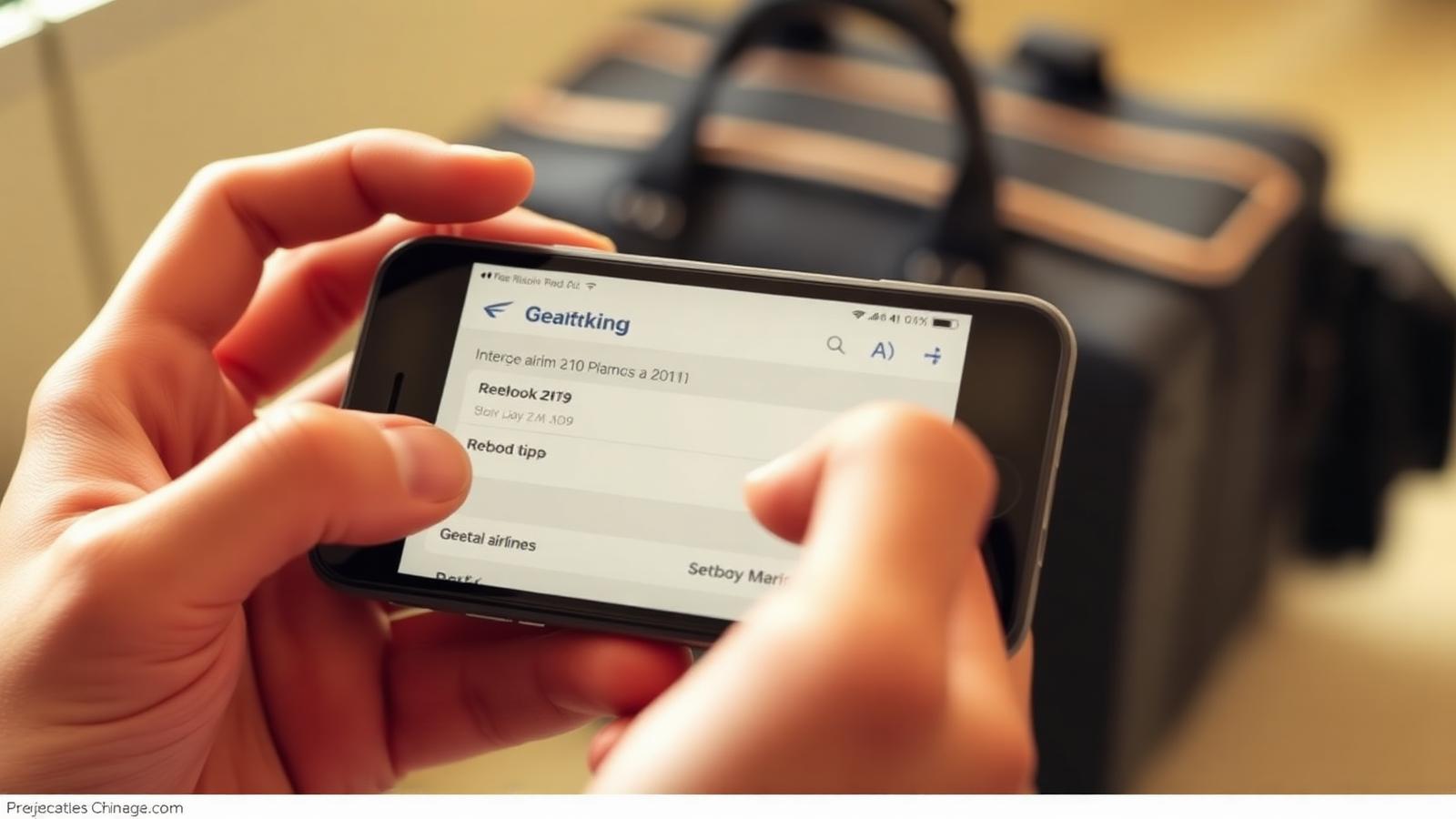
- Check the airline's app for automatic rebooking. Many carriers now push a new boarding pass to your phone the moment their system detects a broken connection, sometimes before you have even landed.
- If nothing appears automatically, head straight for a transfer desk or gate agent airside rather than joining a check-in line back outside security. Staff working transfers can usually see live seat availability on the next few departures and rebook you on the spot.
- Keep your original boarding passes and any delay notification. If you end up needing to claim expenses or compensation later, this paperwork matters more than memory.
- If the desk queue is long, call the airline at the same time, or use their app chat function. Whichever channel gets you an answer first wins, and there is no penalty for pursuing more than one at once.
Real transfer time examples
Minimum connection times published by airports are averages, and averages hide a lot of variation. At Dallas Fort Worth, American Airlines' primary hub, a same-terminal connection can be comfortable in under an hour, but a connection that requires the SkyLink train between terminals adds meaningful time, and a delay on the inbound taxi can eat that buffer fast. At Atlanta Hartsfield-Jackson, Delta's home hub, the airport is enormous but almost entirely walkable or served by an efficient underground train (the "PlaneTrain"), so published minimum connection times tend to be realistic in normal conditions but get squeezed badly during weather delays or when a flight arrives at a remote stand requiring a bus.
International hubs bring an extra layer: security or passport control between segments. At Amsterdam Schiphol, a well designed single-level layout keeps most KLM to KLM connections quick, but a connection that changes from a Schengen to a non-Schengen flight, or vice versa, may require an extra passport check that is easy to underestimate on a tight schedule. London Heathrow is the most demanding example commonly discussed by frequent flyers: a transfer from Terminal 5 to Terminal 2, which happens when connecting between British Airways and a Star Alliance partner such as United or Lufthansa, involves leaving one terminal building, taking a shuttle or the Heathrow Express connector, and re-clearing security. That transfer alone can take the better part of an hour before you even reach the new gate, so a scheduled connection under ninety minutes across those two terminals is genuinely tight even with no delays at all.

Protected but rebooked onto a worse routing
Even on a protected ticket, the flight the airline offers you after a misconnection is not always the ideal one. It might route through a different city, land at a less convenient airport, or simply be the next seat available the following morning. You are usually entitled to ask about alternatives, including flights on partner airlines within the same alliance, and it is worth explicitly asking whether a competing airline has a sooner departure that your ticket could be rebooked onto under an irregular operations agreement. Airlines will not always volunteer this option, but many have interline agreements that make it possible, particularly at hub airports where several carriers overlap.
If the offered rebooking involves an overnight stay, ask directly whether the airline will cover a hotel, meals and transport, rather than assuming you must arrange and pay for these yourself. Policies differ by airline, by region and by whether the original delay was within the airline's control (a mechanical issue, for example) versus outside it (extreme weather, an air traffic control ground stop, or an airport strike). As a general pattern, disruptions caused by the airline's own operation are more likely to come with hotel and meal support than those caused by weather or third-party air traffic control decisions, though this is a broad tendency rather than a guarantee, so always ask rather than assume.
When you should buy your own ticket instead of waiting
Occasionally the fastest fix is not to wait for the airline's rebooking queue at all. If you are on a separate-ticket self-connection with no protection, or if the airline's next available seat is two days away and the trip is time-critical, it can make sense to buy an entirely new ticket on a different airline and sort out a refund or expense claim for the missed segment afterward. This is a judgment call that depends on cost, urgency and whether your original fare, travel insurance or a corporate travel policy will reimburse the new purchase. Keep every receipt and boarding pass regardless of which route you take, because disputes over missed connections are resolved almost entirely on paperwork.
For background on the fare rules that determine whether a connection is genuinely protected, it helps to read up on connecting flight rules over on the Rules Station, which explains minimum connection times and how alliances define a "protected" itinerary in more detail. If your misconnection turns into a longer delay overnight, the flight delay survival guide covers what to expect hour by hour. And if the airline's answer is that no seats are available for days, it is worth reading about denied boarding and passenger rights, since some misconnection scenarios overlap with involuntary denied boarding rules, particularly in the European Union and the United Kingdom.

A short checklist for tight connections going forward
- Book connections of at least ninety minutes at large hub airports, and longer if a terminal change is involved.
- Favor single-ticket itineraries over self-connections whenever the price difference is small.
- Download the airline app and turn on notifications before you travel, not after a delay has already started.
- Note the minimum connection time for your specific airport pair rather than trusting a generic rule of thumb.
- If you change flights within the airline's system, ask about alliance partners before accepting the first offer.
What to actually say at the desk
Vague requests get vague answers, and a misconnection desk is one of the few places where the exact phrasing you use changes the outcome. Instead of "my flight was delayed and I missed my connection," try something closer to: "I'm on a through-ticket, booking reference [code], and I've missed my connection to [destination] because of the delay on [flight number]. Can you check the next available flight, including your partner airlines, and confirm whether a hotel is included if there's nothing tonight." That single sentence does three things at once: it establishes the ticket is protected, it asks about partners without waiting to be offered them, and it puts the hotel question on the table before the agent has finished typing. If the first agent says there is nothing until tomorrow, it is worth asking directly, "is there anything on a different alliance partner, even if it means a different arrival airport," since some staff only search their own airline's schedule unless prompted.
Comparing your recovery options
| Situation | Typical airline response | What you should ask for |
|---|---|---|
| Protected ticket, same airline delay | Automatic rebooking, often pushed to your app before you land | Confirm meal and hotel cover if the new flight is the next day |
| Protected ticket, alliance partner involved | Rebooking usually possible but sometimes needs a human agent to endorse it | Ask specifically for partner availability, not just the original carrier's next flight |
| Separate tickets, self-connection | No obligation from the second airline, delay compensation only from the first if applicable | Ask the first airline about delay compensation, then handle the second ticket yourself |
| Weather or air traffic control delay | Rebooking offered, but hotel and meal support is less consistent across carriers | Ask plainly whether a hotel is offered, rather than assuming it isn't |
Common mistakes people make after a misconnection
- Joining the general check-in line instead of a transfer desk or gate agent airside, which is almost always slower once you are already through security.
- Assuming a self-connection through, say, a separately booked low cost flight out of Milan Bergamo after a delayed long-haul into Milan Malpensa carries the same protections as a through-ticket. It does not, and the two airports are not even the same building.
- Accepting the very first rebooking offer without asking whether a sooner option exists on a partner airline, particularly at hub airports where three or four carriers might serve the same route.
- Throwing away boarding passes or delay notifications before a claim is settled. These are the only proof you have that the misconnection was not your fault.
- Booking a 45 minute connection through an unfamiliar airport layout, then being surprised that a terminal change or an extra passport check ate the whole buffer.
Edge cases worth knowing about
A codeshare flight, where a Lufthansa-operated flight is sold under a United flight number or vice versa, is usually still protected if it was issued as one ticket, but the airport agent handling your misconnection may work for the operating carrier rather than the marketing one, which occasionally causes confusion about who can actually rebook you. If an agent says they "can't see" your itinerary, ask them to search by the operating flight number rather than the one printed on your original boarding pass.
Separate tickets deserve one more mention here because they cause more disputes than any other scenario in this guide. If you booked a long-haul flight into Dubai on Emirates and a separate onward budget fare yourself, a delay into DXB that costs you the second flight is, in almost every case, entirely your own financial risk. Emirates has no knowledge of, and no obligation toward, a ticket it did not sell you. The only real defence against this is travel insurance with a self-connection or missed departure benefit, so check your policy wording before you rely on a tight self-connection to save money.
Terminal changes are the other recurring trap. Connecting between American Airlines and British Airways at Heathrow, or between a domestic and international flight at Chicago O'Hare, can mean a walk, a shuttle, or even a bus between buildings rather than a simple gate-to-gate stroll. If your inbound flight arrives late and you already know the connection involves a terminal change, tell the cabin crew as you land. Many crews will radio ahead so ground staff are already trying to hold the next flight or have a rebooking ready by the time you reach the gate, rather than you discovering the problem cold at the transfer desk.
A rough timeline of what happens next
- 0 to 15 minutes: the airline's system usually detects the broken connection and either auto-rebooks you or flags your record for a transfer desk agent to handle as you arrive.
- 15 minutes to 1 hour: you should have some form of new boarding pass, even if it is not the ideal routing. If you don't, this is the point to actively chase it through app, phone and desk in parallel rather than waiting quietly.
- 1 to 4 hours: if no same-day seat exists, hotel and meal arrangements, where applicable, are typically confirmed in this window. Ask plainly rather than waiting to be offered.
- 24 hours: if you're still waiting for a seat, ask whether an interline agreement with a different airline entirely could get you there sooner, since availability changes hour to hour.
None of this eliminates the possibility of a missed connection entirely, because weather, air traffic control and mechanical issues will always exist. But understanding whether your ticket is protected, moving quickly in the first fifteen minutes, and knowing which desks and channels actually move fastest turns a stressful afternoon into a manageable one. If you can also review Change Station for how to make same-day changes on your own before a connection even breaks, you will often catch a problem before it becomes a missed flight at all rather than dealing with the aftermath.
Frequently asked questions
Related articles
Keep reading across the network
Fix Station · 14 min read
Flight Delay Survival Guide
How to handle a flight delay by length, from a 30 minute wait to an overnight cancellation, including duty of care, vouchers, and when it makes sense to rebook yourself.
Fix Station · 13 min read
Denied Boarding and Passenger Rights, Explained
A question and answer guide to denied boarding, comparing how EU261, UK261, US DOT oversales rules and Canada's APPR generally work, plus how to negotiate a bump offer.
Rules Station · 13 min read
Connecting Flight Rules and Minimum Connection Times
How connections actually work across same airline, codeshare, and separate ticket bookings, with minimum connection times at LHR, AMS, FRA, CDG, ATL and DXB.