
Carry-On Limits, Airline by Airline
A quick-reference guide to cabin bag size and weight limits across major airlines, plus how to measure your own bag before you get to the airport.
11 min read · Updated March 2025
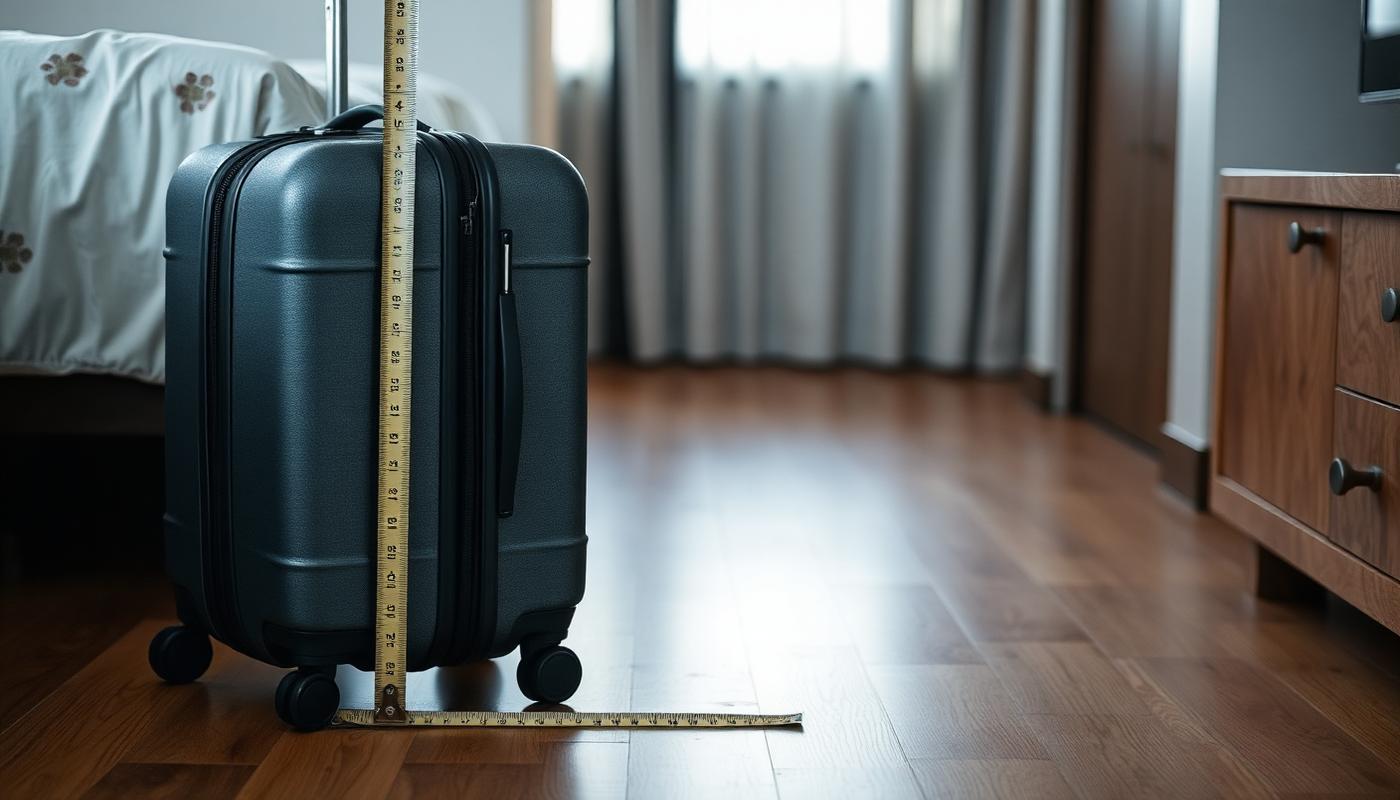
Carry-on allowances feel like they should be simple, and airlines have done a remarkably good job of making sure they are not. Every carrier publishes a size and weight limit, but the numbers move by a few centimetres or a couple of kilograms from one airline to the next, fare classes inside the same airline can carry different rules, and the gate sizer at the airport is the only opinion that actually counts on the day. This guide lays out where things generally stand, airline by airline, and then walks through how to measure your own bag properly so you are not guessing at the departure gate.
Treat every number below as a snapshot rather than a permanent fact. Airlines revise cabin bag policy fairly often, sometimes seasonally, sometimes as a quiet cost-cutting move, so always check the current fare rules for your specific ticket before you pack, particularly if you are flying a low cost carrier in Europe or a budget subsidiary elsewhere.
Why the numbers do not match across airlines
The International Air Transport Association, IATA, published a voluntary "Cabin OK" guideline some years back suggesting 55 x 35 x 20 cm as a size that should fit most narrow-body overhead bins. It was never adopted universally, and most full service airlines settled instead on something closer to 56 x 45 x 25 cm, measured including wheels and handles. Low cost carriers tend to run smaller, because a smaller stated limit means more bags get flagged for a paid upgrade or hold check at the gate, which is a meaningful revenue line for that business model.
Regional aircraft add another wrinkle. Smaller jets and turboprops, common on domestic United, American and Delta routes within the US, or short hops within Europe on aircraft like the Embraer E-jet family, often have noticeably smaller overhead bins than the mainline size limit assumes. On these routes it is common for gate agents to pre-tag standard sized roll-aboards for the hold before boarding even starts, usually at no charge, simply because the bin space will not stretch to cover everyone.
Quick-reference table: cabin bag limits by carrier
The figures below are broadly representative at time of writing for the main cabin bag, generally in addition to one small personal item such as a handbag, laptop bag or small backpack that fits under the seat in front. Weight limits, where stated, apply mostly outside North America; US carriers historically do not weigh cabin bags at check-in or the gate, though this is not a guarantee.
| Airline | Max dimensions (cm) | Max weight | Notes |
|---|---|---|---|
| American Airlines | 56 x 36 x 23 | No stated weight limit | Basic Economy usually allows a personal item only, no roll-aboard, on many routes |
| Delta Air Lines | 56 x 35 x 23 | No stated weight limit | Basic Economy generally still permits a full carry-on domestically, unlike American |
| United Airlines | 56 x 35 x 22 | No stated weight limit | Basic Economy on many domestic routes restricts to personal item only |
| British Airways | 56 x 45 x 25 | 23 kg on most fares | Two cabin bags allowed on most fares, including a larger personal item than many rivals |
| Lufthansa | 55 x 40 x 23 | 8 kg | Light fares may restrict to a smaller personal item only |
| Air France / KLM | 55 x 35 x 25 | 12 kg combined for one bag | Light fares often reduce this to a single small under-seat item |
| Qatar Airways | 50 x 37 x 25 | 7 kg in Economy | Weight limit is enforced fairly consistently at check-in desks |
| Emirates | 55 x 38 x 20 | 7 kg in Economy | Business and First allow larger bags and a higher weight allowance |
| Singapore Airlines | 56 x 45 x 25 combined | 7 kg in Economy | Combined dimension limit rather than three separate maximums |
| Air Canada | 55 x 40 x 23 | No stated weight limit | Basic fares restrict to a personal item only on many routes |
| Qantas | 56 x 36 x 23 | 7 kg in Economy | Domestic Australian routes sometimes allow two cabin pieces up to 14 kg total |
A few patterns stand out from that table. Middle Eastern and Asian carriers tend to enforce a specific weight limit, usually 7 kg in economy, more consistently than North American carriers, which mostly rely on the bag physically fitting the sizer frame rather than weighing it. European legacy carriers sit somewhere in between, weighing bags occasionally, especially at busy hub airports like Frankfurt, Amsterdam or Heathrow, where overhead bin space is a genuine daily problem.
Low cost carriers run their own game entirely
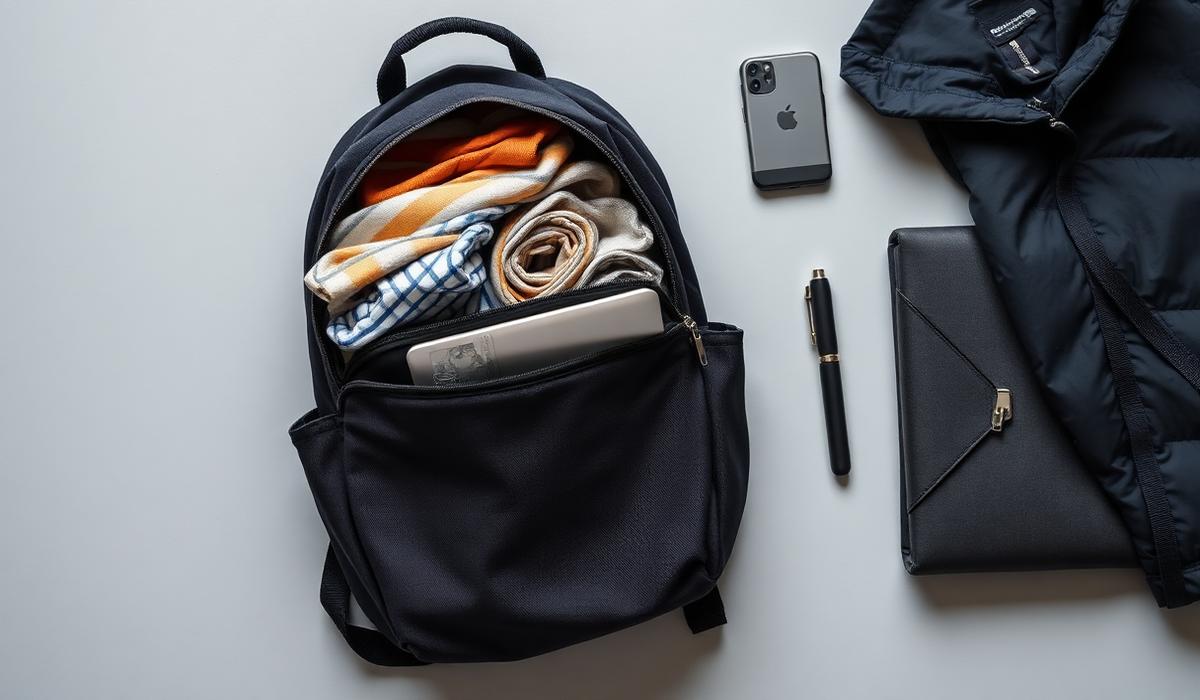
Budget airlines deserve their own section because the economics are different. Ryanair, easyJet, Wizz Air and similar carriers in Europe, along with equivalents elsewhere, typically include only a small personal item, something like 40 x 20 x 25 cm, in the base fare, and charge separately for a larger cabin bag or any checked bag. Miss this distinction and it is very easy to arrive at the gate with a bag that fits every full-service airline's limit but is still too big, and too expensive, for the ticket you actually bought.
These carriers also enforce sizing more aggressively at the gate, partly because bag fees are a real part of the revenue model. If your bag is borderline, budget for the possibility of a gate charge that is noticeably higher than the online pre-purchase price for the same allowance, sometimes two or three times as much. Paying for the larger cabin bag online in advance, even a day before departure, is almost always cheaper than paying at the gate.
How to measure your own bag properly
Most disputes at the gate come down to a bag that was measured incorrectly at home, usually by leaving out the wheels, the external side pockets, or the handle in its extended position. Airlines measure the bag in the state it will actually be carried, which means the full outer envelope of the thing, not the shell alone.
- Stand the bag upright with wheels down and any retractable handle pushed fully in.
- Measure height from the floor to the very top of the bag, including the handle housing and any raised hardware, not just the fabric or hard shell body.
- Measure width at the widest point, which usually means including external pockets if they bulge when the bag is packed for a real trip, not sitting empty in a shop.
- Measure depth the same way, at the fullest point once the bag is packed as you intend to travel.
- Add the three numbers together if the airline states a combined limit, such as Singapore Airlines or Air France, rather than three separate maximums.
- Weigh the packed bag on a home scale or a luggage scale, not an empty bag on a bathroom scale, and check against the specific fare's weight limit rather than a general figure you remember from a previous trip.
It is worth doing this exercise with the bag packed the way it will actually travel, wheels attached, front pocket stuffed with a charger and a book, because an empty bag that measures fine can grow by two or three centimetres once it is loaded, which is exactly the margin that gets flagged by a gate sizer.
What actually happens when a bag does not fit
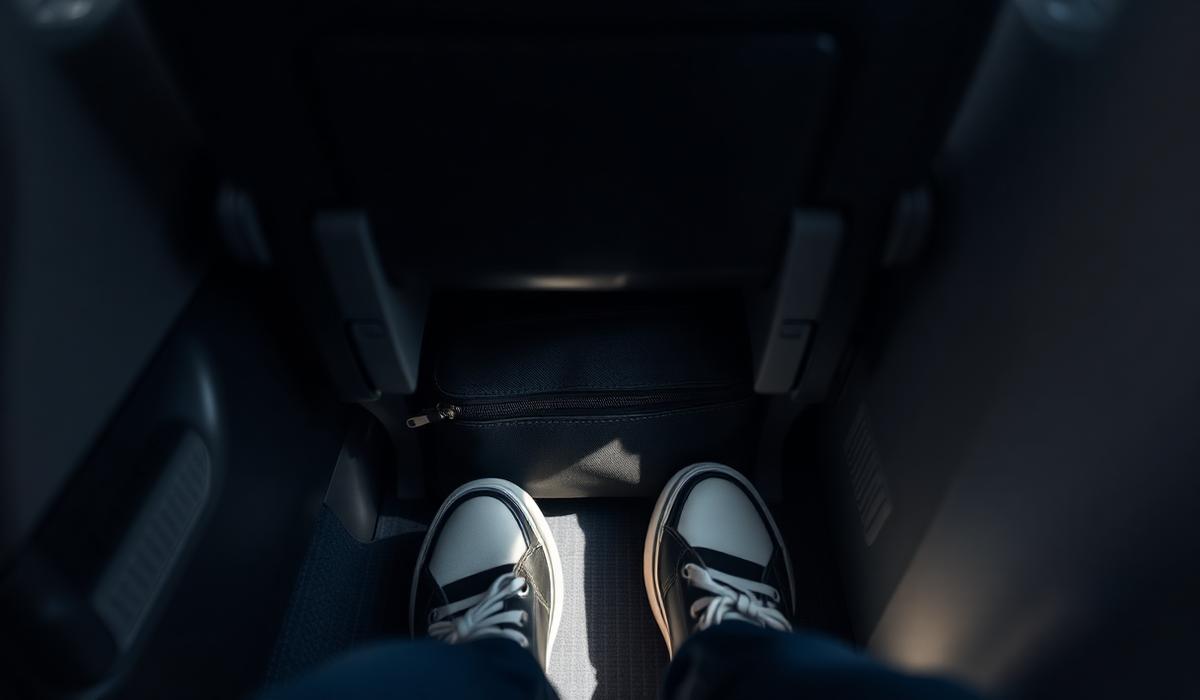
If a bag fails the sizer test at the gate, the usual outcome is that it gets tagged and placed in the hold for the remainder of that journey, sometimes free of charge if the flight is not full, sometimes for a fee that varies by airline and route. On low cost carriers this fee tends to be fixed and clearly higher than the equivalent online price, precisely to discourage relying on the gate as a backup plan.
Before handing over a bag that is going to the hold unexpectedly, remove anything you would not want checked: laptops and other electronics, medication, passports and other travel documents, chargers you will need at the next stop, and anything fragile or valuable. Most gate agents will give you a moment to do this, but it is worth building a habit of keeping these items in a small secondary pouch inside the main bag precisely so they can be pulled out quickly if needed.
It is also worth knowing that connecting itineraries sometimes involve two different airlines with two different cabin bag policies, particularly on interline tickets that mix a full service carrier with a regional partner. In these cases the more restrictive limit generally applies for the whole journey, so it pays to check the smallest allowance across all the airlines on your itinerary rather than assuming the first flight's rules will carry through.
A few habits that avoid most problems
- Buy the smallest bag that still fits your actual packing habits, not the largest one marketed as "carry-on approved," since marketing labels are not consistent across airlines.
- If your itinerary includes a budget carrier for any leg, check that airline's cabin bag policy separately, even if the rest of the trip is on a full service carrier.
- Weigh the bag packed, the night before travel, especially on Middle Eastern and Asian carriers where the 7 kg limit is enforced with real consistency.
- Keep essentials in an inner pouch so a sudden gate check does not mean digging through a fully packed bag in front of a queue.
- When flying a smaller regional aircraft, expect pre-boarding gate tagging even for bags that would normally fit, and do not take it personally.
Special cases: instruments, medical equipment and mobility aids
Musical instruments occupy an odd space in cabin bag policy. A violin or a small guitar often fits within standard dimensions and can travel as the passenger's one carry-on item on most airlines, but a cello or a larger instrument generally does not, and travelling musicians either buy a second seat for the instrument, a practice several airlines including Lufthansa and British Airways explicitly accommodate with a specific fare code, or invest in a hard case built for the cargo hold. Checking a fragile instrument without a purpose built case is one of the more predictable ways to arrive with a damaged one.
Medical equipment and mobility aids are treated differently again, and generally more favourably, across almost every airline's published policy. Wheelchairs, walkers, CPAP machines and similar devices are typically exempt from the standard cabin bag count entirely, meaning a passenger can bring a personal item, a carry-on, and a piece of medical equipment without it counting against the normal two-item limit. This exemption is not always advertised clearly on a booking page, so travellers relying on it are usually better off calling the airline directly or noting it in the special assistance section of a booking, rather than assuming gate staff will already know the policy from memory.
A short scenario: connecting through a hub with two different airlines
Say a traveller books a JFK to Amsterdam flight on Delta, connecting onward to a smaller European city on KLM, all on one ticket under the joint venture the two airlines operate together. Because it is a single ticket with a through check-in, the cabin bag policy that applies for the whole journey is generally the more restrictive of the two airlines' rules, even though most of the flying time is on Delta's metal. In practice this rarely causes a problem, since Delta and KLM publish broadly similar cabin bag dimensions, but the same scenario connecting a US domestic carrier to a strict low cost carrier in Europe, for example a United flight into London followed by a separately booked Ryanair flight onward, is a different story entirely. The Ryanair leg's much smaller personal-item-only allowance for a basic fare will not stretch to accommodate a bag that was perfectly fine on the United flight, and because these are two separate tickets, nothing about the first airline's rules carries over to protect the traveller on the second.
The lesson generalises: whenever an itinerary mixes a legacy network carrier with a budget carrier, treat the budget carrier's cabin bag policy as the one that governs the whole trip's packing decision, not an afterthought to check once you land.
None of this removes the basic unfairness of the system, which is that ten airlines can each have a slightly different number and still call it a standard. But once you know where a given airline sits on this table, and once you have actually measured your own bag packed rather than empty, the gate becomes predictable rather than a small daily gamble. For everything that happens once the bag does go into the hold instead, the companion piece on checked baggage covers weight bands, fees and what to do about fragile or sports items.
Where to go next
Two more guides pair well with this one. read The Checked Baggage Guide, carry-on-rules-explained. The full Rules Station index lists every guide in this module, and Change Station covers the side of the trip this article does not. If the dates themselves are still moving, the itineraries in Route Station are built to absorb a shifted day.
Frequently asked questions
Related articles
Keep reading across the network
Rules Station · 13 min read
The Checked Baggage Guide
A step-by-step guide to checked baggage, from booking to the carousel: weight and size limits, overweight fees, sports gear, fragile items and interline transfers.
Rules Station · 11 min read
Carry-on Rules Explained
Cabin bag sizes, liquid limits, electronics, restricted items and the gate checks that catch travellers out.

Rules Station · 12 min read
Airport Security Screening, Start to Finish
A step by step walk through airport security screening, from bag prep to the checkpoint, plus common mistakes, CT scanners and known traveller schemes.