
Petra and Wadi Rum in Four Days from Amman
A four day Jordan itinerary from Amman to Petra and Wadi Rum via the Dead Sea, with Jordan Pass advice, heat planning, timings and a full budget.
14 min read · Updated October 2024
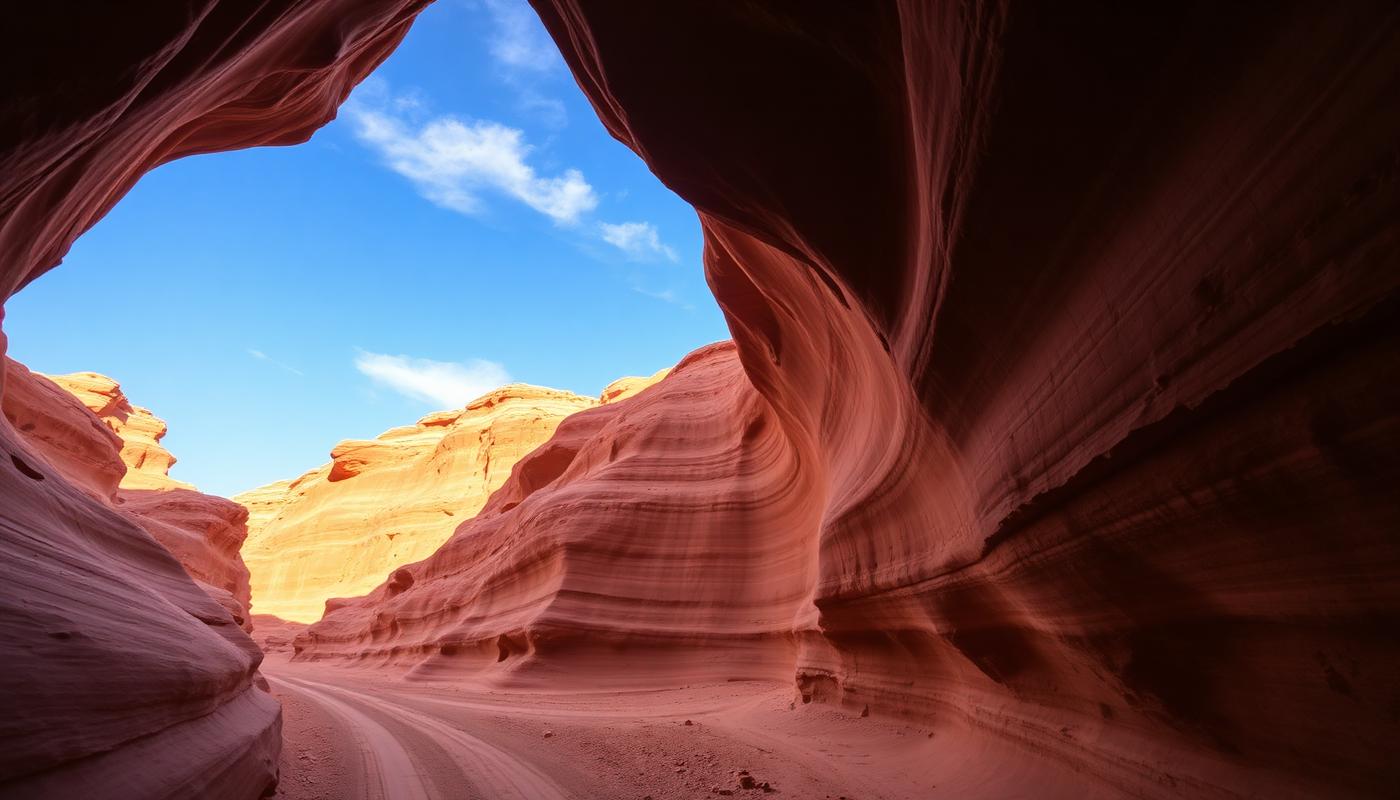
Jordan compresses well. The country is smaller than Portugal, the road network is straightforward, and the two things almost everyone comes for, Petra and Wadi Rum, are ninety minutes apart in the south. Four days is genuinely enough to do both properly if you treat Amman as an arrival point rather than a destination.
The one constraint that shapes everything is heat. Every timing below is built around being out of direct sun between roughly 12:00 and 15:30 from April onwards. Ignore that and Petra becomes a memory of feeling unwell near some very impressive rock.
Who this route suits
Reasonably fit travellers who can manage several hours of walking on uneven ground and a lot of steps. Petra is enormous, around 60 square kilometres, and even the standard route is about twelve kilometres in a day. Horse carriages and donkeys exist inside the site, and their welfare is variable, so if you cannot walk the distance, plan a shorter route rather than relying on animals.
Before you go: the Jordan Pass
Buy it online before arrival. The pass costs 70, 75 or 80 JOD depending on whether it covers one, two or three days at Petra, and it waives the 40 JOD tourist visa fee provided you stay at least three nights. Petra alone is 50 JOD for one day and 55 for two, so the arithmetic is not subtle.
It also covers Jerash, the Amman citadel, the Roman theatre, Ajloun and dozens of others. Print it or save the QR code offline, because the signal at some sites is poor.
Day one: Amman and the Dead Sea
Land at Queen Alia airport, 35 kilometres south of Amman. The airport express bus costs 3.5 JOD and takes about 45 minutes to North Terminal; a taxi is 20 to 25 JOD.
Spend the morning at the Amman Citadel on Jabal al-Qala'a, where the Temple of Hercules and the Umayyad palace sit on a hill above the whole city. From the terrace you can see the Roman theatre below, a 6,000 seat structure from the second century that is still used for events.
Walk down into downtown, al-Balad, for lunch. Hashem for falafel and Habibah for kunafeh are the two names everyone gives, both are cheap, and both deserve it. A full falafel meal costs under 3 JOD.
In the afternoon, drive to the Dead Sea, about an hour west, descending to 430 metres below sea level. Public beaches and resort day passes both exist, the latter costing 25 to 50 JOD including a pool and a shower. The shower matters. Float for fifteen minutes, do not shave beforehand, and keep the water away from your eyes.
Day two: south to Petra
Two routes go south. The Desert Highway is fast and dull, about three hours. The King's Highway is slow and spectacular, about five hours, and passes Madaba with its sixth century mosaic map of the Holy Land, Mount Nebo, and Wadi Mujib, a canyon crossing with a 400 metre descent and climb that looks like a small Grand Canyon.
Take the King's Highway if you have a driver and the day. Take the Desert Highway if you want to be in Wadi Musa by lunchtime and inside Petra by mid afternoon.
Arrive in Wadi Musa, the town outside Petra, and if you have the energy, do Petra by Night. It runs Monday, Wednesday and Thursday evenings, costs 17 JOD and is not covered by the Jordan Pass. The Siq is lined with 1,500 candles and you sit in front of the Treasury for music and tea. It is atmospheric and it is also a large crowd being asked to stay quiet, with mixed results.
Day three: Petra, the full day
Be at the gate at 06:00 when it opens. This is the most important line in this article. The first hour in the Siq, before the crowds and while the canyon is still in shade, is the best part of the entire trip.
The Siq is a 1.2 kilometre natural cleft, in places only three metres wide with walls 80 metres high, running gently downhill. Walk it slowly and look for the water channels cut along both sides, which are the actual engineering achievement here.
It opens onto the Treasury, al-Khazneh, 40 metres of facade carved into the rock face. It was a tomb, not a treasury, and the name comes from a legend about an urn full of pharaoh's gold, which visitors shot at for decades trying to break open.
Continue along the Street of Facades and the colonnaded street to the Great Temple and the Qasr al-Bint. That is about two and a half kilometres from the entrance. Most of the crowd stops here.
Then climb to the Monastery, ad-Deir. It is roughly 800 rock cut steps, an hour up at a steady pace, and the building at the top is larger than the Treasury and usually far less busy. Do this before 10:00 or after 15:30. There is a cafe opposite it with a view and expensive cold drinks, both of which you will want.
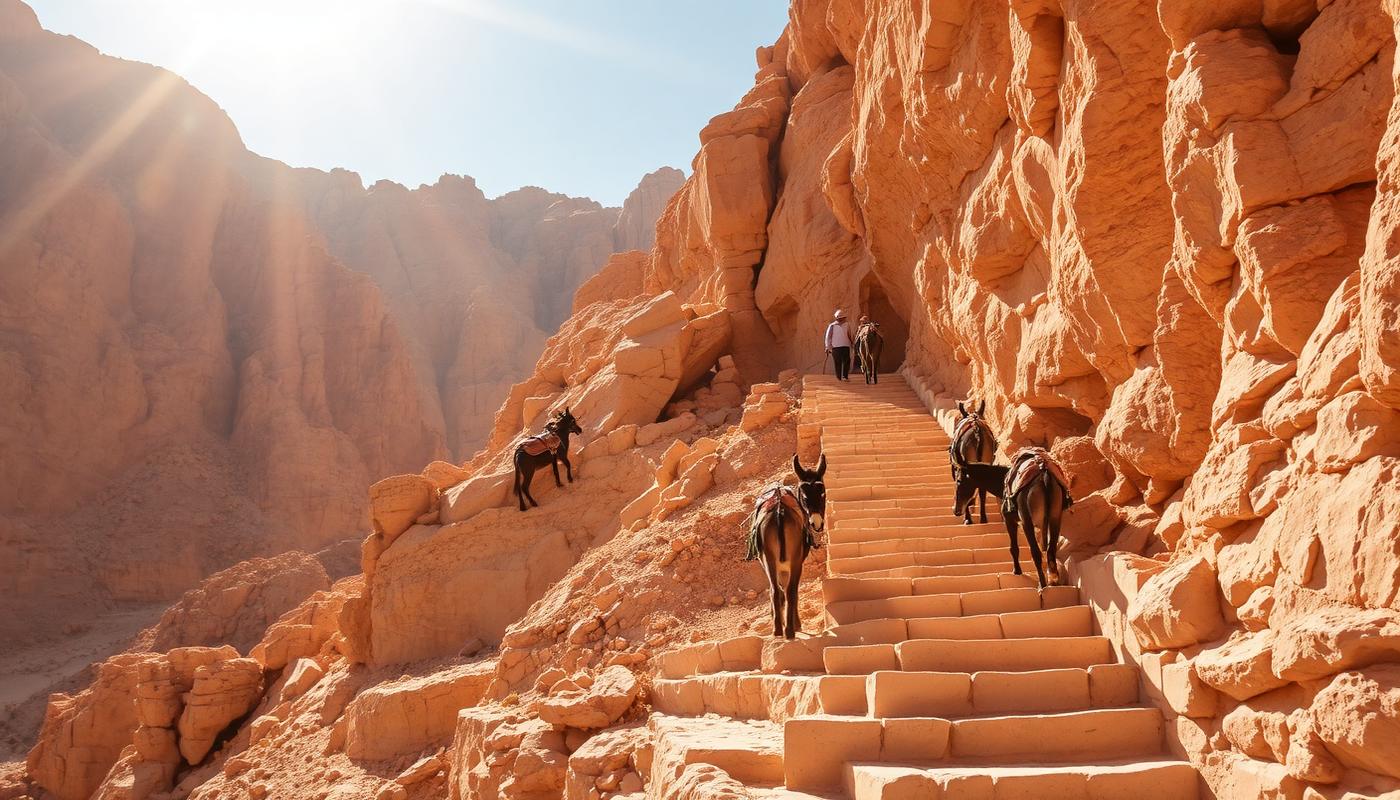
Come down, rest through the middle of the day at the Basin restaurant or in the shade of a tomb, and use the late afternoon for the Royal Tombs on the eastern cliff, which catch the best light of the day around 16:00.
Total walking for this day is twelve to sixteen kilometres with a lot of vertical. Carry three litres of water per person. There are stalls inside selling drinks but the prices climb with the altitude, understandably.
Day four: Wadi Rum
Wadi Rum is 110 kilometres south, about ninety minutes by road. You cannot drive into the protected area in your own vehicle, so you park at the visitor centre, pay the 5 JOD entry which the Jordan Pass covers, and your camp collects you in a pickup.
A standard half day jeep tour covers Lawrence's Spring, the Khazali canyon with its Thamudic inscriptions, a sand dune you climb and slide down, the Um Fruth rock bridge, and a sunset point. Camps charge 25 to 60 JOD per person for the tour and 35 to 120 JOD for the night depending on whether you want a bedouin goat hair tent or one of the transparent bubble domes that have appeared in the last few years.
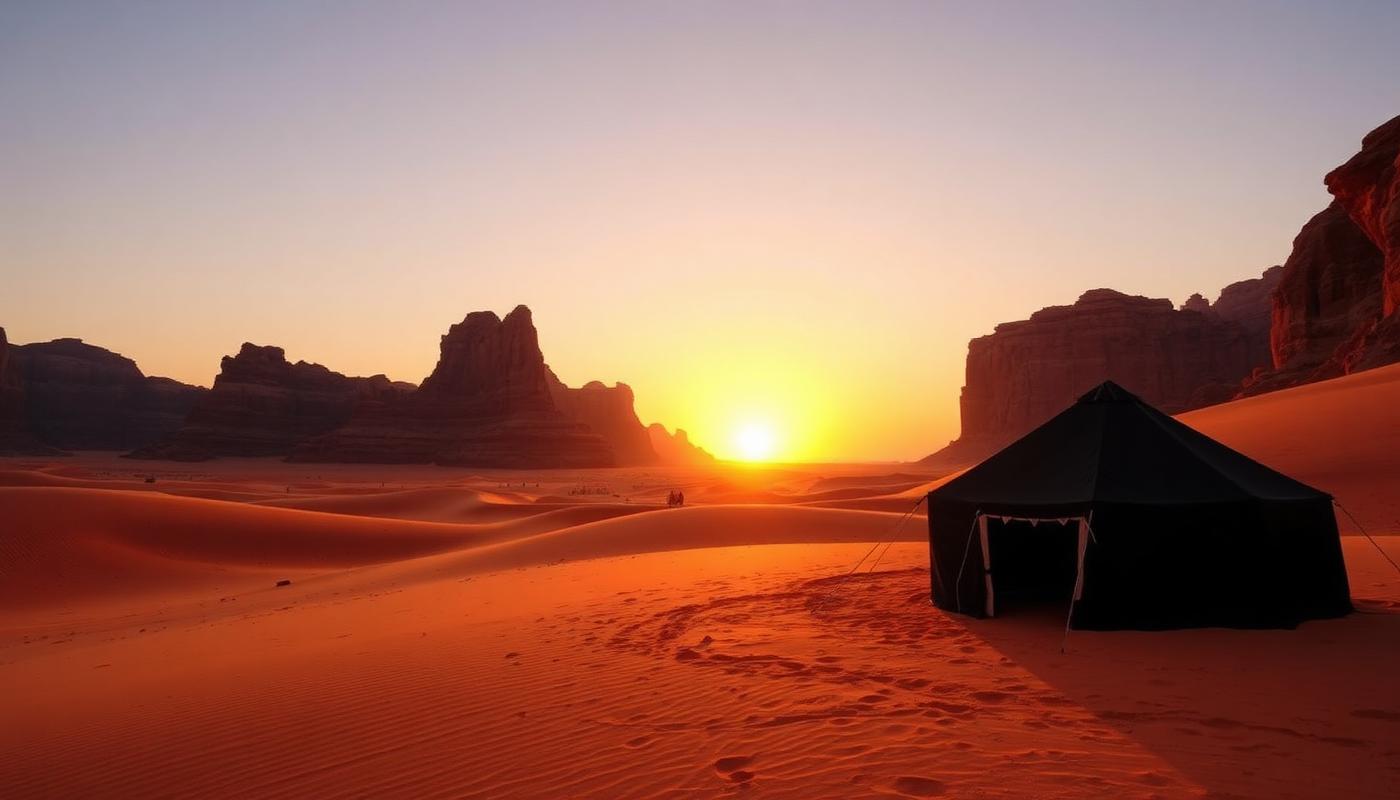
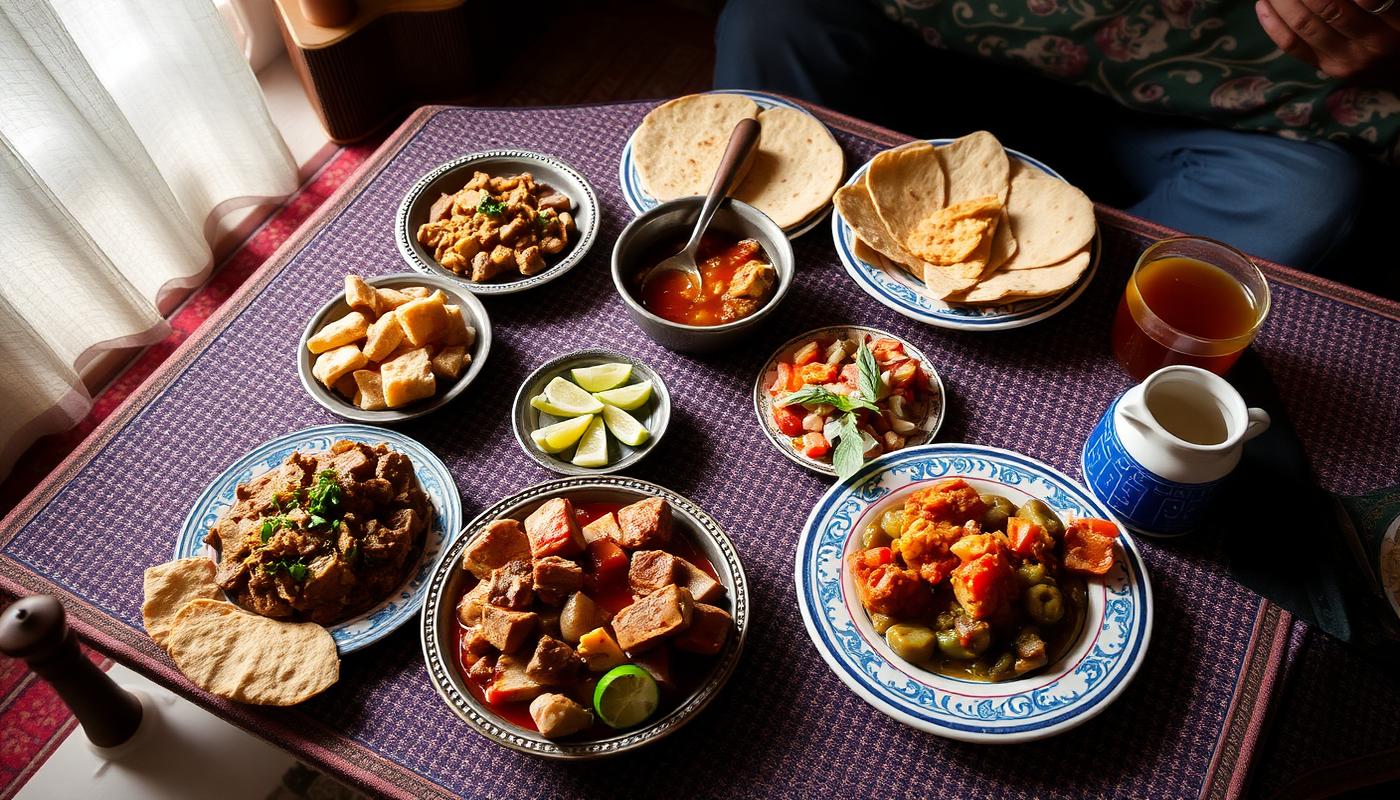
Dinner is usually zarb, meat and vegetables cooked in a sand oven and dug up in front of everyone, which is theatrical and also very good. Afterwards, the sky. Wadi Rum has almost no light pollution and the Milky Way is plainly visible on a moonless night. Bring a warm layer. The desert drops fifteen to twenty degrees after dark and people are consistently unprepared for it.
In the morning, either drive back north to Amman, about four hours on the Desert Highway, or continue an hour south to Aqaba on the Red Sea, which has an airport and some genuinely good coral reefs a short boat ride offshore.
Budget
- Jordan Pass with two Petra days: 75 JOD.
- Driver for four days: 240 to 400 JOD, split between a group.
- Rental car alternative: 30 to 45 JOD a day plus fuel.
- Wadi Rum camp with tour and dinner: 60 to 150 JOD per person.
- Hotel in Wadi Musa: 40 to 90 JOD a night for a double.
- Food outside hotels: 10 to 25 JOD per person per day.
Four days lands most travellers between 400 and 700 JOD per person including accommodation, excluding international flights.
Practical notes
- Jordan is conservative but relaxed with visitors. Covered shoulders and knees are appropriate outside resorts.
- Fridays are the weekend. Some shops close, sites stay open.
- Tap water is not recommended for drinking. Refill bottles at hotels or buy large containers.
- Tipping is expected at around 10 percent in restaurants and a couple of dinars for drivers.
- Take real walking shoes for Petra. The rock is smooth and polished in places and sandals will fail you.
Season and weather variants
April, May, October and November are the sensible months for this route, with daytime temperatures usually comfortable for walking and Petra rarely passing 30 Celsius. Summer, June through August, regularly pushes past 35 Celsius in Petra's main valley with little shade, and the itinerary above becomes considerably harder to execute safely without shifting almost everything to before 9am and after 4pm. Winter brings cooler days, occasional rain, and genuinely cold desert nights in Wadi Rum, sometimes near freezing, so a warm layer there is not optional even though the days can still be pleasant.
Transport specifics
The JETT bus runs a daily direct service between Amman and Petra along the Desert Highway, taking roughly three and a half to four hours, and is a reasonable budget option if you are not hiring a driver for the whole trip. A private driver for the full four days usually runs somewhere in the range mentioned in the budget section below and removes the need to navigate or manage luggage transfers, which suits a first visit well. Renting a car is straightforward on the Desert Highway itself, since it is a well signed dual carriageway, though the King's Highway requires more attention with its narrower sections and occasional slow agricultural traffic near Madaba. Between Wadi Rum and Aqaba, shared taxis and prearranged transfers through your camp are both common and simpler than renting for that final short leg.
Where to stay, and the trade-offs
In Amman, staying downtown near al-Balad puts you closest to the citadel and the food worth walking to, but rooms there tend to be simpler; the Abdoun and Shmeisani districts offer more polished hotels at a higher price, at the cost of a taxi ride into the old centre. In Wadi Musa, hotels close to the Petra visitor centre cost more but let you be at the gate exactly at opening, which matters enormously for the early Siq walk; hotels further down the hill are cheaper and still only a short taxi ride away. In Wadi Rum the real choice is between a traditional bedouin style camp, simpler and usually cheaper, and one of the newer glass dome or "bubble" camps, which cost considerably more for the novelty of sleeping under a transparent ceiling, and are worth it mainly if the sky is clear and moonless that night.
Common mistakes
- Arriving at Petra after 8am in high season and losing the empty Siq experience, which is genuinely one of the best parts of the whole trip and disappears once the tour groups arrive.
- Treating Wadi Rum as a day trip. A jeep tour in the middle of a hot day without the sunset, dinner and night sky misses most of what makes the desert worthwhile.
- Not buying the Jordan Pass before arrival. It must generally be purchased online in advance to also waive the visa fee, and buying it after landing usually forfeits that part of the benefit.
- Underestimating the Monastery climb. Roughly 800 uneven steps in full sun is a serious undertaking, and starting it at midday rather than early morning or late afternoon makes it considerably harder than it needs to be.
- Packing sandals rather than proper closed shoes for Petra's smooth, worn sandstone paths, which get slippery even when dry in places.
Related routes
For another route where heat and early starts drive the plan, see Cape Town in five days. For a completely different intensity of walking day, Kyoto in three days uses the same first-thing-in-the-morning discipline. The Route Station landing page explains the walking distance thresholds referenced here.
Frequently asked questions
Related articles
Keep reading across the network
Route Station · 13 min read
Seoul in Three Days, Food First
A three day Seoul itinerary organised around meals and neighbourhoods: Gwangjang market, Bukchon, Noryangjin, Hongdae and a night at Namsan.
Route Station · 14 min read
Cape Town in Five Days, Weather Permitting
A five day Cape Town itinerary designed around wind and weather: Table Mountain, the Cape Peninsula, Bo-Kaap, the Winelands and Robben Island.
Route Station · 13 min read
Kyoto in Three Days, Mostly on Foot
A three day Kyoto itinerary built around early starts, one bus pass and walking loops through Higashiyama, Arashiyama and the Nishiki area.