
A Quebec City Winter Weekend That Works at Minus Fifteen
A three day winter itinerary for Quebec City built around short outdoor stretches, warm interiors, Montmorency Falls and Ile d'Orleans, with costs.
12 min read · Updated January 2025
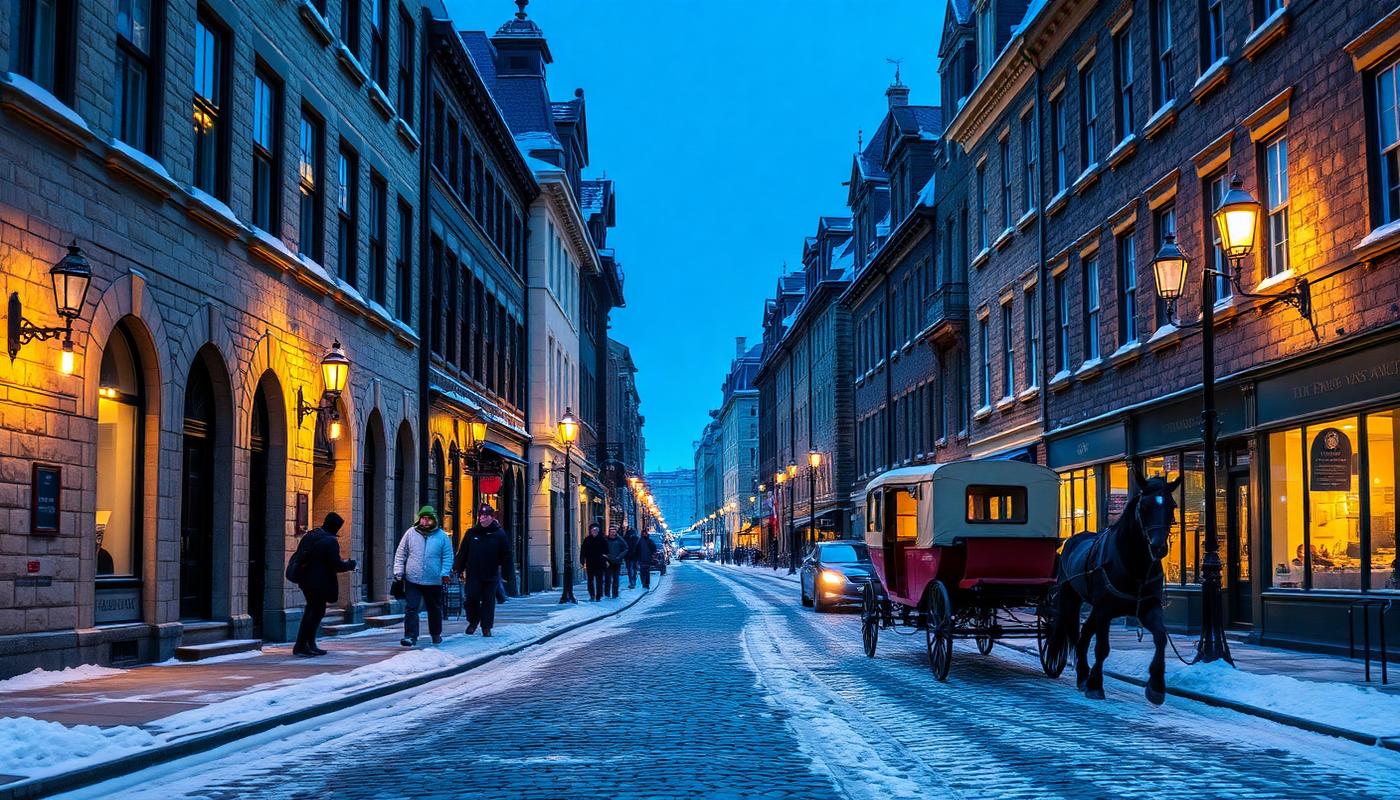
Winter itineraries usually fail for one reason: they treat cold as a mild inconvenience rather than a design constraint. At minus fifteen with wind, a plan with three hours of continuous outdoor walking is not a plan, it is an ordeal with a nice view attached. Quebec City is extremely good in winter precisely because it is built for this. Everything is close together and there is a warm interior every two hundred metres.
This is a three day route where no outdoor stretch runs longer than about forty five minutes without a scheduled warm-up. It sounds fussy. It is the difference between enjoying the trip and quietly hating it by Sunday.
Who this is for
Couples and small groups who want an atmospheric winter city break without a ski resort attached. It works well with children if you shorten the outdoor sections further and add a toboggan run, which we do below. It works badly for anyone who has never experienced serious cold and refuses to buy proper boots.
Getting there and getting around
Jean Lesage airport is 20 minutes from the old town and a taxi is a flat rate of around 40 CAD. Via Rail runs from Montreal in about three hours and twenty minutes for 45 to 90 CAD, and it drops you at Gare du Palais, which is a beautiful chateau-style station ten minutes' walk from the lower town.
Inside the city, walk. The RTC bus network covers the rest for 3.75 CAD a ride. The funicular linking the lower and upper town costs about 5 CAD, takes ninety seconds, and in winter is not a tourist gimmick but a practical way of avoiding an icy staircase called the Breakneck Steps, which is named accurately.
Day one: the upper town and the walls
Start late, around 10:00. Winter mornings here are dark and bitter and there is no reward for beating a crowd that is not there. Begin at the Terrasse Dufferin, the boardwalk beside the Chateau Frontenac. It runs along the cliff above the St Lawrence, which in deep winter carries visible ice floes moving downriver.
At one end of the terrasse there is a wooden toboggan slide, the Glissade de la Terrasse, running since 1884. It costs a few dollars, lasts about eight seconds, and reaches genuinely alarming speed. Do it once.
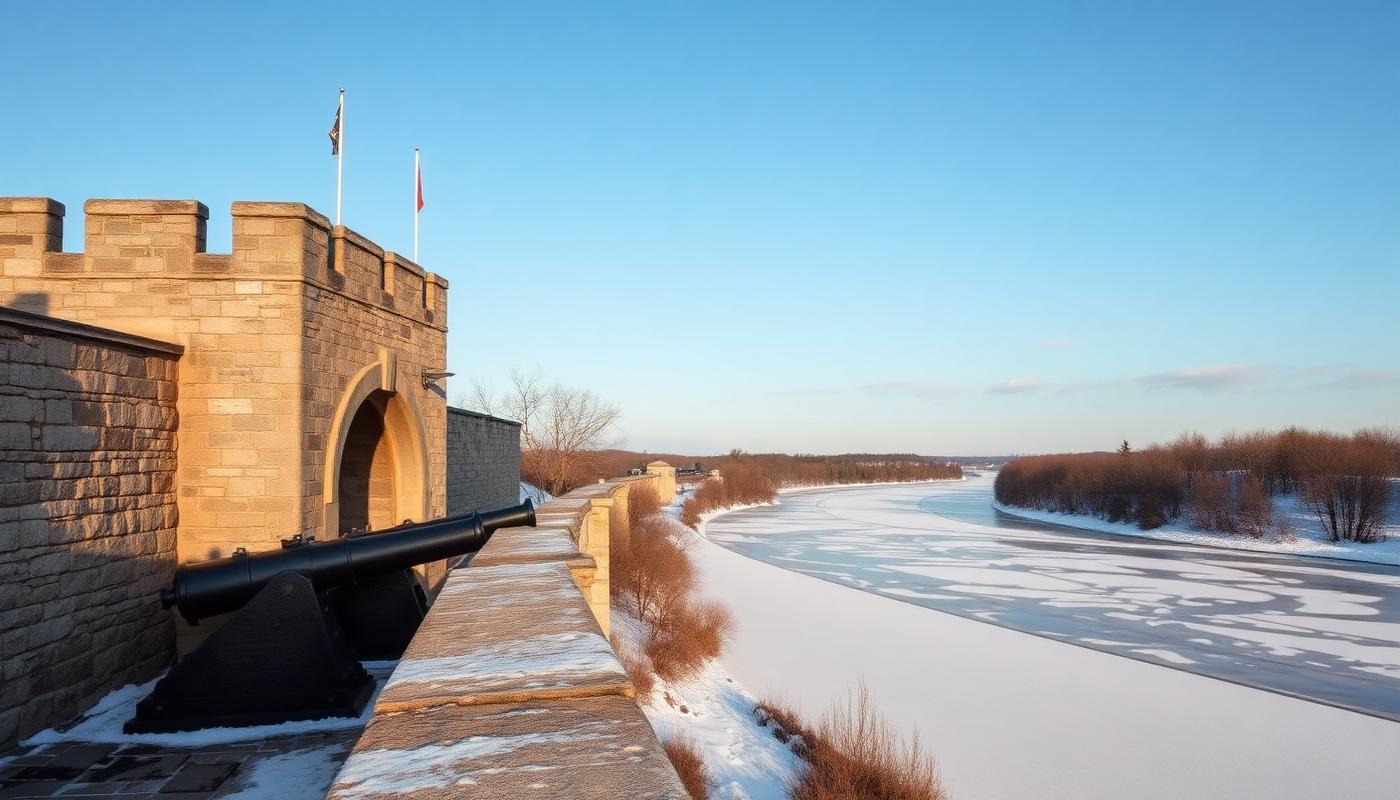
Walk the fortifications afterwards. Quebec is the only walled city north of Mexico with its walls intact, and the circuit around them is about 4.6 kilometres. In winter, do a section rather than the whole thing: from Porte Saint-Louis to the Citadelle is enough, maybe thirty minutes, and then go inside.
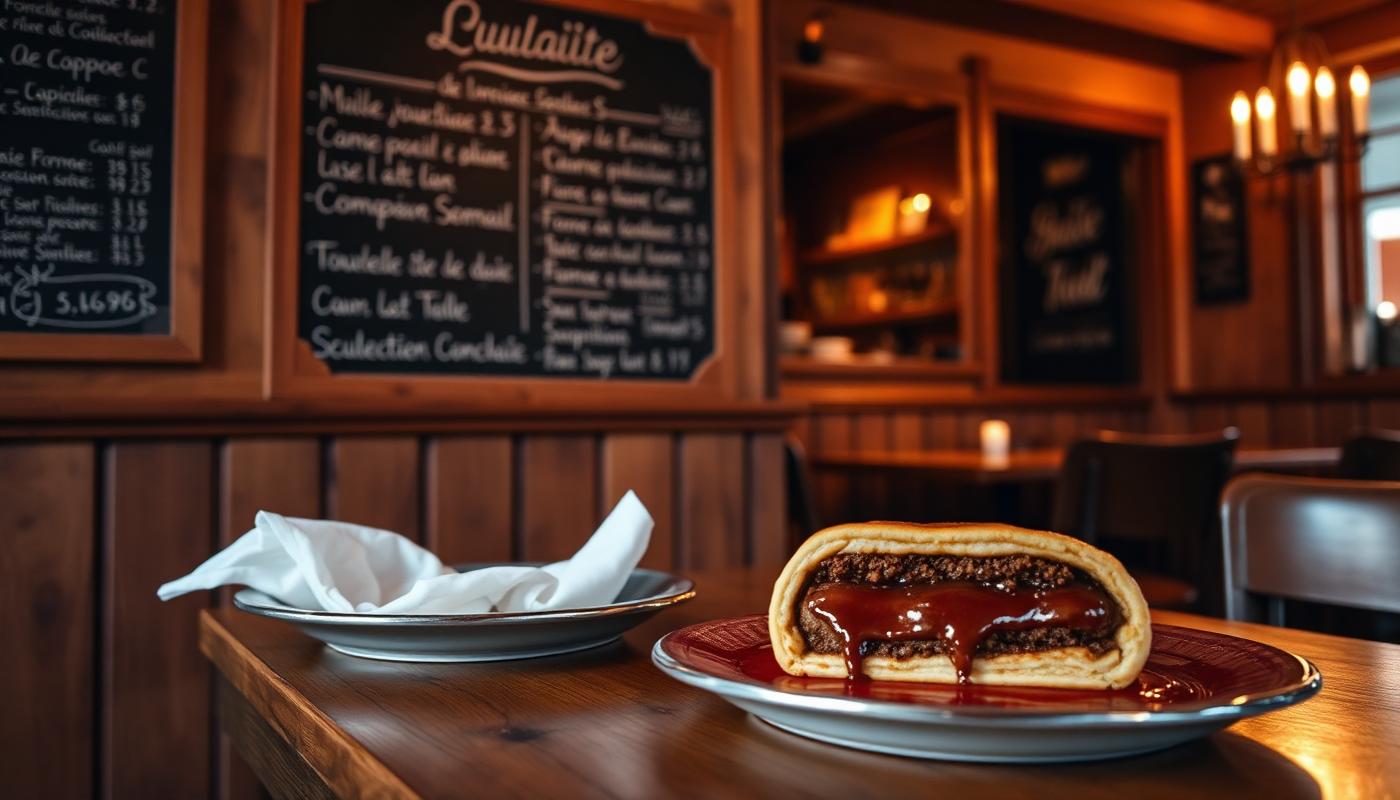
Lunch at a place with a fireplace. Aux Anciens Canadiens in the oldest house in the city is the tourist classic and serves tourtiere and maple pie at around 30 to 45 CAD for a main. Cheaper and equally warm options sit along Rue Saint-Jean. Spend the afternoon in the Musee de la Civilisation, which is genuinely good and costs about 22 CAD, then eat dinner in the Petit Champlain quarter with its lights strung over the snow.
Day two: the falls and the ice
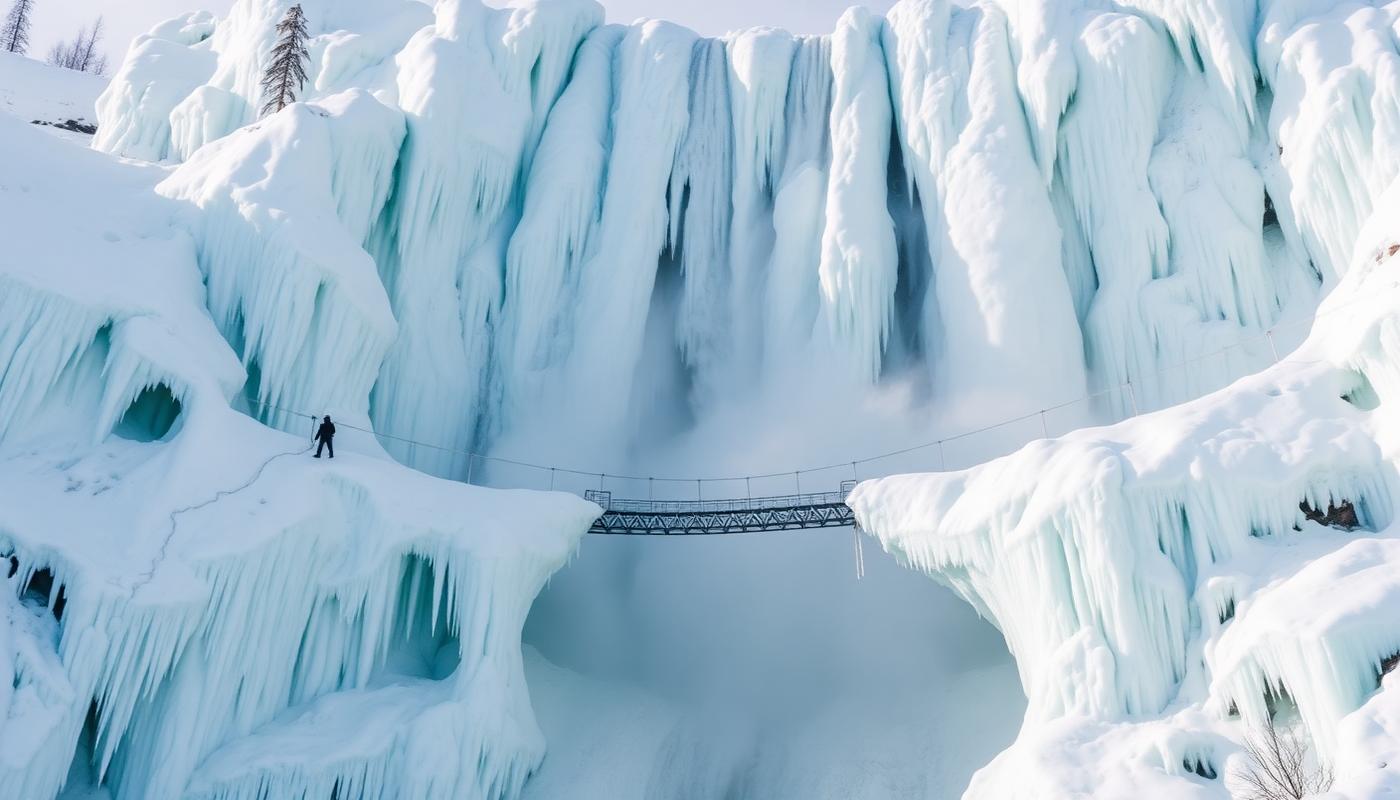
Montmorency Falls is 83 metres high, thirty metres taller than Niagara, and about fifteen minutes from the city. In winter the spray freezes at the base into a white cone that ice climbers actually climb. There is a cable car, a suspension bridge across the top, and a staircase with 487 steps that is often closed in ice.
Getting there without a car: the 800 bus plus a short connection, roughly 45 minutes, or a taxi at about 35 CAD each way. Allow two hours at the site including the cable car, which costs around 16 CAD return.
In the afternoon, cross to Ile d'Orleans if you have transport. It is a rural island in the middle of the St Lawrence, twenty minutes from the falls, with cider houses, sugar shacks and a chocolatier that does an ice cream even in February because Quebecers are unbothered by the concept. Ice cider, cidre de glace, is the local speciality, made from apples left to freeze on the tree, and tastings run about 10 CAD.
Back in the city, warm up properly. Nordic spas are a serious part of the culture here, and the thermal circuit of hot bath, cold plunge and rest, outdoors in the snow, costs 60 to 90 CAD. It sounds unpleasant and is the single best thing on this itinerary.
Day three: neighbourhoods and a slow departure
Spend the morning in Saint-Roch, the lower town neighbourhood away from the tourist core. It has the better coffee, the independent shops and a normal weekday rhythm. Le Grand Marche, in the exhibition grounds, is an indoor market with local cheese, maple products and produce, and it is a good final stop for things to take home.
If you are here in the first half of February, the Carnaval de Quebec takes over the city: ice sculpture competitions, night parades, canoe races across the partly frozen river, and a lot of caribou, which is a warm fortified drink you will regret in quantity. An effigy pass costs around 25 CAD and covers most sites.
Dressing for it, seriously
- Boots rated to at least minus 25 with a real grip sole. This matters more than the coat.
- Base layer of merino or synthetic, never cotton.
- A hat that covers the ears completely and a neck gaiter for wind.
- Mittens rather than gloves, with a thin liner underneath for phone use.
- Ice grips that slip over boots, about 20 CAD, and worth every cent on cobbles.
Budget
- Breakfast: 12 to 20 CAD.
- Lunch: 20 to 35 CAD.
- Dinner: 40 to 70 CAD.
- Transport and taxis: 15 to 40 CAD a day.
- One paid activity per day: 20 to 90 CAD.
- Hotel double in the old town: 160 to 300 CAD, higher during Carnaval.
What this costs, roughly
For 2026 planning in Canadian dollars, a single bus fare in Quebec City is usually around 4 CAD, and a day pass around 10 CAD, worth it if you are making more than two trips including one out toward Montmorency. Museum entry, at the Musee de la civilisation or the Musee national des beaux-arts, usually runs 18 to 25 CAD. A mid-range sit down dinner in the old town typically runs 35 to 55 CAD per person with a glass of wine, and a mid-range hotel double in the old town usually runs 180 to 280 CAD a night in winter, considerably more during Carnaval in early February.
Neighbourhood notes
Staying inside the walls, in Vieux Quebec proper, puts you steps from Chateau Frontenac, the Terrasse Dufferin and the Petit Champlain shops, and it is genuinely magical under snow, but rooms are older, smaller and pricier, and the steep streets in Upper Town get properly icy. Staying in the Saint-Roch or Saint-Jean-Baptiste area, a fifteen to twenty minute walk or a short bus ride from the old town, gets you better value, a more local feel and easier parking if you have a car, at the cost of losing the fall-out-of-bed-into-the-old-town convenience.
Common mistakes visitors make here
- Underestimating the cold and planning long outdoor stretches without a warm-up stop scheduled in.
- Wearing city boots without real grip. The old town's slopes and cobbles ice over regularly and ordinary soles slip badly.
- Assuming Quebec City is the same as Montreal linguistically or culturally. It is considerably more French speaking day to day, though tourism staff are bilingual.
- Skipping Montmorency Falls because it sounds like an add-on. In winter it is arguably more striking than in summer, with ice formations that draw their own crowds.
- Booking Carnaval weekend without checking hotel prices well ahead. Rooms sell out and prices climb sharply in the days around the festival.
A version for families with young children
Shorten every outdoor block to twenty or twenty five minutes rather than forty five, and build in a toboggan run at Terrasse Dufferin, which is a genuinely thrilling, low effort activity that most children love and that costs only a couple of dollars a ride. The Musee de la civilisation has interactive exhibits well suited to kids and is a solid full indoor stop on a very cold afternoon. Skip the longer Ile d'Orleans excursion with very young children, since the driving and the spread out stops mean a lot of time in car seats for a relatively small payoff, and instead spend that time in the old town's many warm cafes and the ice skating rink at Place D'Youville, which rents skates on site.
Accessibility and mobility notes
Winter genuinely changes the accessibility picture here, and it is worth planning around that rather than discovering it on the ground. The funicular between the upper and lower town is the single most useful piece of infrastructure for anyone with limited mobility, since it removes the need for the Breakneck Steps entirely and runs year round except during scheduled maintenance. Beyond that, Vieux Quebec's cobbled streets ice over and get uneven under packed snow, which is a genuine problem for wheelchair users and for anyone with a cane or an unsteady gait, and the city's snow clearing crews prioritise the main roads over the narrower pedestrian lanes. The Musee de la civilisation and Le Grand Marche are both modern, step-free buildings and make sensible indoor anchors for a visitor who wants to limit time on icy pavement. Montmorency Falls has a paved, mostly flat path to the base viewing area, though the suspension bridge and the staircase above it are not step-free.
What I would skip
The horse-drawn calèche rides around the old town look charming in photographs but are slow, expensive at around 100 CAD for a short loop, and cover ground you will walk anyway on the way to dinner. I would also skip the ice hotel, Hotel de Glace, unless you specifically want to sleep there, since the day visit fee is high for what amounts to twenty minutes of looking at ice sculptures before your hands get cold. And unless you are visiting during Carnaval itself, the Plains of Abraham in deep winter is a large, exposed, empty field with a good view and not much else, better suited to a summer visit when the park hosts events.
What winter clothing actually needs to do here
Most visitors overdress in the wrong way. They bring one very heavy coat and thin everything else, then spend the weekend either freezing outside or sweating inside a restaurant with nowhere to put the coat. The system that works in Quebec is three layers you can shed in stages: a merino or synthetic base, a fleece or light down mid layer, and a windproof shell. The shell matters more than the thickness, because the wind off the Saint Lawrence is what turns minus twelve into something that hurts. Below that, insulated boots with an actual rubber sole rather than fashion boots, because the sidewalks alternate between packed snow, wet salt and sheet ice within a single block.
Two small items make an outsized difference. A pair of slip-on ice cleats, the kind that stretch over a boot and cost around 25 CAD at any Canadian Tire or outdoor shop, will change how confidently you walk down Cote de la Montagne. And a hat that covers your ears properly, not a beanie that rides up. Gloves are obvious but people forget that you will be taking photographs constantly, so bring a thin liner glove you can keep on while operating a phone rather than exposing bare hands twenty times an hour.
Eating on a winter schedule
Restaurant timing in Quebec City is more compressed than visitors expect. Kitchens in the old town often stop serving around 21:00 on weekdays, earlier outside the holiday period, and the good places in Saint-Roch fill up by 19:00 on a Friday. Book anything you actually care about two or three days ahead. Walk-in works for lunch almost everywhere, which is one argument for making lunch the larger meal and keeping dinner simple.
A practical pattern: a long sit-down lunch at Le Chic Shack or Buffet de l'Antiquaire in the lower town, which doubles as your midday warm-up and removes the pressure to find something at 19:30 while cold and irritable. Then something light in the evening, a bowl of soup at Le Billig or a plate at Bistro L'Orygine in Saint-Roch. Cabane a sucre food, the sugar-shack menu of pea soup, tourtiere and maple everything, is genuinely seasonal here and worth one meal even if the format feels touristy. Erico on Rue Saint-Jean does hot chocolate that is closer to melted ganache than a drink, and it is a legitimate warm-up stop rather than a novelty.
Related reading
For another cold weather route where the transport does the heavy lifting, see Oslo to Bergen by train. For the same compact old-town-plus-day-trip structure in a warmer climate, read Ljubljana and Lake Bled. The Route Station landing page covers building fallback plans, which winter travel needs more than any other kind.
Frequently asked questions
Related articles
Keep reading across the network
Route Station · 13 min read
Oslo to Bergen by Train in Four Days
A four day rail itinerary from Oslo to Bergen with the Flam railway and the Naeroyfjord, including seat advice, timings and a realistic Norwegian budget.
Route Station · 12 min read
Ljubljana and Lake Bled in Two Unhurried Days
A two day Slovenia itinerary pairing Ljubljana's old town with Lake Bled and Vintgar Gorge, including bus times, walking distances and costs.
Route Station · 12 min read
A Porto Weekend Built for Real Legs
A two and a half day Porto itinerary that respects the hills: Ribeira, Gaia cellars, Bolhao market and Foz, with timings, tram notes and a full budget.