Oslo to Bergen by Train in Four Days
A four day rail itinerary from Oslo to Bergen with the Flam railway and the Naeroyfjord, including seat advice, timings and a realistic Norwegian budget.
13 min read · Updated May 2025
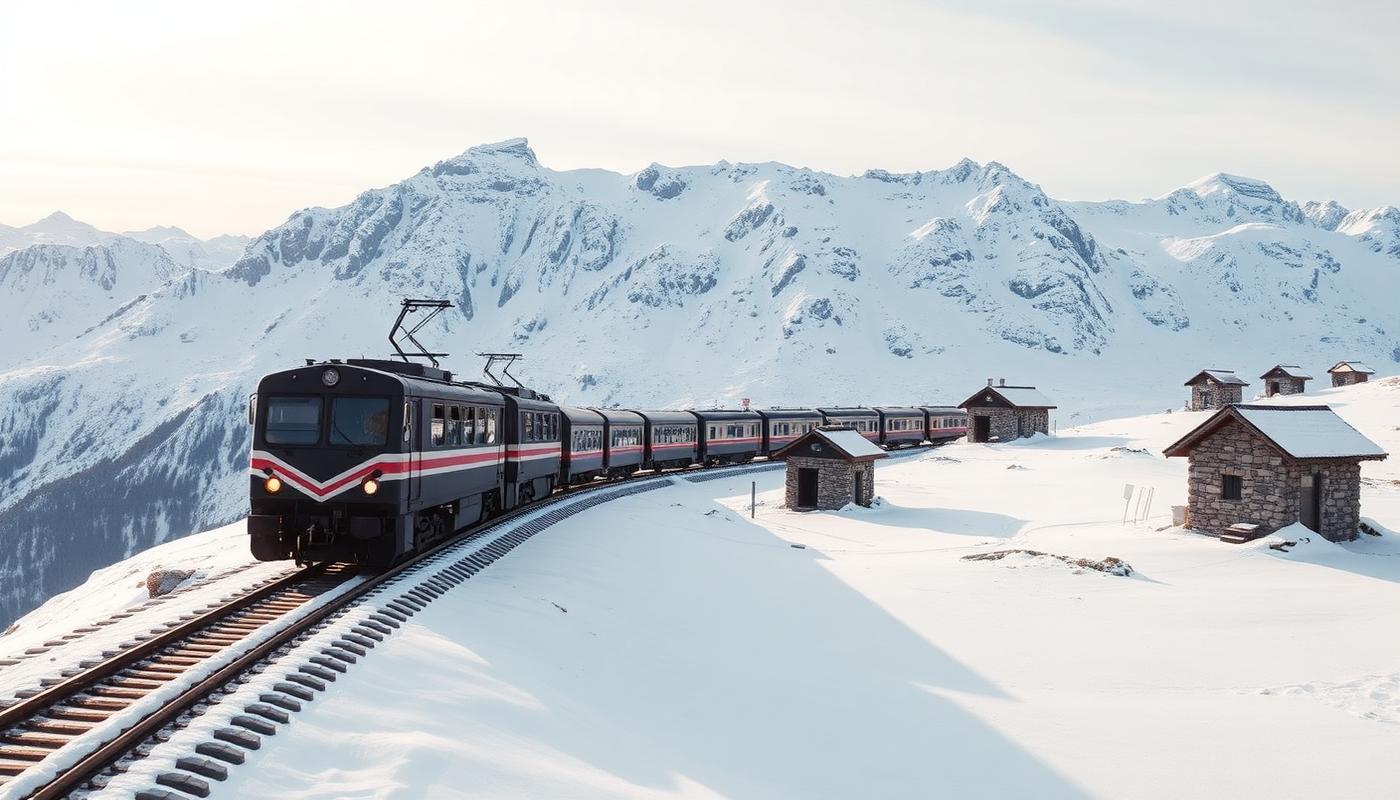
The Bergen Line is the highest mainline railway in northern Europe and it does something unusual: the journey is better than either endpoint. Seven hours of track climbs from sea level in Oslo to 1,222 metres at Finse, crosses the Hardangervidda plateau where there are no trees and often no colour except grey and white, and then falls back down to the Atlantic at Bergen.
You can do it in a day. You should not. This four day version breaks the line at Myrdal, drops down the Flam branch to the fjord, spends a night at the water, and arrives in Bergen with two days of rail behind it instead of one long one.
Who this route suits
People who like sitting still and looking out of windows. There is very little walking in this itinerary unless you choose to add it, which makes it a good option for travellers who are not up for city marathons. It is also good for anyone nervous about driving mountain roads, because there is no driving at all.
It is less good for a tight budget. Norway is expensive in a way that surprises people even when they have been warned, and the fjord section in particular has captive pricing.
The shape of the four days
- Day one: Oslo. Arrive, walk the harbour, one museum.
- Day two: Oslo to Myrdal by rail, then the Flam railway down to the fjord. Night in Flam or Aurland.
- Day three: Naeroyfjord boat to Gudvangen, bus to Voss, train to Bergen.
- Day four: Bergen. Bryggen, the fish market, Floibanen funicular, departure.
Booking and costs
Norwegian rail tickets go on sale about 90 days ahead and use a discount fare system called minipris. Booked early, Oslo to Myrdal can cost 249 to 399 NOK. Booked on the day, the same seat can be 900 NOK or more. This single decision has more effect on the trip budget than anything else.
The Flam railway is a separate operator and costs around 600 NOK return, or about 450 NOK one way. The Naeroyfjord boat from Flam to Gudvangen is roughly 500 to 800 NOK depending on the vessel, and the Gudvangen to Voss bus is about 200 NOK. Add a further 250 NOK for the Voss to Bergen train.
- Oslo to Myrdal: about 4 hours 45 minutes.
- Myrdal to Flam: 1 hour, 20 kilometres, 865 metre descent.
- Flam to Gudvangen by boat: about 2 hours.
- Gudvangen to Voss by bus: about 1 hour 15 minutes.
- Voss to Bergen: about 1 hour 15 minutes.
Day one: Oslo, briefly
Oslo is not the point of this trip but it deserves an afternoon. The Opera House lets you walk up its sloping marble roof for free, which remains one of the better pieces of public architecture anywhere. The Munch museum next door is thirteen floors and costs about 180 NOK. The Fram Museum on the Bygdoy peninsula, which houses an entire polar exploration ship indoors, is the better choice if you prefer objects to paintings.
Eat at Mathallen food hall or a supermarket. This is not miserliness, it is strategy. A restaurant dinner in Oslo will cost 400 to 600 NOK per person and you have three more days of Norwegian pricing ahead.
Day two: the plateau and the descent
Take a morning departure, ideally around 08:25, so that you cross the high section in good light. The first two hours climb gently through forest and lake country. Around Geilo the trees give up. From there to Finse the landscape is bare rock, snow patches that persist into July, and long snow tunnels built to keep the line open in winter.

Finse itself is the highest station on the line at 1,222 metres, has no road access at all, and was used as a filming location for the ice planet Hoth. The train stops for a couple of minutes. Get off if you want to feel how cold 1,222 metres is in August.
Change at Myrdal, which is a platform and very little else, and board the Flam railway. It descends 865 metres in twenty kilometres, at a gradient of about 5.5 percent, through twenty tunnels, and stops for five minutes at the Kjosfossen waterfall where everyone gets out onto a viewing platform and gets slightly wet.
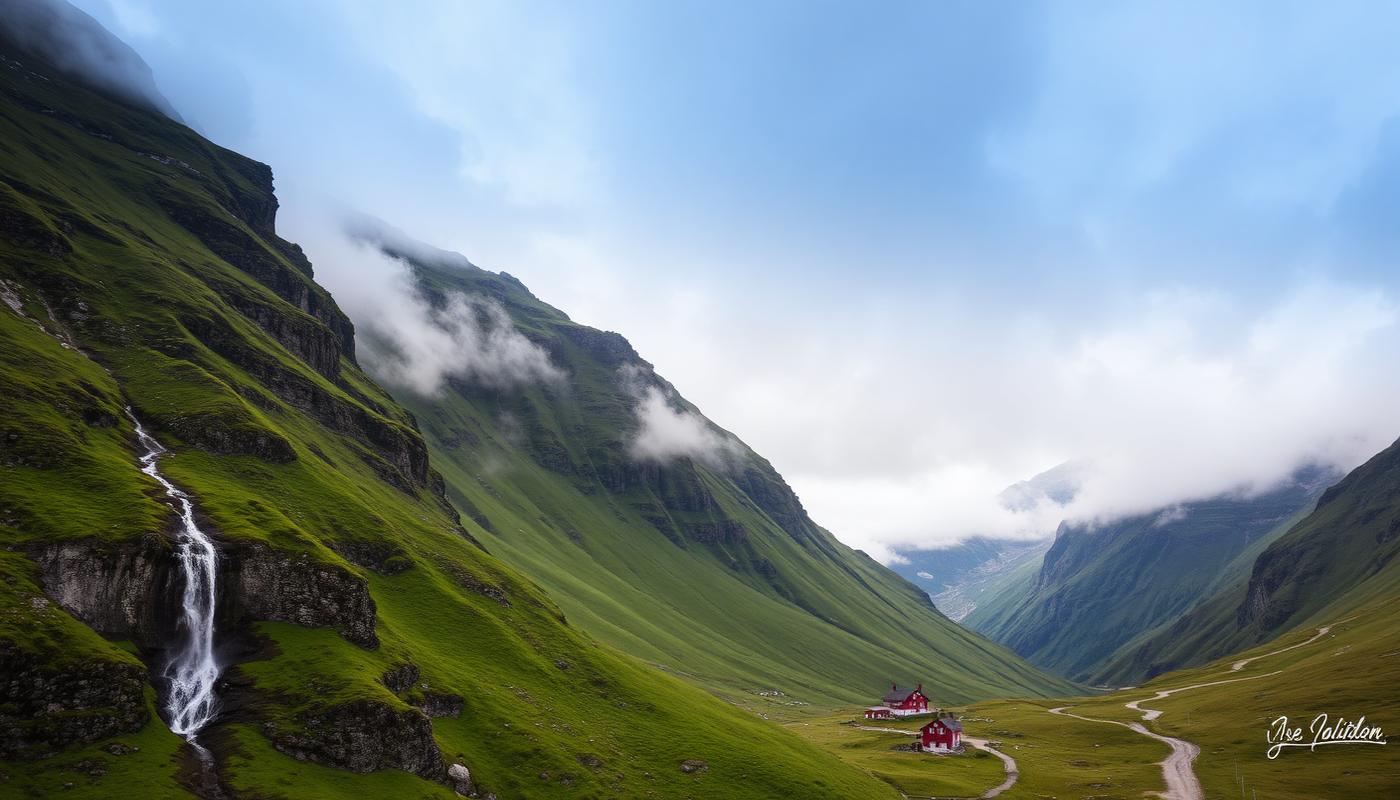
Stay the night in Flam, or better, take the short bus to Aurland five kilometres away, which is a working village rather than a cruise terminal and has hotel rooms at maybe two thirds of the price. If the evening is clear, the Stegastein viewpoint above Aurland is a 650 metre high platform reached by a narrow road and a shuttle bus, and it is worth the hairpins.
Day three: the fjord and on to Bergen
The Naeroyfjord is a UNESCO listed arm of the Sognefjord, 250 metres wide at its narrowest with walls rising 1,400 metres. The morning boat from Flam to Gudvangen takes about two hours. Modern electric vessels run this route now, which means you hear waterfalls instead of an engine. Sit outside at the bow, dress warmer than the temperature suggests, and accept that you will get slightly cold and be glad you did it anyway.
From Gudvangen the bus climbs the Stalheimskleiva hairpins in summer, which is a road with thirteen switchbacks at a gradient that makes passengers go quiet. At Voss, change to the Bergen train for the last hour along lakes and through tunnels.
Day four: Bergen
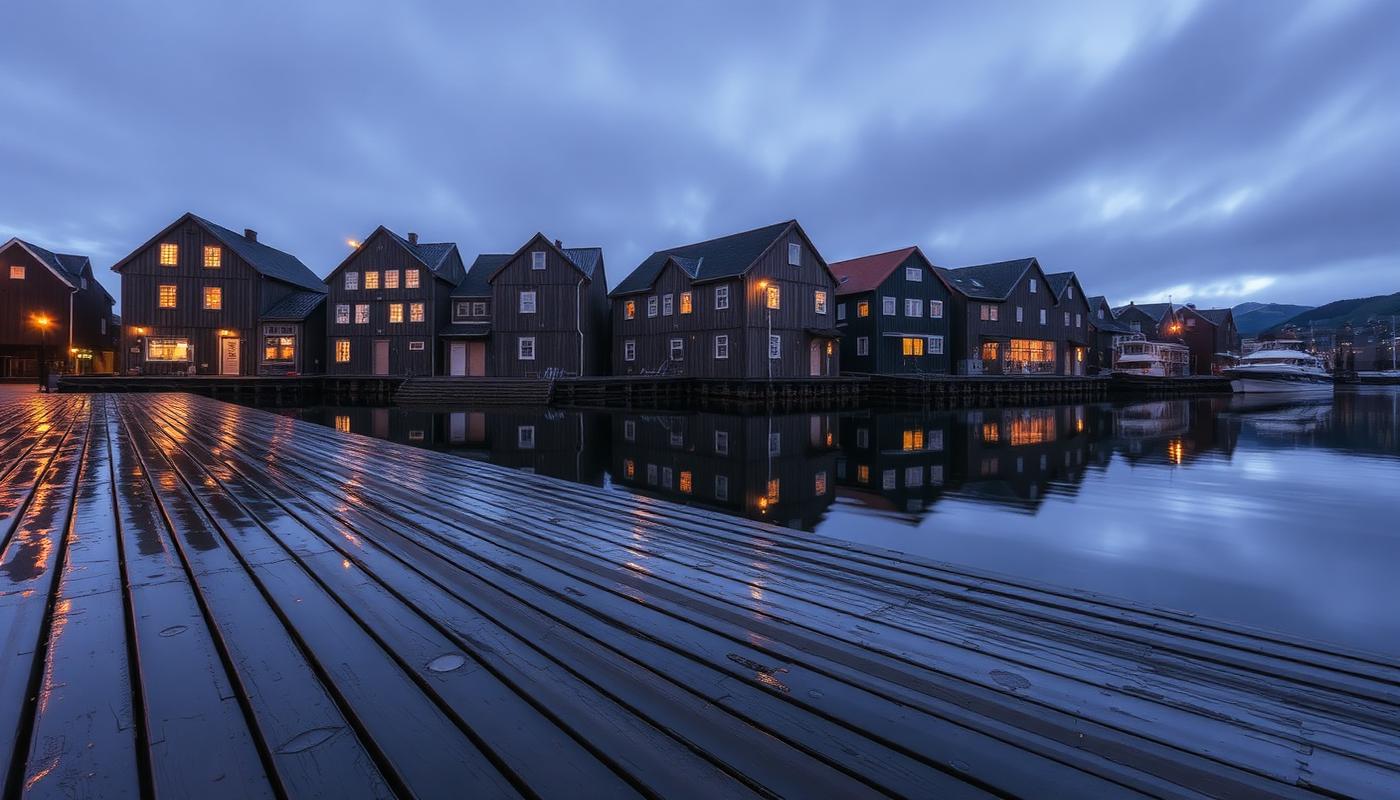
Bergen is compact and rains about 230 days a year, which locals mention with something close to pride. Start at Bryggen, the row of wooden Hanseatic trading houses on the north side of the harbour. Go into the alleys behind the facade, where the buildings lean against each other over creaking wooden walkways. The Bryggens Museum next door explains the medieval town underneath.
The fish market has an indoor and an outdoor half. The outdoor half is expensive and aimed squarely at cruise passengers. The indoor Mathallen is better value for a fish soup or a plate of shrimp. Then take the Floibanen funicular up Mount Floyen, about 160 NOK return, for the view over the harbour and the seven mountains. There is a well marked walking path down that takes forty minutes.
If you have the whole day, add the Fantoft stave church or the Edvard Grieg house at Troldhaugen, both a short light rail ride south. Bergen airport is on that same light rail line, which makes the departure very simple.
Budget
- Rail and boat for the whole route, booked early: 1,700 to 2,400 NOK.
- Accommodation: 1,200 to 2,000 NOK a night for a double, less in Aurland.
- Food, using supermarkets for two meals a day: 350 to 500 NOK per person per day.
- Food, eating out for lunch and dinner: 800 to 1,200 NOK per person per day.
A four day trip therefore ranges from about 6,000 NOK per person on the careful end to 12,000 NOK on the comfortable one, excluding flights.
Small practical notes
- Norway is effectively cashless. Cards work everywhere, including on rural buses.
- Tap water is excellent. Buying bottled water here is a small act of self harm at these prices.
- Reserve seats on the Bergen line in summer. Unreserved travel is legal but standing for five hours is not fun.
- Luggage storage exists at Oslo S, Myrdal is minimal, and Flam has lockers near the pier.
- The weather changes fast. Pack a shell jacket even in July.
What this costs, roughly
For a 2026 baseline, an Oslo public transport single ticket costs around 40 NOK, and a 24 hour ticket around 130 NOK, useful if you are doing more than a couple of trips around the harbour and Bygdoy. The Munch museum is around 180 NOK and the Fram Museum around 170 NOK. A mid-range restaurant main in Oslo or Bergen typically runs 250 to 400 NOK, and a supermarket meal for two, bread, cheese, cured fish and fruit, usually comes to under 150 NOK. A mid-range hotel double in Oslo or Bergen usually runs 1,300 to 2,200 NOK a night, and considerably less in Flam or Aurland.
Neighbourhood notes for the two city stops
In Oslo, staying near the Central Station puts you within walking distance of the harbour, the Opera House and most transit lines, at the cost of a slightly characterless, business-district feel in the immediate area. Grunerlokka, a short tram ride northeast, is a livelier neighbourhood of cafes and vintage shops with more atmosphere, though it means one extra tram ride each direction. In Bergen, the area around Bryggen and the fish market puts you inside the postcard view but rooms there book up fast and cost more, while the streets slightly uphill toward Fjellveien are quieter, cheaper and still an easy walk down into the centre.
Common mistakes visitors make on this route
- Doing the whole Oslo to Bergen run in one sitting to save a hotel night, then being too exhausted to appreciate either city properly.
- Not reserving a seat in summer and ending up standing for a long stretch of the Bergen line, which is legal but unpleasant.
- Skipping a jacket for the Naeroyfjord boat because the town felt warm. The fjord itself is noticeably colder, especially at the bow.
- Assuming the Norway in a Nutshell package is the only way to do this route. Booking each leg separately usually costs less and gives you more control over where you stop.
- Underestimating how expensive restaurant dining is and running out of budget by day three.
A shorter version, with less time
If you only have two or three days rather than four, cut Oslo down to a single morning, since the real reason for this trip is the railway and the fjord rather than either city. Take an early train from Oslo, do the Flam branch and an afternoon boat on the same day if the connections line up, and spend your extra time in Bergen instead, which rewards a slower pace with its museums and surrounding fjord boat trips of its own. This compressed version loses the overnight in Flam or Aurland, which is a genuine loss, but it is workable if time is tight.
What I would skip
The Viking Ship Museum on the Bygdoy peninsula is closed for a major rebuild in this period, so check its status before planning an Oslo afternoon around it. Even when open, I would weigh it against the Fram Museum next door, which suits a shorter visit better since the whole story is told inside one building rather than across a small campus. In Bergen, I would skip the funicular queue at peak midday in summer, when the wait for Floibanen can run past forty minutes, and either go early, around 09:00, or walk up the marked path instead, which takes about forty minutes and is a pleasant climb through the woods on the lower half.
Accessibility and mobility notes
The Bergen Line trains themselves are comfortable and have accessible carriages with space for wheelchairs, bookable in advance through Vy, the operator, and the stations at Oslo S, Voss and Bergen are all step-free with lifts. Myrdal station, where you change for the Flam railway, is a small mountain platform, but the change itself is a level walk across the platform rather than a climb. The Flam railway carriages are step-free from the platform, and the short stop at Kjosfossen waterfall has a paved viewing area, though it can be slippery with spray. The Naeroyfjord boats have accessible seating areas, but the open bow deck, which has the best views, is reached by a short set of steps on most vessels, so ask the crew about the layout of the specific boat when boarding. In Bergen, the cobbled lanes around Bryggen are uneven underfoot and the buildings themselves are not step-free, though the harbourfront path in front of them is flat and manageable.
Related routes
For another route where the transport is the attraction, see Milford Sound and Queenstown. For a very different cold-weather trip, Quebec City in winter handles low temperatures with a completely different strategy. The Route Station landing page explains the two nights per base rule that this itinerary bends deliberately.
Frequently asked questions
Related articles
Keep reading across the network
Route Station · 12 min read
Ljubljana and Lake Bled in Two Unhurried Days
A two day Slovenia itinerary pairing Ljubljana's old town with Lake Bled and Vintgar Gorge, including bus times, walking distances and costs.
Route Station · 13 min read
Milford Sound and Queenstown in Four Days
A four day South Island itinerary combining Queenstown, Glenorchy, Te Anau and Milford Sound, with driving times, cruise advice and costs in NZD.
Route Station · 13 min read
Tasmania in Five Days: Hobart, Freycinet and Cradle Mountain
A five day Tasmania driving itinerary from Hobart through Freycinet to Cradle Mountain, with distances, walk grades, park pass details and costs in AUD.